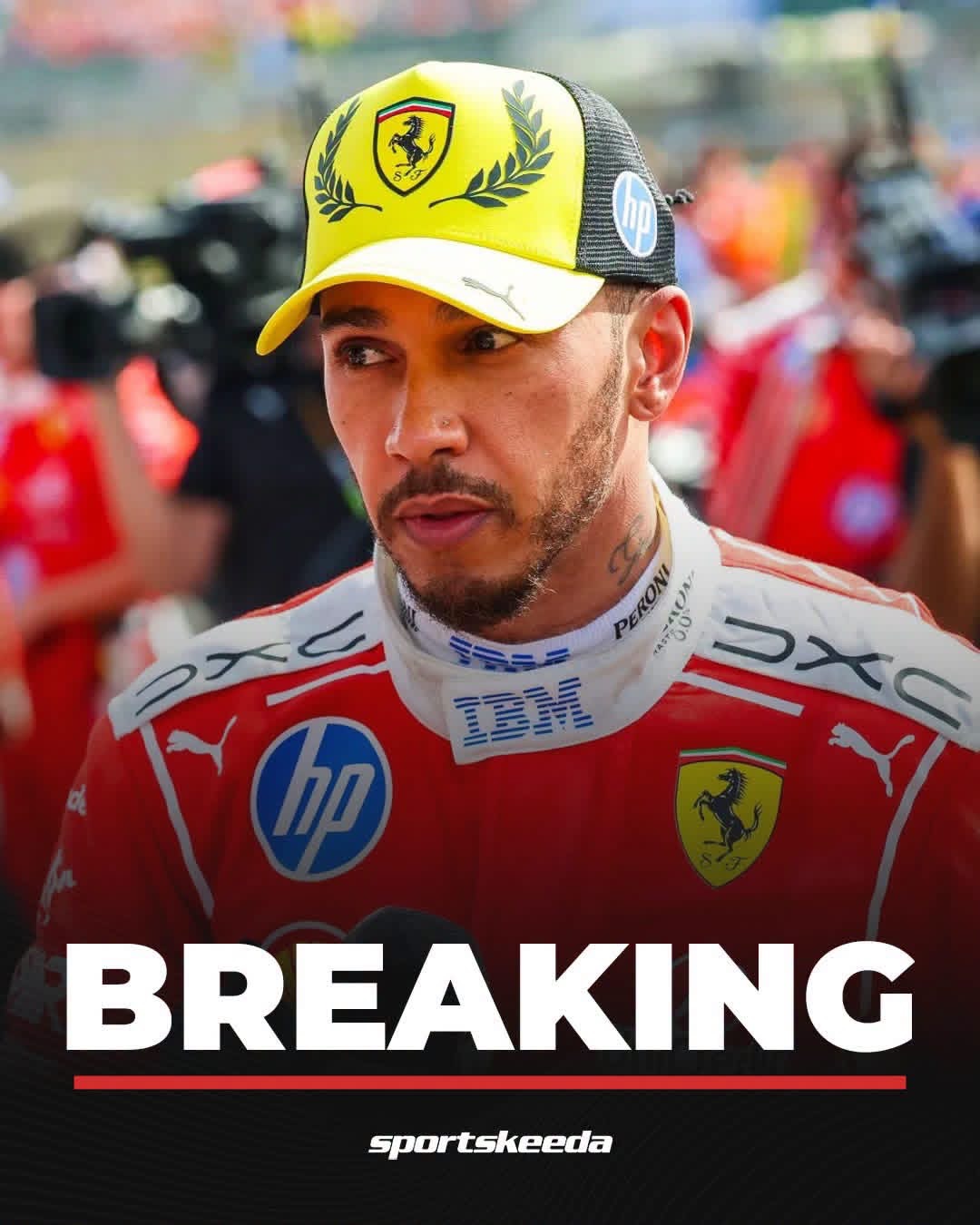
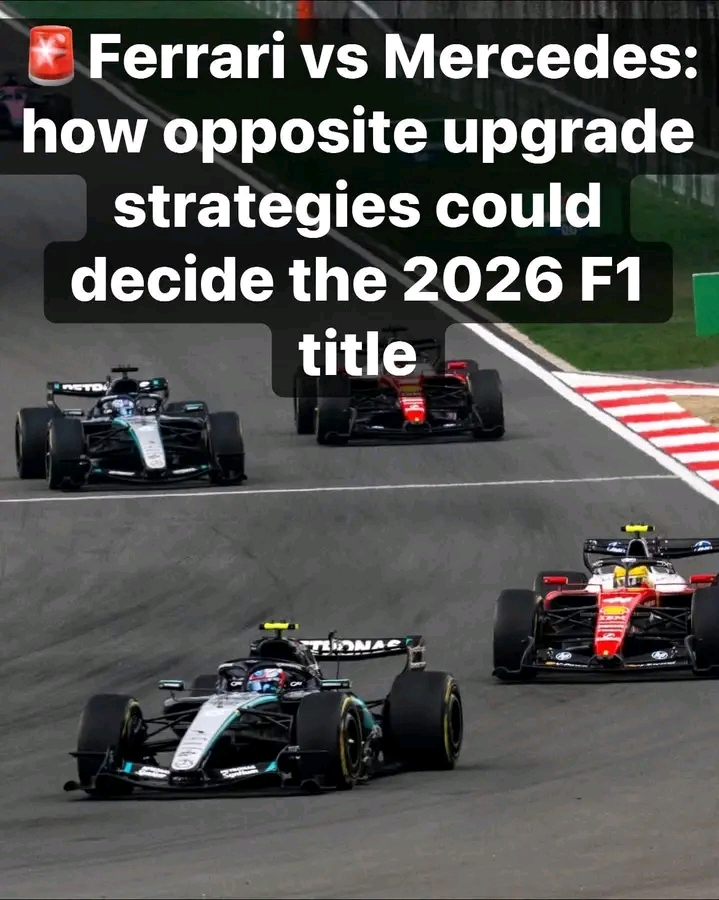
The 2026 Formula 1 season has reached a fascinating crossroads. After the first 11 rounds, Andrea Kimi Antonelli has established himself as the driver to beat, while Lewis Hamilton has transformed a difficult opening phase with Ferrari into a genuine championship challenge.
The gap between the two is 50 points.
On paper, that looks substantial. In a season featuring 12 remaining Grands Prix and six Sprint weekends, however, it is far from an insurmountable advantage. Formula 1’s new technical era has already demonstrated how quickly the competitive order can change, and the second half of the campaign could be defined by development battles, reliability and the ability of each team to perform under pressure.
Antonelli has the championship lead. Hamilton has the experience. Mercedes has the stronger overall package. Ferrari, however, appears to be closing the gap at precisely the moment the title fight is becoming serious.
The question is no longer whether Hamilton can recover from his difficult start to life under the 2026 regulations.
The question is whether he can recover enough to stop a 19-year-old Mercedes sensation from becoming the youngest Formula 1 world champion in history.
ANTONELLI HAS GONE FROM ROOKIE TALENT TO CHAMPIONSHIP FAVOURITE
The biggest story of the 2026 season is arguably not Mercedes’ technical advantage but Antonelli’s ability to exploit it.
The Italian entered the campaign with enormous expectations after showing flashes of exceptional speed in his first full season. But being quick is one thing. Controlling a championship is something entirely different.
Antonelli has shown remarkable consistency.
He began the season with second place in Australia before winning in China, Japan, Miami, Canada and Monaco. That run immediately changed the conversation surrounding his future. Instead of being viewed simply as Mercedes’ exciting young prospect, Antonelli became the driver every rival had to beat.
His winning streak eventually ended in Barcelona, where a power unit problem forced him into retirement while running second. He also endured a difficult Silverstone weekend, but his response was arguably more important than the setbacks themselves.
Rather than allowing lost points to destabilise his campaign, Antonelli returned to the front and won at Spa.
That is an important championship characteristic.
Drivers rarely win titles by dominating every weekend. They win them by maximising the good days and limiting the damage on the bad ones. Antonelli has already demonstrated that quality at just 19 years old.
His third-place finish at the Hungaroring was particularly significant. Mercedes did not appear to have the outright pace of Ferrari or McLaren, yet Antonelli still secured a podium while his championship advantage remained intact.
That is precisely the kind of result that can decide a title.
A driver who wins when the car is fastest is expected to score heavily. A driver who finishes on the podium when his team is struggling is the one who builds a championship lead.
MERCEDES STILL HAS THE FASTEST OVERALL PACKAGE
Antonelli’s advantage cannot be separated from the performance of the Mercedes W17.
The new 2026 regulations created one of the biggest technical resets in modern Formula 1. The removal of the MGU-H, the increased electrical contribution, active aerodynamics, sustainable fuel and smaller, lighter cars forced every manufacturer to rethink its approach.
Mercedes appears to have understood those changes better than most.
The team has taken eight victories from the opening 11 events and secured 10 pole positions. That qualifying record demonstrates just how strong its single-lap performance has been.
However, the W17 is not invincible.
Ferrari and McLaren have shown that Mercedes can be beaten when the conditions are right. Track characteristics, temperatures and tyre behaviour have increasingly influenced the competitive order, suggesting that the second half of the season could be much closer than the championship standings initially suggest.
Mercedes’ advantage is also being challenged by reliability.
Mechanical problems have already cost the team valuable points, and as development continues, teams will inevitably be forced to balance performance gains against reliability risks.
That could become the defining battle of the championship.
Mercedes does not necessarily need to be the fastest car at every remaining race. With Antonelli holding a 50-point lead, the team can afford to prioritise consistency. Ferrari, by contrast, has less room for conservative thinking.
Hamilton needs victories.
Antonelli needs points.
That difference could shape how both teams approach the remaining races.
HAMILTON HAS FINALLY FOUND HIS FERRARI MOMENT
Hamilton’s second season with Ferrari has developed into a very different story from his first.
His 2025 campaign was dominated by questions about adaptation and performance. The transition to Ferrari was always going to be challenging, particularly after spending so many years at Mercedes, but the arrival of the 2026 regulations gave Hamilton another opportunity to reset his career.
The new Ferrari appears to suit him better.
Hamilton has demonstrated that he remains extremely effective over a full race distance, particularly when tyre management and energy deployment become critical. While his qualifying record has not yet matched the very best drivers in the field, his ability to extract points from difficult weekends has become one of his greatest strengths.
The turning point came in Barcelona.
Hamilton’s victory at the Spanish Grand Prix was more than another addition to his extraordinary career statistics. It was his first Grand Prix victory in Ferrari colours and a psychological breakthrough for both driver and team.
The win also interrupted Antonelli’s momentum.
That matters because championship battles are not purely mathematical. Momentum can influence confidence, risk-taking and decision-making. A dominant leader who suddenly sees a major rival winning races may begin to feel pressure that did not exist several rounds earlier.
Hamilton followed his Barcelona triumph with further strong results, including a podium at Silverstone and consistent scoring in the races that followed.
The result is a remarkable transformation.
Instead of fighting merely to establish himself at Ferrari, Hamilton is now the second-placed driver in the championship and the most credible threat to Antonelli.
THE 50-POINT GAP IS BIG BUT FAR FROM SAFE
A 50-point deficit can look enormous during a Formula 1 season, but the 2026 calendar gives Hamilton plenty of opportunities to reduce it.
There are still 12 Grands Prix remaining, along with six Sprint weekends.
That creates a substantial number of points available to the leading drivers.
A couple of victories combined with an Antonelli retirement could dramatically change the championship picture. Conversely, if Hamilton suffers a mechanical failure while Antonelli finishes on the podium, the gap could quickly become much larger.
The most important factor may therefore be reliability.
Antonelli has already experienced two zero-point weekends. Hamilton’s recent run has been considerably more consistent. If Ferrari can maintain that reliability while improving its outright pace, Hamilton could gradually turn the championship into a pressure battle.
The danger for Mercedes is that a 50-point lead can encourage defensive thinking.
Antonelli cannot afford to start racing simply to protect his advantage. If he becomes too conservative, Hamilton could take control of the momentum. The young Mercedes driver must continue driving aggressively while avoiding unnecessary risks.
That balance will become increasingly difficult as the championship approaches its final stages.
FERRARI’S DEVELOPMENT CURVE COULD CHANGE EVERYTHING
The biggest reason to believe Hamilton has a realistic chance is Ferrari’s apparent improvement.
The team began the season behind Mercedes in the overall performance hierarchy, but the gap has narrowed. Ferrari has improved its package through aerodynamic development and power unit optimisation, while Hamilton and Charles Leclerc have benefited from a car that appears increasingly predictable.
That development trend is perhaps more important than the current championship standings.
Mercedes has a large advantage in the Constructors’ Championship, but Ferrari appears to be gaining performance at the right time.
Formula 1 championships are often won by the team that develops best rather than the team that starts strongest.
If Ferrari continues reducing the qualifying gap, Hamilton could find himself with a genuine opportunity to win more races. The situation becomes even more interesting if Ferrari’s improvement is particularly strong at circuits where Mercedes struggles.
The championship does not require Ferrari to become the fastest team everywhere.
Hamilton simply needs Ferrari to be fast enough on enough weekends.
RUSSELL COULD BECOME THE UNEXPECTED FACTOR
One element that could complicate the Hamilton-Antonelli battle is George Russell.
The Mercedes driver has already won twice and remains close enough to Hamilton in the championship to remain relevant. With Antonelli leading the standings, Russell is currently Mercedes’ second championship contender.
That creates a fascinating internal situation.
Mercedes has two drivers capable of winning races, while Ferrari has Hamilton and Leclerc both capable of taking points away from the Silver Arrows.
If Russell continues scoring heavily, he could unintentionally help Antonelli by preventing Hamilton from gaining maximum points.
Imagine Hamilton winning a Grand Prix with Antonelli second and Russell third.
Hamilton would gain only seven points on Antonelli.
Now imagine Hamilton winning while Antonelli finishes fifth and Russell finishes second.
The championship impact is far greater.
This is why Mercedes’ internal management could become increasingly important. If Antonelli and Russell are both fighting for wins, the team may eventually have to decide whether it is protecting a championship leader or allowing its drivers to race without restrictions.
For now, that decision can be postponed.
But the closer Hamilton gets, the more difficult it becomes.
THE 2026 RULES MAKE THIS TITLE FIGHT DIFFERENT
The 2026 regulations have created a championship in which driver skill is being tested in new ways.
The increased electrical contribution from the power unit means energy management has become more influential. Active aerodynamics have changed how cars behave on straights and through corners, while the removal of the MGU-H has forced manufacturers to rethink how they generate and deploy power.
Drivers are effectively managing another layer of performance during races.
That could favour Hamilton.
Experience matters when the technical environment becomes complicated. Hamilton has spent almost two decades adapting to different generations of Formula 1 machinery. He has won championships under radically different aerodynamic and power unit philosophies.
Antonelli, however, has demonstrated that he is adapting remarkably quickly.
The young Italian appears comfortable with the complexity of the new cars, particularly when it comes to energy deployment and race management.
That creates one of the most intriguing contrasts of the season.
Hamilton has the experience of thousands of laps at the highest level.
Antonelli has the advantage of growing up in an era where sophisticated simulation, data analysis and advanced driver preparation are central to the sport.
The battle between those two advantages could become decisive.
THE NEXT FEW RACES COULD REDEFINE THE CHAMPIONSHIP
The championship resumes at Zandvoort, and the upcoming sequence of circuits will provide a major test of the competitive order.
Zandvoort should place emphasis on aerodynamic efficiency and high-downforce performance. Monza will provide a completely different challenge, with low drag and power efficiency becoming critical.
The new Madrid circuit adds another layer of uncertainty because teams will have limited historical data to rely upon.
That is precisely the kind of situation where a championship can suddenly change direction.
Mercedes has the advantage of a large Constructors’ Championship cushion, allowing the team to take a more measured approach to development.
Ferrari does not have that luxury.
Hamilton’s team must continue pushing.
Every upgrade must be judged against the possibility of gaining performance without creating reliability problems. Every strategic decision becomes more important. Every qualifying session carries greater weight.
The pressure is moving toward Ferrari.
But pressure can also create opportunity.
MCLAREN AND RED BULL CANNOT BE IGNORED
Although the championship narrative is increasingly focused on Antonelli and Hamilton, other drivers could still influence the outcome.
Lando Norris’ victory in Hungary demonstrated that McLaren remains capable of taking points away from both Mercedes and Ferrari. Oscar Piastri is also close enough to remain part of the wider championship conversation.
Max Verstappen, meanwhile, remains a threat despite sitting further back in the standings.
The Red Bull Ford project has not produced the level of dominance many expected, but Verstappen’s ability to extract results from difficult machinery should never be underestimated.
A driver like Verstappen does not need to be a championship favourite to influence the championship.
If he starts winning races, Hamilton and Antonelli could lose valuable points to a third party.
That is one of the reasons the 2026 title fight is more complicated than a simple two-driver duel.
The outcome could ultimately be decided by the entire competitive field.
HAMILTON HAS EXPERIENCE, BUT ANTONELLI HAS MOMENTUM
The age difference between the two championship protagonists makes this one of the most compelling rivalries in modern Formula 1.
Antonelli is 19.
Hamilton is 41.
One is trying to establish a new era. The other is attempting to extend an already historic legacy.
Hamilton has been in championship fights against some of the greatest drivers of his generation. He understands the psychological demands of leading a title battle, chasing one and defending a points advantage.
Antonelli has never experienced the pressure of entering the final stages of a championship as the driver everyone is trying to defeat.
That could become important.
The first time a young driver leads a championship deep into the season, the pressure is different. Every mistake receives greater attention. Every retirement becomes a headline. Every rival begins to analyse weaknesses.
Antonelli has handled pressure impressively so far.
But the pressure in September is not the same as the pressure in November.
Hamilton knows that.
And Ferrari will be hoping that experience becomes an advantage.
MY PREDICTION FOR THE SECOND HALF OF 2026
If Mercedes maintains its current performance advantage, Antonelli remains the favourite.
A 50-point lead is significant, and the W17 has demonstrated greater consistency across a wider range of circuits. Antonelli has also shown the ability to recover from setbacks without allowing them to derail his season.
However, I expect the championship to become considerably closer.
Ferrari’s development trajectory is the biggest reason for optimism around Hamilton. If the SF-26 continues improving and Hamilton converts more of its opportunities, the 50-point deficit could fall rapidly.
My prediction is that Hamilton will win several more races before the season ends and push Antonelli into a genuine championship battle.
The most likely scenario is still an Antonelli title victory, but it may not be decided until the final few rounds.
For Hamilton to overturn the deficit, he probably needs three things to happen simultaneously: Ferrari must become consistently competitive, Mercedes must experience at least one or two more reliability setbacks, and Hamilton must outperform Antonelli directly on multiple weekends.
That is difficult.
But it is absolutely possible.
THE CHAMPIONSHIP BATTLE THAT COULD DEFINE A NEW ERA
The 2026 season was supposed to be about a technical revolution.
Instead, it may also become the beginning of a new Formula 1 rivalry.
Antonelli represents the future: young, fast and already comfortable leading the sport’s most powerful team.
Hamilton represents the past and present: a seven-time world champion chasing an unprecedented eighth title while attempting to deliver Ferrari its greatest prize.
The 50-point gap gives Antonelli the advantage.
Hamilton’s experience gives him hope.
Mercedes has the better season-long package.
Ferrari appears to have momentum.
And with 12 races still remaining, the championship is far from settled.
If Antonelli wins the title, it will confirm the arrival of a new superstar and potentially mark the beginning of a Mercedes-led era around its young Italian driver.
If Hamilton completes the comeback, it could become one of the greatest championship recoveries of his career and perhaps the defining achievement of his Ferrari journey.
The next few races will tell us which story Formula 1 is preparing to write.
For now, Antonelli is in control.
But Hamilton is close enough to make the chase impossible to ignore.