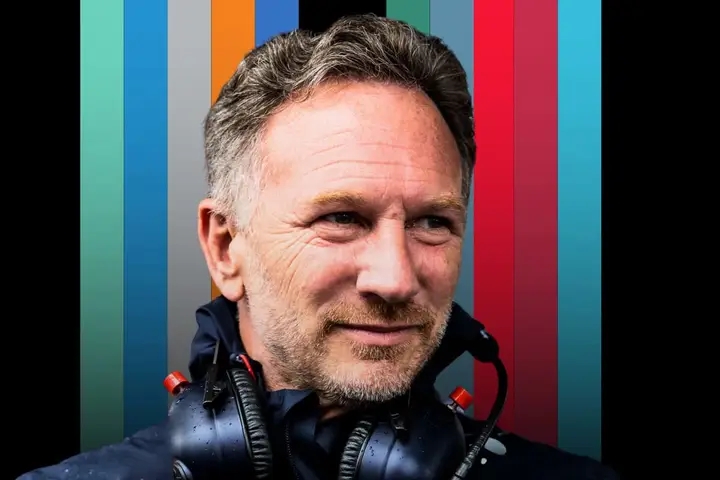
Christian Horner may be away from Formula 1 for now, but speculation over his future refuses to fade. Fresh comments from FIA President Mohammed Ben Sulayem have reignited discussions about whether the former Red Bull team principal is destined for another chapter in the sport.
After two decades at the helm of Red Bull Racing, Horner’s departure marked the end of one of Formula 1’s most successful leadership eras. Yet many within the paddock believe a figure with his experience and championship-winning pedigree is unlikely to remain on the sidelines forever.
A REMARKABLE ERA AT RED BULL COMES TO AN END
Christian Horner’s exit after the 2025 British Grand Prix closed one of the most influential partnerships Formula 1 has ever seen.
When Red Bull entered Formula 1 in 2005, it was an ambitious newcomer with little experience at the front of the grid. Under Horner’s leadership, the Milton Keynes outfit evolved into one of the sport’s defining teams, capturing multiple Drivers’ and Constructors’ Championships.
The team enjoyed two dominant eras.
The first came with Sebastian Vettel, who secured four consecutive world titles between 2010 and 2013. Years later, Red Bull returned to the top thanks to Max Verstappen, whose championship-winning performances helped establish another period of dominance.
Across both eras, Horner earned a reputation for building elite technical teams, managing high-pressure environments, and keeping Red Bull consistently competitive against manufacturers with far greater resources.
WHY HORNER LEFT RED BULL
Despite its remarkable history, Red Bull entered a difficult period during Horner’s final season.
The team slipped down the competitive order and found itself fourth in the Constructors’ Championship after previously setting the benchmark for the rest of the grid.
Performance struggles were accompanied by growing internal tensions.
Reports throughout the season pointed to disagreements involving Horner, Red Bull advisor Helmut Marko, and Max Verstappen’s father, Jos Verstappen. Those public and private disputes became one of Formula 1’s biggest talking points and added pressure during an already challenging campaign.
Ultimately, Red Bull decided a leadership change was necessary, ending Horner’s 20-year spell as team principal.
FIA PRESIDENT EXPECTS A RETURN
Mohammed Ben Sulayem believes Horner’s Formula 1 story is far from finished.
The FIA president has expressed confidence that someone with Horner’s achievements and experience will eventually find his way back into the paddock.
That view is shared by many across Formula 1.
Elite team principals with proven championship-winning records are incredibly rare. Horner has demonstrated an ability to recruit top engineering talent, guide long-term technical projects, manage superstar drivers, and deliver sustained success under intense pressure.
Those qualities remain valuable regardless of how his Red Bull tenure ended.
WHY THERE IS NO IMMEDIATE COMEBACK
Although rumors continue to circulate, Horner himself has suggested there is no rush to return.
Following his departure, he admitted he has been enjoying time with his family after spending two decades immersed in Formula 1’s relentless schedule.
The demands placed on modern team principals extend well beyond race weekends. They oversee thousands of employees, negotiate with sponsors, manage driver relationships, and play key roles in technical and political discussions throughout the championship.
After such a long period at the center of Formula 1, taking time away could ultimately prove beneficial before considering another high-profile position.
WHICH TEAMS COULD BENEFIT FROM HORNER?
Should Horner eventually decide to return, he would immediately become one of the most sought-after executives in Formula 1.
Any ambitious manufacturer launching a long-term championship project could benefit from his leadership.
His strengths include:
- Building championship-winning organizational structures.
- Managing elite driver lineups.
- Developing successful technical departments.
- Maintaining competitiveness over multiple regulation cycles.
- Leading teams through periods of rapid change.
Whether an existing front-running team or a manufacturer looking to establish itself among Formula 1’s elite, Horner would almost certainly attract serious interest.
WHAT THIS MEANS FOR RED BULL
Red Bull now faces the challenge of proving its success was built on more than one individual.
Replacing a leader who spent two decades shaping every aspect of the organization is never straightforward.
The team’s ability to remain competitive under Formula 1’s new regulations will determine whether Horner’s departure becomes merely the end of one successful era—or the beginning of a more difficult chapter.
Maintaining stability while continuing to fight for championships will be one of Red Bull’s biggest tests in the coming seasons.
IMPACT ON THE FORMULA 1 CHAMPIONSHIP
Leadership changes rarely affect only one team.
Formula 1 has become increasingly competitive, with the smallest operational advantages often deciding championship battles.
If Horner eventually joins another constructor, his experience could dramatically accelerate that team’s development.
His knowledge of race operations, team management, technical coordination, and championship strategy could make an immediate impact, particularly as Formula 1 continues evolving under new technical regulations.
That possibility explains why every comment regarding Horner’s future attracts so much attention across the paddock.
PREDICTION: DON’T EXPECT HORNER TO STAY AWAY FOREVER
While Horner appears content enjoying life away from Formula 1, history suggests figures of his caliber rarely remain absent indefinitely.
Championship-winning leaders possess knowledge that is difficult to replace, and ambitious teams are always searching for experienced executives capable of delivering titles.
A return in 2027 may not be on the cards if Horner’s recent comments are taken at face value, but a comeback later in the decade feels increasingly plausible.
For now, Formula 1 continues without one of its most recognizable team principals. However, if Mohammed Ben Sulayem’s prediction proves accurate, fans may not have seen the last chapter of Christian Horner’s remarkable Formula 1 career.