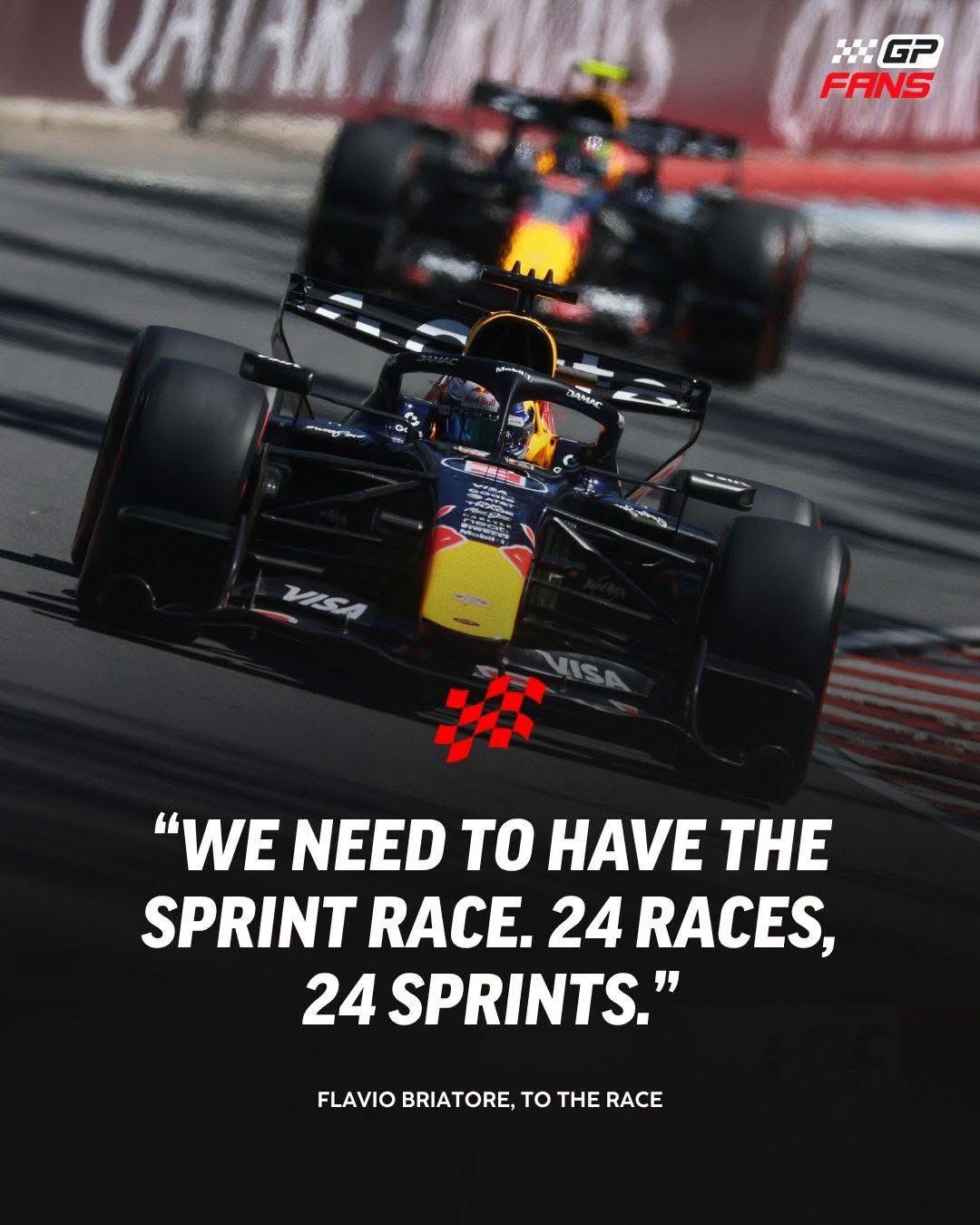
Formula 1 has spent the past few years expanding its global footprint, introducing new venues, sprint weekends, and record-breaking fan engagement. But Alpine executive advisor Flavio Briatore believes the sport still is not doing enough to maximize its entertainment value. In his latest eye-catching proposal, the veteran Italian suggested Formula 1 should effectively become a 48-race spectacle by staging a sprint race at every single Grand Prix weekend.
The suggestion has already sparked debate across the paddock, with supporters seeing more action for fans and critics questioning whether teams, drivers, and personnel could realistically handle such an intense schedule.
BRIATORE WANTS EVERY GRAND PRIX TO FEATURE A SPRINT
Speaking during the Formula 1 summer break, Briatore argued that every race weekend should include a competitive sprint event rather than limiting the format to a handful of selected venues.
His reasoning is straightforward. He believes fans deserve more meaningful on-track action instead of lengthy practice sessions where teams focus primarily on data collection and car setup.
According to Briatore, sprint races provide drivers with something tangible to compete for while giving spectators two race starts, more overtaking opportunities, and significantly more excitement over the course of a weekend.
If implemented under the current calendar, Formula 1 would feature 24 Grands Prix and 24 sprint races, creating what Briatore jokingly described as a 48-race season.
FORMULA 1 HAS ALREADY MOVED TOWARD MORE RACING
While Briatore’s proposal sounds extreme, Formula 1 has steadily evolved in a similar direction over the past decade.
The championship currently hosts 24 Grands Prix, the largest calendar in the sport’s history, alongside six sprint weekends. F1 CEO Stefano Domenicali has also previously indicated that expanding the number of sprint races remains a possibility if they continue proving popular with fans and commercial partners.
Liberty Media’s ownership has transformed Formula 1 into a global entertainment product, with increasing emphasis on maximizing television audiences, digital engagement, and race weekend experiences.
Adding more competitive sessions aligns with that philosophy, although Briatore’s vision takes the concept considerably further than current discussions.
MORE ACTION COMES WITH MAJOR CHALLENGES
While additional sprint races would undoubtedly increase entertainment value, implementing them across every event would create enormous logistical and sporting challenges.
Formula 1 teams already face one of the busiest calendars in world sport. Drivers, engineers, mechanics, and support staff spend months traveling across multiple continents, often working long hours under immense pressure.
Adding another competitive race every weekend would increase physical demands, accelerate wear on components, complicate race strategies, and potentially require further adjustments to Formula 1’s sporting regulations.
Teams would also need to carefully balance aggressive sprint performances against preserving equipment and maximizing points in Sunday’s Grand Prix.
DRIVERS COULD HAVE MIXED FEELINGS
Not everyone inside Formula 1 is likely to embrace Briatore’s vision.
Some drivers enjoy sprint weekends because they provide additional opportunities to score points and recover from disappointing qualifying sessions. Others have questioned whether sprint races dilute the significance of the Grand Prix itself while increasing the risk of crashes and mechanical failures before Sunday’s main event.
Championship contenders, in particular, may be reluctant to accept more opportunities for accidents that could derail title campaigns.
With 24 Grands Prix already pushing the limits of the calendar, many drivers have also spoken publicly about maintaining a healthier balance between racing and personal life.
THE FUTURE OF FORMULA 1 CONTINUES TO EVOLVE
Whether Briatore’s proposal ever becomes reality remains highly unlikely in its current form. However, it reflects the broader direction Formula 1 continues to explore as it searches for new ways to attract audiences and enhance race weekends.
Sprint races remain one of the sport’s most divisive innovations, yet they continue generating significant discussion and strong television audiences. If those trends continue, further expansion cannot be completely ruled out.
For now, Formula 1 appears committed to refining the existing sprint format rather than doubling its use overnight. But Briatore has once again succeeded in doing what he has done throughout much of his career—forcing the paddock to debate ideas that challenge the sport’s traditional boundaries.
Whether fans view a 48-race Formula 1 season as exciting innovation or complete overload, one thing is certain: the conversation about how the sport should evolve is far from over.