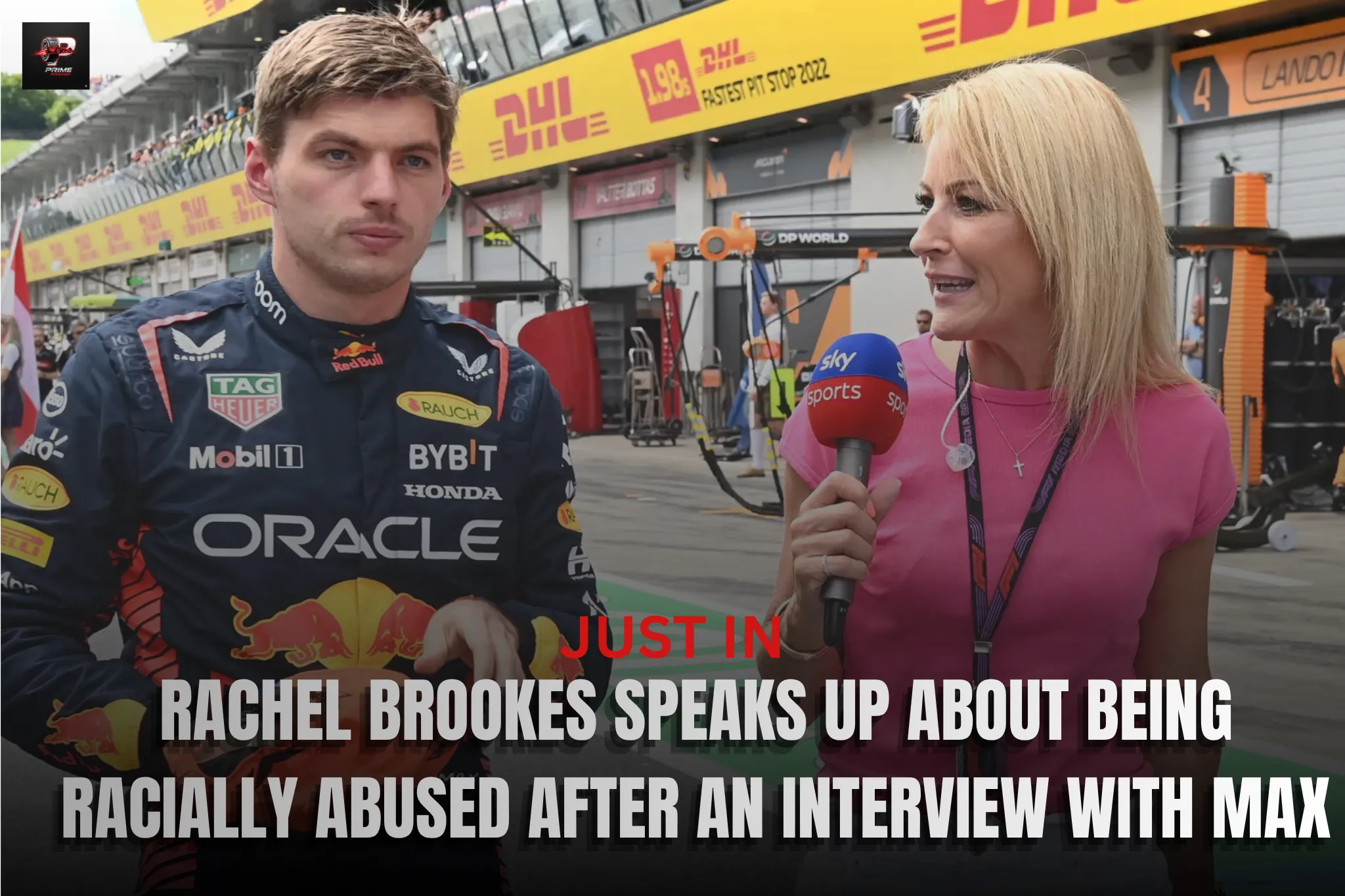
Formula 1 presenter Rachel Brookes has spoken candidly about the abuse she received following a high-profile interview with Max Verstappen, revealing that some of the messages crossed the line from criticism into deeply personal and racially charged attacks.
Her comments have reignited an uncomfortable discussion within Formula 1 about the treatment of journalists, broadcasters, and public figures who find themselves at the center of controversial moments involving the sport’s biggest stars.
While passionate fan support remains one of Formula 1’s greatest strengths, Brookes’ experience highlights the darker side of modern sports fandom and raises important questions about how online communities engage with media personalities who are simply doing their jobs.
THE INTERVIEW THAT TRIGGERED THE BACKLASH
The controversy traces back to an interview following a tense race weekend involving Max Verstappen and George Russell.
During the exchange, Brookes asked Verstappen a direct question regarding an incident that had already become a major talking point among fans, pundits, and former drivers.
Rather than avoiding the issue, she chose to address the matter head-on, reflecting the role journalists play in seeking answers to questions that many viewers are already asking.
The interview itself was relatively brief. However, once clips began circulating across social media platforms, the reaction quickly escalated beyond normal sporting debate.
What followed became a stark reminder of how rapidly online conversations can spiral into personal attacks.
FROM CRITICISM TO RACIAL ABUSE
Brookes has now revealed that the response she received extended far beyond disagreement with her questioning.
According to her account, she was subjected to a wave of abusive messages, including racist comments and deeply personal insults.
Constructive criticism is a reality for anyone working in the public eye, particularly in a sport as emotional and tribal as Formula 1. However, racial abuse represents a completely different issue.
There is a significant difference between disagreeing with a journalist’s approach and targeting them because of their identity.
Brookes’ willingness to discuss the experience publicly shines a spotlight on a problem that extends far beyond Formula 1 and affects sports media across the world.
WHY THIS ISSUE MATTERS FOR FORMULA 1
Formula 1 has spent years attempting to improve its image regarding diversity, inclusion, and respect.
The sport has introduced initiatives aimed at broadening participation, encouraging greater representation, and creating a more welcoming environment for fans from all backgrounds.
Incidents such as this threaten to undermine that progress.
When journalists, broadcasters, drivers, or team members become targets of racial abuse, it creates an environment where people may feel pressured to avoid difficult conversations simply to escape harassment.
That is dangerous for the sport.
Healthy journalism relies on the ability to ask difficult questions without fear of personal attacks. If reporters become reluctant to challenge drivers or teams, fans ultimately receive less transparency and fewer meaningful insights.
THE GROWING POWER OF SOCIAL MEDIA IN F1
The Formula 1 landscape has changed dramatically over the last decade.
Drivers have become global celebrities with massive online followings. Teams operate as international brands. Every interview, radio message, and on-track incident can generate millions of views within hours.
While that growth has helped Formula 1 reach new audiences, it has also amplified negative behavior.
A short clip taken out of context can quickly become fuel for online outrage.
Algorithms reward emotional reactions, and controversial moments often spread faster than balanced discussion.
As a result, broadcasters like Rachel Brookes frequently find themselves at the center of debates they never intended to create.
THE CHALLENGE OF COVERING MAX VERSTAPPEN
Max Verstappen’s popularity has grown enormously during his championship-winning years.
The Dutch star commands one of the largest and most passionate fanbases in motorsport.
That popularity brings tremendous support, but it can also create challenges for journalists.
Any criticism, tough question, or controversial interview involving Verstappen tends to generate significant online engagement.
Most fans engage respectfully. However, a small minority often cross boundaries that should never be crossed.
Brookes’ experience demonstrates how quickly a routine post-race interview can become a flashpoint when emotions are running high.
Importantly, there is no suggestion that Verstappen himself encouraged or endorsed any abusive behavior.
The issue lies entirely with individuals who chose to respond inappropriately.
FORMULA 1’S RESPONSIBILITY MOVING FORWARD
Formula 1, broadcasters, teams, and social media platforms all face increasing pressure to address online abuse more aggressively.
Several drivers, including Lewis Hamilton, have spoken openly in recent years about receiving racist messages online.
Other figures across the paddock have also experienced targeted harassment after controversial incidents.
The challenge is finding effective ways to protect individuals while preserving open discussion and passionate fan engagement.
Many believe stronger moderation policies, faster reporting systems, and clearer consequences for abusive behavior will be necessary as Formula 1 continues to grow globally.
SUPPORT FROM WITHIN THE PADDOCK
One encouraging aspect of Brookes’ account has been the support she reportedly received from fellow broadcasters and members of the Formula 1 community.
Many within the industry understand the pressures associated with asking difficult questions in a highly charged environment.
Journalists serve an important role in ensuring accountability and providing fans with answers.
That role becomes significantly harder when reporters fear becoming targets for personal abuse.
The solidarity shown by colleagues suggests there is widespread recognition that these issues must be addressed collectively rather than left for individuals to handle alone.
WHAT THIS MEANS FOR THE FUTURE OF F1 COVERAGE
Rachel Brookes’ experience serves as a reminder that Formula 1’s rapid growth comes with new responsibilities.
The sport is enjoying unprecedented popularity, attracting larger audiences and greater global attention than ever before. However, maintaining that momentum requires fostering a culture where disagreement remains respectful and personal abuse is universally condemned.
The vast majority of Formula 1 fans are passionate, knowledgeable, and respectful. Yet incidents like this demonstrate how the actions of a small minority can create damaging headlines and overshadow the sport itself.
As Formula 1 heads into another crucial phase of the 2026 season, the focus should remain on the racing, the championship battles, and the incredible stories unfolding on track—not on journalists facing abuse for doing their jobs.
The hope throughout the paddock will be that conversations sparked by Brookes’ comments lead to meaningful change, ensuring Formula 1 remains a place where tough questions can be asked, honest answers can be given, and everyone involved is treated with respect.