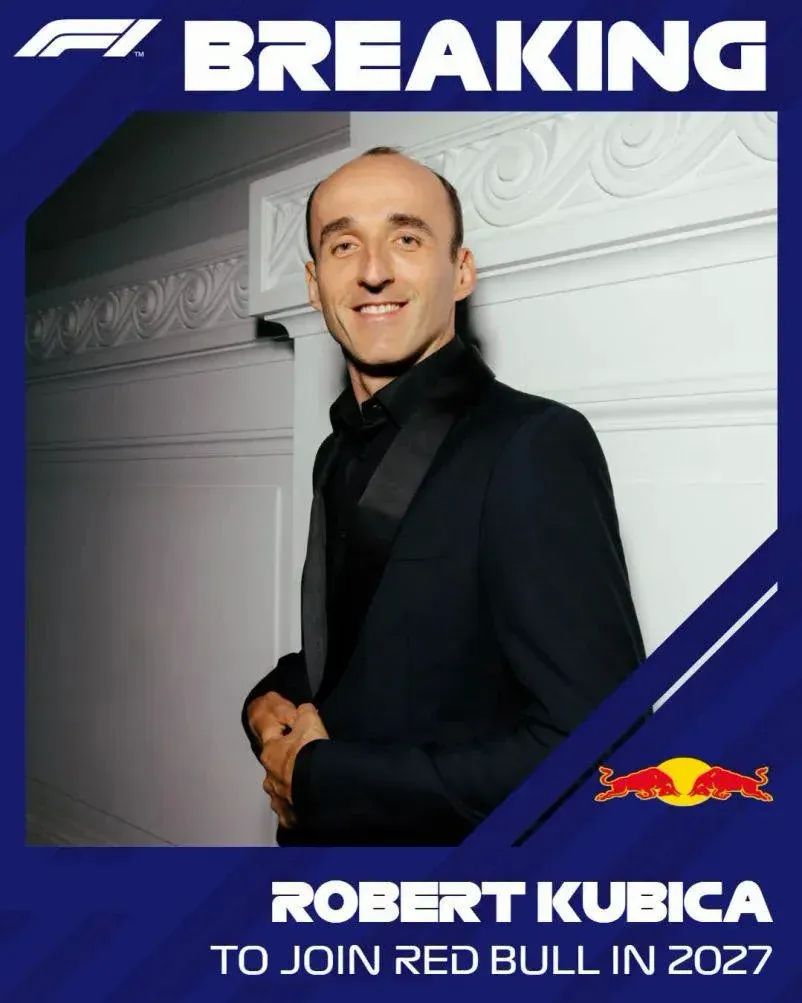
Red Bull Racing has reportedly secured one of Formula 1’s most respected minds for the future, with Robert Kubica expected to join the Milton Keynes-based outfit in 2027. While Kubica’s name is forever associated with his remarkable driving career, this latest move signals a new chapter that could have significant implications for Red Bull as Formula 1 enters a completely new technical era.
The reported appointment comes at a fascinating time for the reigning powerhouse. Red Bull is preparing for sweeping regulation changes in 2027 while simultaneously navigating uncertainty surrounding its driver lineup, technical department, and long-term competitiveness. Bringing someone with Kubica’s unique combination of racing experience, technical understanding, and simulator expertise could become one of the team’s most underrated acquisitions.
WHY ROBERT KUBICA REMAINS ONE OF FORMULA 1’S MOST RESPECTED FIGURES
Kubica’s Formula 1 story is unlike any other. Once regarded as one of the brightest talents on the grid, the Polish driver claimed a memorable Grand Prix victory before a devastating rally accident threatened to end his career. Against enormous odds, he returned to Formula 1 years later, earning widespread admiration throughout the paddock.
Since stepping away from full-time F1 competition, Kubica has built a reputation as one of motorsport’s finest development drivers. His detailed technical feedback has benefited multiple manufacturers across Formula 1, endurance racing, and prototype competition. Engineers have repeatedly praised his ability to identify subtle weaknesses in a car’s handling and provide solutions that translate directly into performance improvements.
That reputation is precisely why Red Bull’s reported interest makes strategic sense.
WHAT KUBICA COULD BRING TO RED BULL
Modern Formula 1 success depends on far more than having the fastest drivers. Teams rely heavily on simulator work, development programs, aerodynamic testing, and engineering collaboration to remain competitive throughout a season.
Kubica has become highly regarded in those areas.
If the reported move is confirmed, he could contribute by:
Assisting with simulator development.
Providing detailed setup and balance feedback.
Supporting correlation between simulation data and real-world performance.
Helping Red Bull optimize its next-generation car under the new regulations.
As Formula 1 prepares for another major technical reset, every advantage matters. Having an experienced development specialist could save months of work during the design process.
WHY THE TIMING IS PARTICULARLY IMPORTANT
Red Bull enters an uncertain period unlike any it has experienced in recent years.
Questions continue to surround the team’s long-term technical direction following several high-profile staff departures. At the same time, speculation surrounding Max Verstappen’s future refuses to disappear, while rivals including Ferrari, Mercedes, and McLaren continue closing the performance gap.
The introduction of new regulations means every team effectively starts from scratch. Historical dominance offers no guarantee of future success.
That makes experienced technical personnel increasingly valuable.
Kubica’s arrival could represent part of a broader effort by Red Bull to strengthen its engineering structure ahead of one of Formula 1’s biggest competitive resets.
COULD THIS SHAPE RED BULL’S NEXT ERA?
Although headlines naturally focus on driver transfers, many championships are won behind factory doors rather than on race weekends.
The engineers, simulator specialists, strategists, and development drivers often determine whether a promising concept becomes a title-winning machine.
Kubica has demonstrated throughout his career that he understands race cars at an exceptionally deep level. His analytical approach has earned respect across the paddock, and his ability to bridge the gap between driver feedback and engineering solutions remains one of his greatest strengths.
If Red Bull successfully integrates that expertise into its development program, the benefits may not be immediately visible—but they could prove crucial once the 2027 season begins.
WHAT HAPPENS NEXT?
At this stage, the reported move has generated significant discussion throughout the Formula 1 community, but further official confirmation will ultimately determine Kubica’s exact responsibilities within Red Bull.
Should the appointment become official, it would underline Red Bull’s intention to prepare aggressively for Formula 1’s next era rather than relying solely on its recent championship-winning pedigree.
With sweeping regulation changes approaching and every leading team searching for an edge, adding one of motorsport’s most respected technical minds could become one of the smartest long-term investments Red Bull makes before the 2027 campaign begins.