Lewis Hamilton has addressed the frustration that spilled over during Ferrari’s difficult Dutch Grand Prix, admitting that his emotional radio messages did not represent the best version of himself as attention rapidly shifts toward the team’s most important home race of the season.
HAMILTON ADMITS HE LET FRUSTRATION TAKE OVER
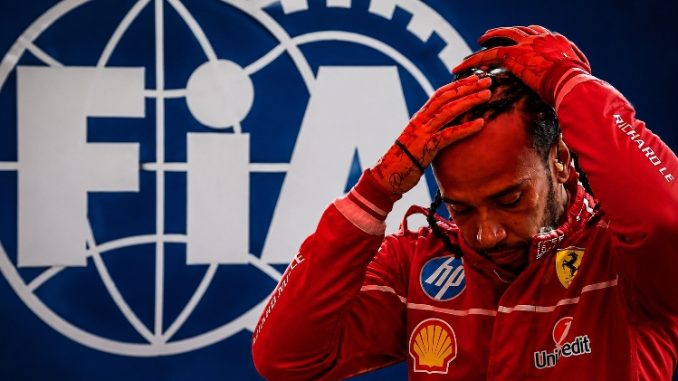
Hamilton’s fourth-place finish at Zandvoort left him visibly disappointed after Ferrari’s strategy decisions appeared to cost him valuable time in the fight for a podium.
The seven-time world champion had been running a different strategy from Charles Leclerc and believed he had the pace to challenge the Mercedes drivers ahead. However, he spent crucial laps behind his teammate before Ferrari eventually brought Leclerc into the pits.
Hamilton’s frustration became obvious over team radio, with the Ferrari driver questioning why he had been left out for so long and sarcastically describing the situation as a waste of time.
FERRARI’S STRATEGY HAS BECOME A MAJOR TALKING POINT
The controversy was not simply about Hamilton being unhappy with his finishing position.
Hamilton had already compared Ferrari’s decision-making unfavourably with Mercedes, who made a decisive call during the closing stages to allow championship leader Kimi Antonelli through George Russell.
For Hamilton, the difference was significant. Mercedes were prepared to make a difficult call immediately in the interests of the championship, while Ferrari appeared to lose valuable seconds debating its options.
Ferrari team principal Fred Vasseur has since explained that the team was actually attempting an alternative strategy with Hamilton, but deliberately withheld some information because it did not want rivals to understand its plans.
HAMILTON HAS CHOSEN NOT TO ESCALATE THE DISPUTE
Despite his anger during the race, Hamilton has now taken responsibility for the way he expressed his frustration.
Rather than allowing the disagreement to become a public feud with Ferrari, he has made it clear that the appropriate place to discuss the team’s strategic decisions is internally.
That could prove important.
Hamilton is still relatively new to Ferrari compared with his long history at Mercedes, and establishing trust between a driver and a new race-engineering group is critical. Publicly attacking the team after every strategic mistake would risk creating unnecessary tension inside the garage.
Instead, Hamilton appears determined to turn the disappointment into a learning experience.
MONZA COULD CHANGE THE ENTIRE MOOD AROUND FERRARI
The timing could hardly be more important.
Ferrari now heads to Monza, its spiritual home, with the Tifosi expecting the team to challenge at the front. Hamilton will also have an enormous spotlight on him as he prepares to race a Ferrari at its home circuit.
A podium—or even a victory—could instantly transform the narrative surrounding the team.
Another strategic failure, however, would make the questions surrounding Ferrari’s pit wall considerably louder.
HAMILTON KNOWS EVERY POINT MATTERS
The biggest issue for Hamilton is not simply whether Ferrari can produce a fast car.
It is whether the team can consistently convert that performance into maximum points.
The Dutch Grand Prix showed that Ferrari could fight near the front, but Hamilton ultimately finished behind Norris and the two Mercedes drivers. In a championship battle where margins can become decisive, those lost opportunities could become extremely expensive.
Hamilton’s response suggests he understands that reality.
He has acknowledged his own frustration, Ferrari has explained its thinking, and now the focus turns to Monza.
The pressure is enormous, but so is the opportunity. If Hamilton and Ferrari deliver at Monza, the Zandvoort controversy could quickly become yesterday’s news. If they stumble again, however, the questions about Ferrari’s strategy will only become louder.