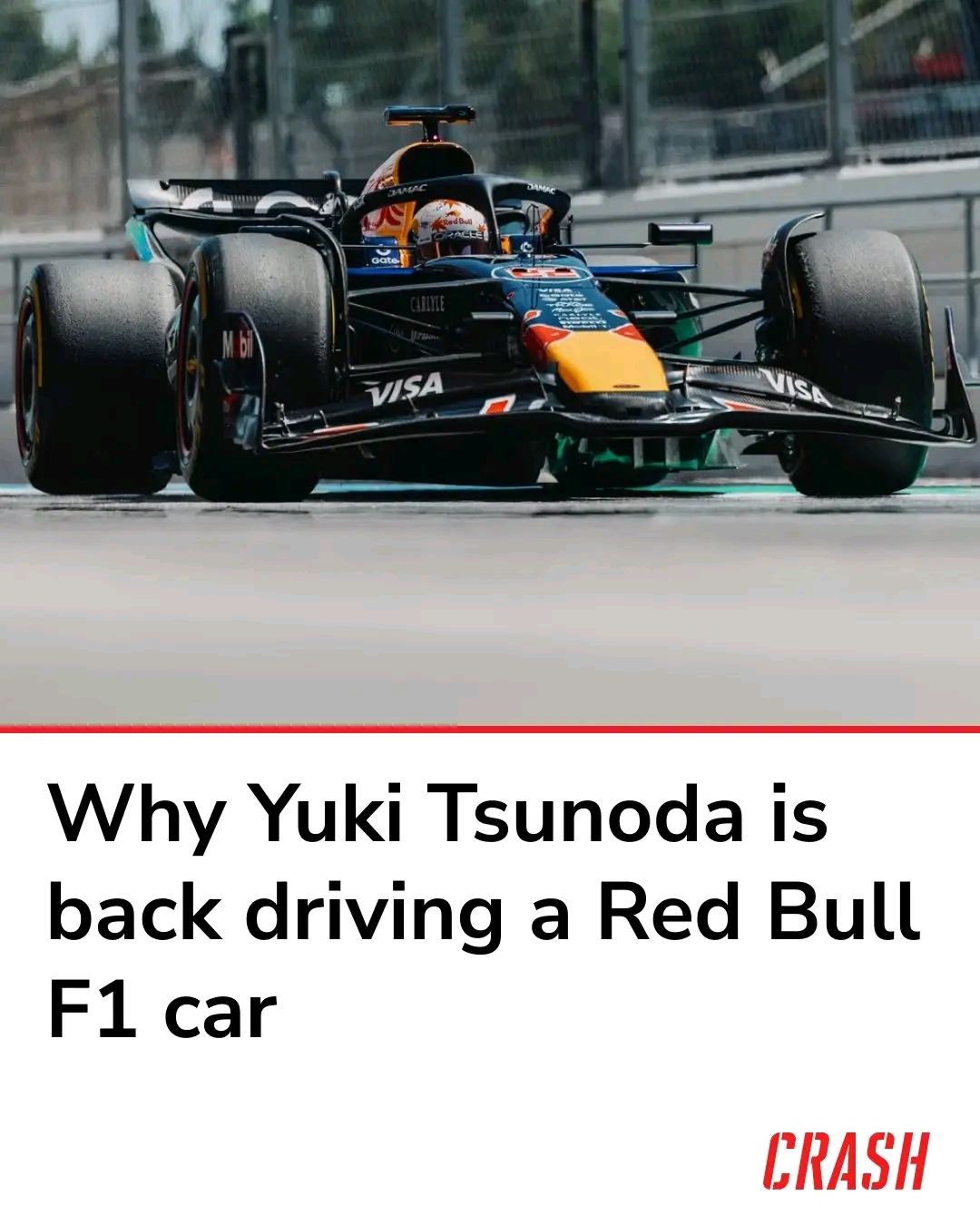
Yuki Tsunoda has been back behind the wheel of a Red Bull Formula 1 car, but not in the way fans might expect from a full competitive return. Instead, the Japanese driver’s latest outing is tied to Red Bull’s ongoing showrun and development programme, highlighting how the team continues to use experienced drivers even outside the race seat rotation.
While it may look like a simple promotional appearance on the surface, there is more going on beneath the noise.
THE REAL REASON TSUNODA WAS DRIVING THE RED BULL CAR
Tsunoda’s return to a Red Bull cockpit is part of the team’s demonstration and showrun activities, where F1 machinery is taken to public events for fan engagement and brand promotion.
In this case, Tsunoda is acting in his current Red Bull role as a test and reserve driver, which includes:
Driving older Red Bull F1 cars in exhibition events
Supporting promotional activities with partners like Ford
Staying race-ready in case a substitute driver is needed
Providing technical feedback during private running sessions
This kind of role keeps drivers sharp while ensuring Red Bull can rely on them if a race seat opens up unexpectedly.
WHY RED BULL IS USING TSUNODA IN THESE EVENTS
Red Bull doesn’t just assign showrun duties randomly. There are strategic reasons Tsunoda is still being placed in the cockpit.
1. KEEPING HIM RACE-SHARP
Even without a full-time seat, Tsunoda still needs real mileage in F1 machinery to maintain reaction timing, braking feel, and tyre management instincts.
2. DATA AND DEVELOPMENT FEEDBACK
Test and reserve drivers are valuable for correlating simulator work with real-world performance. Tsunoda’s experience in different Red Bull machinery makes him useful in this role.
3. BRAND VALUE AND FAN ENGAGEMENT
Tsunoda is one of the most marketable Asian drivers in Formula 1, and Red Bull continues to leverage his popularity in global fan-facing events.
THE CONTEXT: TSUNODA’S SHIFT AWAY FROM A RACE SEAT
This return to the car is also shaped by a bigger backdrop: Tsunoda is no longer a full-time Formula 1 driver on the grid.
After losing his race seat in Red Bull’s reshuffle, he moved into a reserve role within the wider Red Bull ecosystem. That means his current F1 appearances are limited to:
Promotional runs
Testing duties
Standby driver responsibilities
For a driver who spent multiple seasons building toward a permanent top-team seat, this represents a significant career transition.
WHAT THIS MEANS FOR RED BULL’S DRIVER SYSTEM
Red Bull’s driver structure is famously competitive, and Tsunoda’s situation highlights how brutal that system can be.
The team typically runs:
A main Red Bull Racing seat alongside Max Verstappen
A junior pipeline through Racing Bulls
A reserve pool of experienced drivers for emergencies
Tsunoda now sits in that middle zone: too experienced for junior development, but not currently selected for a race seat.
His continued involvement suggests Red Bull still values him, even if not as a frontline competitor.
WHY THIS STORY MATTERS FOR F1 FANS
At first glance, this is just a driver doing show laps. But it actually reflects several deeper themes in modern Formula 1:
DRIVER CAREERS ARE NO LONGER LINEAR
Drivers can move from race seats to reserve roles and still remain visible in F1 machinery, even without a grid position.
TEAMS PRIORITISE FLEXIBILITY
Having experienced drivers like Tsunoda available gives teams insurance against illness, performance drops, or mid-season changes.
F1 IS AS MUCH ABOUT BRAND AS RACING
Showruns and exhibition events are now a key part of how teams stay globally relevant between race weekends.
COULD TSUNODA RETURN TO A FULL-TIME SEAT?
This remains the big question.
There are three realistic pathways:
1. COMEBACK THROUGH A MIDFIELD TEAM
If a team needs an experienced, consistent driver, Tsunoda’s knowledge and adaptability keep him in the conversation.
2. RED BULL INTERNAL RECALL
In a scenario where Red Bull reshuffles again or needs a substitute, he is already embedded in their system.
3. PERMANENT TRANSITION OUT OF F1
If opportunities do not appear, he could eventually move into other categories while staying linked to Red Bull or Honda-backed projects.
FINAL THOUGHT
Yuki Tsunoda’s return to a Red Bull F1 car is not a comeback to the grid, but it is a reminder that he is still very much part of the Formula 1 ecosystem.
Behind the exhibition laps and showrun spectacle lies a strategic role: keeping a proven driver ready, visible, and integrated into one of the sport’s most demanding teams.
In a sport where opportunities can change in an instant, that kind of seat time might matter more than it looks on the surface.