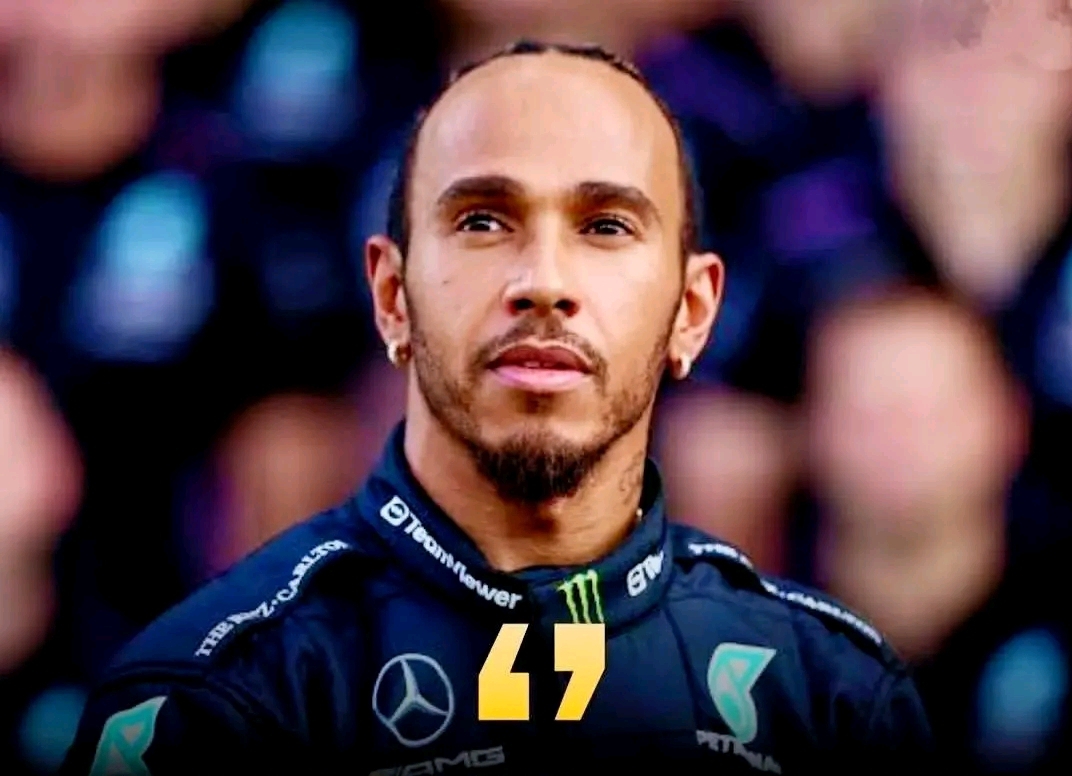
In the high-stakes world of Formula 1, the difference between a podium finish and a DNF is often measured in milliseconds. Yet, for seven-time World Champion Lewis Hamilton, the real race doesn’t happen on the track—it happens in the mind.
While the world fixates on his record-breaking tally of wins, poles, and championships, those closer to the paddock know the truth: Lewis Hamilton isn’t defined by his love of winning. He is defined by his profound, burning hatred of losing.
BEYOND TALENT: THE ARCHITECTURE OF A CHAMPION
Many athletes are gifted with natural speed, but talent alone rarely sustains a career across two decades. The “Hamilton effect” is grounded in an almost obsessive pursuit of improvement. This is a man who, even after securing a pole position, will sit with his engineers to deconstruct his telemetry, searching for a tenth of a second he might have left on the asphalt.
This mindset isn’t just about discipline; it is about reframing the narrative of failure. For a champion, a race lost is not a signal to retreat—it is a diagnostic tool. In the 2026 season, we are seeing a changing of the guard, with rising stars like Andrea Kimi Antonelli dominating the early standings. Yet, veterans like Hamilton remain relevant precisely because they refuse to become comfortable with mediocrity. They understand that when you stop learning, you stop winning.
THE PSYCHOLOGY OF RECOVERY
Why does this story matter beyond the confines of the sport? Because the psychology of an F1 champion is a blueprint for excellence in any field. Whether you are navigating a volatile stock market or pushing through a plateau in your fitness journey, the mechanics of “bouncing back” remain identical:
TRANSFORMING FRUSTRATION: When Hamilton faces a setback, the immediate emotional response is undoubtedly anger. However, the champion’s “secret sauce” is the immediate conversion of that anger into analytical determination.
THE PERSISTENCE PARADOX: Success is often framed as a destination, but in F1, it is a constant state of evolution. You are never “at” the top; you are merely defending your position against an infinite array of variables.
DEFEAT AS DATA: Every mistake on track provides data. In life, every “loss”—a failed project, a rejected idea, a stalled goal—is simply feedback telling you where your process needs optimization.
CHAMPIONS ARE BUILT IN THE DARK
It is easy to cheer for a winner under the bright lights of a Sunday Grand Prix. It is much harder to maintain the drive when you are stuck in the mid-field or when the car isn’t performing as expected.
The 2026 season has been a stark reminder of this. While younger drivers are enjoying early success, the history of the sport tells us that true greatness is reserved for those who survive the “lean years.” The drivers who stay at the top aren’t the ones who only know how to win; they are the ones who have mastered the art of staying in the fight when the momentum is against them.
Staying down is the only true failure. As long as you are still pushing for that extra tenth of a second, you are still in the race.
THE BOTTOM LINE
The lesson of the seven-time champion is simple: Don’t just chase success; fall in love with the process of improvement. If you aren’t failing occasionally, you aren’t pushing hard enough. The next time you face a significant setback, don’t ask “Why did this happen?” Ask, “What does this loss teach me about how to win the next one?”
What is the one goal you are refusing to give up on? Let that frustration be your fuel, and keep showing up.