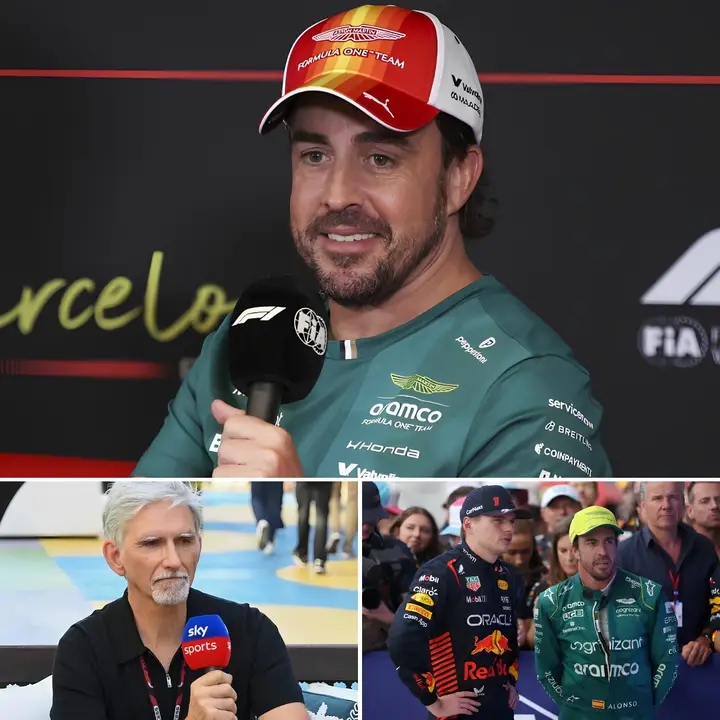
Formula 1 has never been short of strong opinions, but Fernando Alonso’s latest comments about Max Verstappen and the competitive balance of the 2026 season have ignited one of the biggest debates in the paddock. By suggesting that Formula 1 faces a “very serious problem” if even the sport’s best driver cannot fight for victories, Alonso raised questions that extend far beyond Red Bull’s current struggles.
His remarks quickly became one of the hottest talking points across the F1 community. However, the discussion intensified even further when 1996 Formula 1 World Champion Damon Hill responded with a contrasting viewpoint, challenging Alonso’s assessment and adding another layer to an already fascinating debate.
ALONSO QUESTIONS THE STATE OF FORMULA 1
Fernando Alonso has always been one of Formula 1’s most outspoken competitors. The two-time world champion rarely hesitates to express concerns about the direction of the sport, especially when competitive fairness is involved.
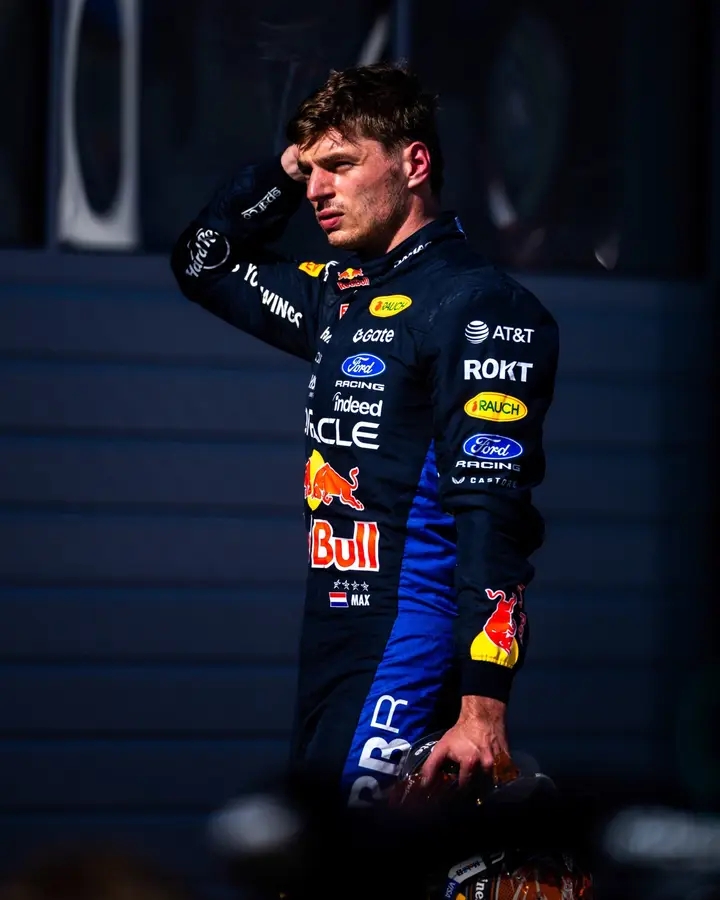
His latest comments centered on Max Verstappen’s difficult circumstances in 2026. Alonso argued that if a driver widely regarded as one of the greatest talents on the current grid is unable to consistently compete for victories because of his machinery, Formula 1 should take a hard look at whether the competitive balance is serving the championship as intended.
Rather than focusing solely on Verstappen, Alonso’s broader message highlighted the importance of ensuring that exceptional driving talent can still influence race outcomes. Formula 1 has always been a combination of driver ability, engineering excellence, and team execution, but Alonso suggested that the balance may have shifted too heavily toward the technical side.
WHY MAX VERSTAPPEN REMAINS THE CENTER OF THE CONVERSATION
Max Verstappen’s reputation has been built on extracting extraordinary performances from whatever package he is given. After dominating previous seasons, expectations remain incredibly high whenever he steps onto the grid.
However, the introduction of Formula 1’s sweeping 2026 regulations has reshaped the competitive order. Several teams have adapted more effectively than others, leaving Red Bull with a much tougher challenge than in previous years.
Even when Verstappen produces exceptional qualifying laps or aggressive race drives, outright pace deficits can be difficult to overcome in modern Formula 1. Alonso’s comments acknowledge a reality many fans have noticed: individual brilliance can only compensate for technical shortcomings up to a certain point.
DAMON HILL OFFERS A DIFFERENT PERSPECTIVE
Damon Hill was quick to respond, offering a contrasting interpretation of Alonso’s argument.
Hill’s position reflects one of Formula 1’s oldest truths: success has always depended on having both an outstanding driver and a competitive car. Throughout the sport’s history, legendary champions have experienced seasons where even their immense talent could not overcome an uncompetitive package.
From Hill’s perspective, Verstappen’s current situation does not necessarily indicate a crisis for Formula 1. Instead, it demonstrates the cyclical nature of the championship, where regulation changes inevitably produce winners and losers until the field gradually converges.
This disagreement illustrates two valid philosophies about Formula 1. One prioritizes ensuring that elite drivers remain capable of challenging for wins regardless of technical fluctuations, while the other accepts engineering competition as a defining characteristic of the sport.
THE IMPACT OF THE 2026 REGULATIONS
The 2026 season represents one of Formula 1’s most ambitious technical overhauls in recent history.
New power unit regulations, revised aerodynamic concepts, and greater emphasis on electrical performance have dramatically altered the competitive landscape. Some teams interpreted the regulations more effectively, while others have faced steep development curves.
These shifts are not unusual in Formula 1. Previous regulation resets have transformed championship battles, elevated unexpected contenders, and forced dominant teams to rebuild.
What makes 2026 particularly compelling is the uncertainty surrounding long-term development. Teams now face the challenge of deciding whether to aggressively improve their current cars or begin shifting resources toward future projects.
WHAT THIS MEANS FOR RED BULL
For Red Bull, Alonso’s comments indirectly shine a spotlight on the enormous expectations surrounding Verstappen.
The Dutch driver remains capable of delivering remarkable performances, but Formula 1 championships are rarely won through individual brilliance alone. Red Bull must continue developing its package if it hopes to return consistently to the front.
The team’s engineers now face increasing pressure to unlock performance gains while maintaining reliability and maximizing the new power unit regulations. Every upgrade introduced over the coming races could significantly influence both the Drivers’ and Constructors’ Championship battles.
WHY THIS DEBATE MATTERS FOR FORMULA 1
The Alonso-Hill exchange highlights a larger discussion about the identity of Formula 1 itself.
Fans want to see the world’s greatest drivers battling wheel-to-wheel for victories. At the same time, Formula 1 has always celebrated engineering innovation as much as driving excellence. Finding the ideal balance between those two elements remains one of the FIA’s biggest challenges.
When elite drivers become trapped in uncompetitive machinery, spectators naturally question whether the sport is showcasing its best talent. Conversely, removing too much technical variation could diminish one of Formula 1’s defining characteristics.
This ongoing debate is unlikely to disappear anytime soon.
WHAT COULD HAPPEN NEXT
If Red Bull successfully develops its 2026 car, Verstappen could quickly re-enter the championship conversation, reinforcing the belief that development remains the key to Formula 1 success.
However, if the performance gap persists, speculation surrounding Red Bull’s future direction—and Verstappen’s long-term plans—will only intensify.
Meanwhile, Alonso’s comments are likely to encourage continued discussion among drivers, team principals, and fans about whether Formula 1’s current regulations are delivering the right balance between engineering superiority and driver influence.
One thing is certain: whenever respected champions like Fernando Alonso and Damon Hill publicly disagree over the sport’s direction, the conversation extends far beyond a single driver. It becomes a debate about Formula 1’s future, the effectiveness of its regulations, and what fans expect from the pinnacle of motorsport in the years ahead.