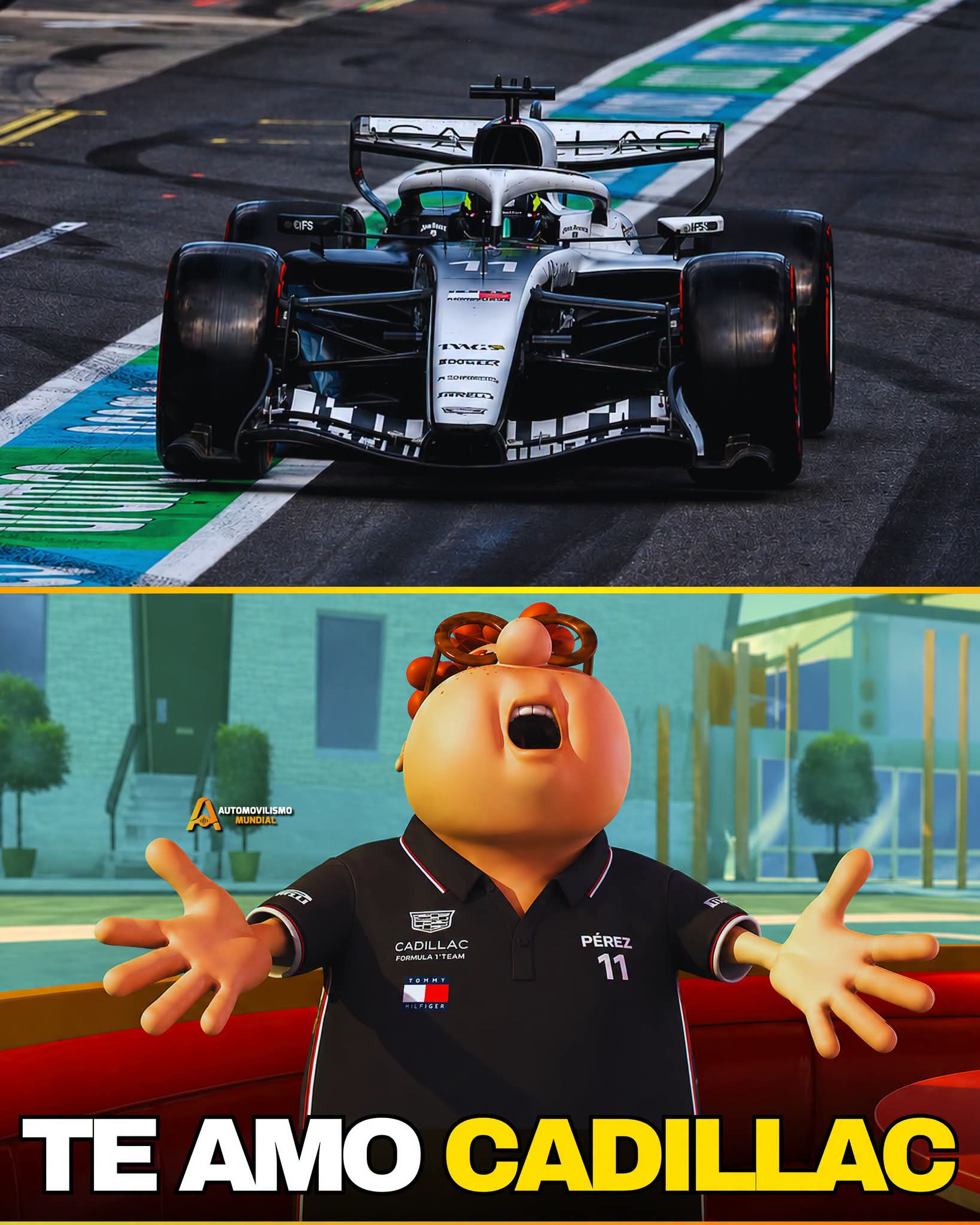
Cadillac’s Formula 1 project may be approaching its first major turning point. After months of learning, troubleshooting, and battling through the challenges of an ambitious debut campaign, the American team is preparing to introduce what insiders describe as the most significant aerodynamic upgrade package in its short F1 history.
The Austrian Grand Prix could become far more than just another race weekend for Cadillac. It may represent the moment the team begins its transformation from a newcomer fighting to survive into a genuine midfield competitor capable of challenging established rivals.
With major changes arriving to key aerodynamic areas of the car, expectations inside the team are growing that Austria could provide the clearest indication yet of Cadillac’s long-term potential.
CADILLAC’S MOST AGGRESSIVE DEVELOPMENT PUSH SO FAR
Building a Formula 1 team from scratch is one of the most difficult tasks in motorsport. Every component, every process, and every decision must be developed at an elite level while competing against organizations that have spent decades refining their operations.
Cadillac entered 2026 knowing immediate success was unrealistic. The priority was always to build a strong foundation.
Now, however, the project is entering a new phase.
The Austrian Grand Prix package reportedly includes significant revisions to the floor, sidepods, and bodywork. These are not minor tweaks designed to find a few hundredths of a second. They are substantial aerodynamic developments aimed at improving the overall behavior of the car.
In modern Formula 1, the floor remains the most important aerodynamic component. Small gains underneath the car can unlock major improvements in downforce, balance, tire management, and driver confidence.
For Cadillac, this upgrade package could be the first true test of its long-term development philosophy.
WHY THE FLOOR UPGRADE IS SO IMPORTANT
Formula 1’s current regulations place enormous emphasis on ground-effect aerodynamics.
The floor effectively generates much of the car’s performance by controlling airflow beneath the chassis. Teams that master this area gain huge advantages in cornering speed, stability, and tire preservation.
Cadillac’s struggles this season have often centered around inconsistency. The car has occasionally shown flashes of promise but has lacked the stability and predictability needed to compete consistently throughout a race weekend.
If the new floor delivers the expected gains, drivers could benefit from:
Improved rear stability
Stronger aerodynamic efficiency
Better tire management
Increased confidence during high-speed corners
More consistent performance over long race stints
These are exactly the areas Cadillac must improve if it hopes to close the gap to the midfield.
CHECO PEREZ AND VALTTERI BOTTAS OFFER VALUABLE EXPERIENCE
One of Cadillac’s greatest assets is its driver lineup.
Sergio Perez arrived at the project with years of Formula 1 experience, race victories, and a reputation as one of the strongest drivers when it comes to tire management and race pace. His feedback has been critical in helping Cadillac identify weaknesses and prioritize development targets.
Valtteri Bottas brings similar value. The Finnish veteran has extensive experience working with championship-winning teams and understands what a competitive Formula 1 package should feel like.
Austria could provide an ideal environment for both drivers to maximize the new package.
Perez has expressed confidence in the work being done at the team’s Silverstone base, while Bottas has historically performed well at the Red Bull Ring throughout his Formula 1 career.
If the upgrades work as intended, Cadillac could finally have the tools necessary to translate experience into meaningful results.
AUSTRIA PROVIDES THE PERFECT TEST
The Red Bull Ring is one of the most revealing circuits on the calendar.
Its combination of long straights, heavy braking zones, and fast directional changes exposes weaknesses in both aerodynamic efficiency and mechanical performance. Teams that bring successful upgrades often see immediate gains because the track quickly highlights improvements.
For Cadillac, this creates both opportunity and pressure.
A strong performance would validate months of development work and boost confidence throughout the organization. A disappointing result, meanwhile, would raise questions about whether the team still needs more time before becoming a serious midfield contender.
Either way, Austria will provide some of the clearest answers yet regarding where Cadillac truly stands.
THE FERRARI POWER UNIT COULD MAKE THE FUTURE EVEN BRIGHTER
The timing of Cadillac’s aerodynamic push is particularly interesting because Ferrari’s power unit development may also play a role in the team’s future progress.
With Ferrari benefiting from the ADUO catch-up system and introducing performance upgrades throughout the season, customer teams could eventually benefit as the power unit package improves.
Should Ferrari continue closing the gap to Mercedes, Cadillac would stand to gain from having a more competitive engine platform alongside its own aerodynamic progress.
The combination of a stronger chassis and an increasingly powerful power unit could accelerate Cadillac’s climb through the competitive order.
WHY THIS MATTERS FOR THE MIDFIELD BATTLE
Formula 1’s midfield remains one of the most fiercely contested areas of the grid.
Small improvements often translate into significant gains because performance margins are incredibly tight. A few tenths of a second can mean the difference between fighting for points and being eliminated in the first phase of qualifying.
Cadillac understands that breaking into this battle is the first major milestone.
Consistent points finishes would provide not only valuable championship points but also crucial evidence that the project is progressing according to plan. Success would strengthen confidence among sponsors, investors, engineers, and future recruits.
Momentum is critical for any new Formula 1 organization.
CAN CADILLAC BECOME THE SPORT’S NEXT SUCCESS STORY?
The long-term ambition has never been hidden.
Cadillac did not enter Formula 1 simply to make up the numbers. The objective is to become a genuine competitive force capable of challenging established teams.
That goal will not be achieved overnight. However, every successful Formula 1 project eventually experiences a breakthrough moment where development begins translating into performance.
Austria could become that moment.
If the new package delivers the expected improvements, Cadillac may finally start showing the competitive potential that many inside the paddock have been waiting to see.
A DEFINING WEEKEND AWAITS
The Austrian Grand Prix may not decide championships, but it could define the trajectory of Cadillac’s season.
For the first time since entering Formula 1, the American team arrives with a comprehensive aerodynamic package designed to fundamentally improve performance rather than simply solve isolated weaknesses.
The pressure is high, but so is the opportunity.
Should the upgrades work, Cadillac could emerge from Austria as one of the most exciting stories in Formula 1’s midfield battle. And if that happens, the rest of the grid may need to start taking the sport’s newest team far more seriously.