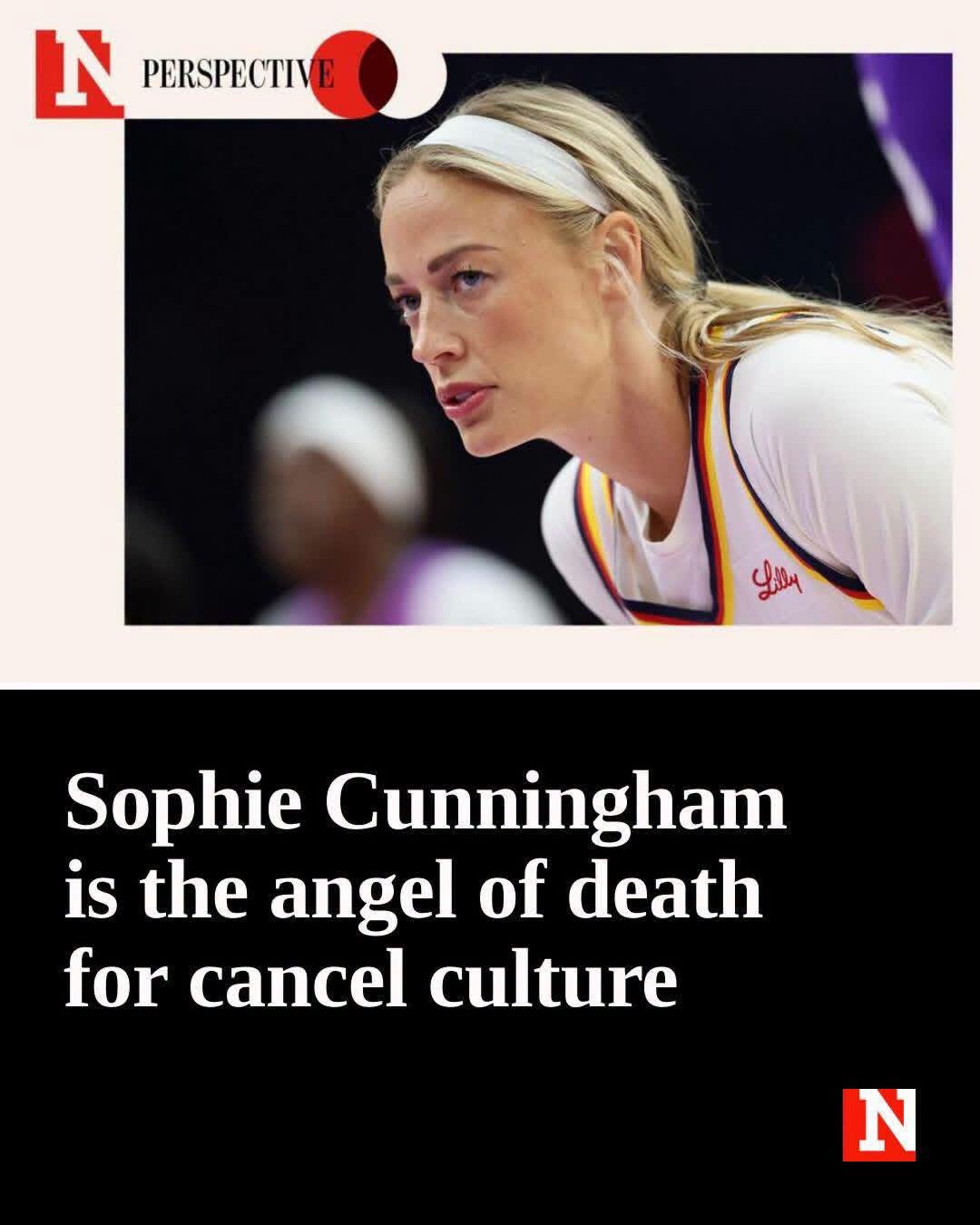
The conversation surrounding Indiana Fever guard Sophie Cunningham has extended far beyond basketball after her recent comments on transgender participation in women’s sports sparked widespread debate. While her remarks drew criticism from some journalists, commentators, and social media users, the anticipated wave of professional consequences never materialized. Instead, Cunningham continued to suit up for the Fever, remained active with sponsors, and reaffirmed her position publicly.
The episode has become one of the most discussed off-court stories in the WNBA this season—not only because of what Cunningham said, but because of how the reaction unfolded. It has also reignited broader conversations about athlete activism, freedom of expression, and the increasingly complex relationship between sports, politics, and public opinion.
WHAT CUNNINGHAM SAID
Cunningham recently addressed criticism she has received over her views regarding transgender athletes competing in women’s sports.
She stated that she does not hate transgender people and emphasized that her concern centers on protecting women’s sports and opportunities for female athletes. She also referenced Title IX, arguing that women’s athletics deserve safeguards designed to preserve competitive fairness.
After facing criticism online, Cunningham declined to walk back her position, telling reporters that she stood by her comments before later reinforcing the message on social media.
Her statements immediately became one of the week’s most heavily debated topics across sports media.
THE BACKLASH ARRIVED—BUT THE EXPECTED CONSEQUENCES DID NOT
As with many culturally sensitive issues, Cunningham’s remarks generated strong reactions.
Critics accused the Fever guard of promoting harmful narratives, while some called for league discipline or invoked the WNBA’s “No Space for Hate” initiative. Others questioned whether sponsors should distance themselves from the player.
Yet unlike several high-profile controversies involving public figures over the past decade, no immediate suspension followed, no sponsorship announcements were withdrawn publicly, and Cunningham continued playing without interruption.
That contrast has become a story in itself.
Rather than disappearing from public view, Cunningham continued competing for Indiana and contributing to the Fever’s playoff ambitions while maintaining her stance.
THE DEBATE EXTENDS FAR BEYOND THE WNBA
The discussion surrounding Cunningham reflects a larger national conversation rather than a basketball-specific issue.
Across sports, governing bodies continue wrestling with questions involving competitive fairness, inclusion, athlete rights, and participation policies. Different organizations have adopted different standards, while governments and courts in several countries continue examining related legislation.
Because no universal framework exists, athletes speaking publicly on the issue often become part of a much broader cultural debate that extends beyond their sport.
For the WNBA, this presents a difficult balancing act. The league has consistently promoted diversity and inclusion while also operating within a society where opinions on these issues remain sharply divided.
PUBLIC OPINION REMAINS COMPLEX
One reason the controversy has attracted so much attention is that public opinion does not always fit neatly into political categories.
Polling conducted by several organizations in recent years has suggested many people simultaneously support legal protections and equal treatment for transgender individuals while also expressing concerns about competitive fairness in women’s sports.
That complexity makes the conversation more nuanced than the polarized exchanges often seen on social media.
Cunningham herself has described her political views as moderate, saying she agrees and disagrees with positions across the political spectrum rather than identifying completely with one side.
Whether people agree with her conclusions or not, her comments have highlighted how athletes increasingly find themselves discussing issues that extend well beyond the court.
WHAT THIS MEANS FOR THE INDIANA FEVER
From a basketball perspective, Indiana’s primary concern remains winning games.
The Fever are firmly focused on postseason success, and Cunningham has established herself as one of the team’s most energetic contributors through her defensive intensity, perimeter shooting, and veteran leadership.
Unless league policies determine otherwise, the organization appears intent on separating basketball performance from broader public debates.
That stability allows Indiana to avoid unnecessary distractions during one of its most important stretches of the season.
ATHLETES ARE BECOMING MORE WILLING TO SPEAK OPENLY
Professional athletes have long used their platforms to discuss issues they consider important, whether related to social justice, equality, politics, education, or public policy.
Cunningham’s situation illustrates that these conversations now unfold in an environment where criticism arrives instantly—but where professional outcomes may no longer be as predictable as they once seemed.
Some observers view that as evidence that organizations are becoming more cautious about responding to public pressure. Others argue it reflects a broader shift toward allowing athletes greater freedom to express personal opinions, provided they do not violate league rules.
Regardless of perspective, one thing is clear: Cunningham’s comments have sparked one of the WNBA’s most significant off-court discussions of the season.
As the Fever continue pursuing playoff success, the basketball headlines will eventually return to points, assists, and victories. But this episode demonstrates that today’s athletes influence conversations far beyond the games they play—and that those conversations are likely to remain part of modern professional sports for years to come.