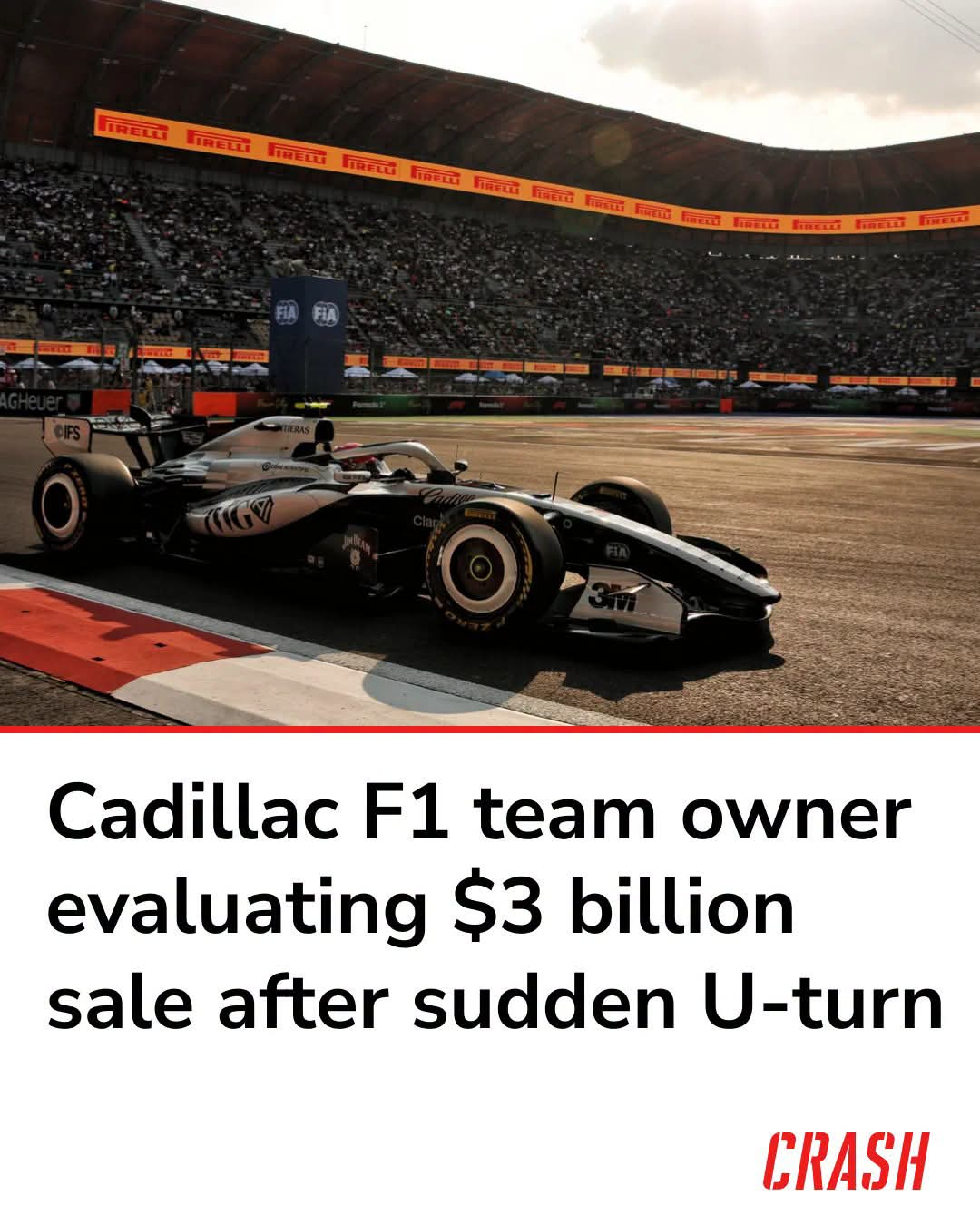
Formula 1’s newest team has barely finished its first season and already finds itself at the center of a high-stakes ownership drama. Reports indicate that at least seven potential buyers are actively circling the Cadillac Formula 1 operation, with controlling owner Mark Walter reportedly testing the market at a valuation of around $3 billion. The development marks a sharp reversal from firm public denials issued only months earlier and underscores both the soaring commercial value of F1 franchises and the complex pressures facing one of the sport’s most ambitious new entrants.
A DRAMATIC SHIFT AFTER FIRM DENIALS
In August, TWG Global—the investment vehicle through which Walter controls the team—issued clear statements insisting it had no plans to sell its stake in Cadillac F1 or any other part of its motorsport portfolio. Those denials came amid broader speculation as Walter began reshaping his sports holdings, including the high-profile sale of his interest in the Los Angeles Lakers and a stake in Chelsea FC. Federal scrutiny of certain insurance-related entities linked to his wider business interests added another layer of attention.
Yet according to multiple reports citing people familiar with the process, Walter is now exploring a sale. TWG has not publicly confirmed any formal process or agreed deal, and General Motors, Cadillac’s partner in the project, has declined to comment. The speed of the apparent pivot has surprised many in the paddock. What looked like a long-term commitment to building an American works-style team now appears open to significant change.
WHY A ZERO-POINT TEAM COMMANDS A MULTI-BILLION-DOLLAR PRICE TAG
On paper, Cadillac’s debut season has been difficult. With four races remaining, the team has yet to score a world championship point. Drivers Valtteri Bottas and Sergio Pérez have spent most weekends fighting at the back of the midfield or lower. The car has shown flashes of potential, particularly after mid-season upgrades, but consistency and outright pace have lagged. Leadership changes, including a switch in team principal, further highlighted the growing pains of a brand-new organization.
Despite the on-track results, the $3 billion asking price reflects Formula 1’s transformed economics more than current performance. Franchise values across the grid have climbed sharply in recent years. The average valuation of the other ten teams reportedly sat near $3.42 billion in the previous year, a substantial increase driven by expanding global audiences, new media deals, and sustained commercial growth under the current Concorde Agreement framework. Entry into the championship required a substantial dilution fee—reported at $450 million—plus more than $1 billion in further investment to build facilities, recruit staff, and develop the operation. Expected first-year losses near $400 million are largely attributed to those startup costs rather than ongoing operational failure.
In this environment, even a struggling new team carries significant strategic and financial weight. An 11-team grid remains relatively rare in modern F1 history, and Cadillac represents the long-sought American manufacturer presence that many commercial stakeholders have wanted for years.
IMPACT ON DRIVERS, STAFF, AND THE WIDER GRID
For the people inside the team the uncertainty is real. Pérez recently signed a multi-year extension through at least 2029, signaling confidence in the project’s future under the current structure. Bottas’s situation has looked less secure, with speculation already linking IndyCar talent Colton Herta and other experienced names to a possible 2027 seat. A change in ownership could accelerate or reshape those decisions. New owners often bring fresh capital, different technical priorities, or altered commercial strategies that ripple through driver line-ups, engineering staff, and sponsorship portfolios.
Existing teams will watch closely. A sale that injects new money or a high-profile investor into Cadillac could intensify competition for talent and resources. Conversely, prolonged uncertainty might slow the team’s development and ease pressure on rivals fighting for the final points-paying positions. The broader industry also has skin in the game. Liberty Media and the FIA have worked hard to stabilize the commercial model and encourage manufacturer involvement. A successful, well-funded Cadillac strengthens the American market and the sport’s global appeal. A messy ownership transition risks distracting from that narrative.
WHAT THIS SAYS ABOUT FORMULA 1’S CURRENT BOOM
The interest from seven parties—whatever their identities—illustrates how desirable an F1 franchise has become. Private equity groups, existing motorsport organizations, technology companies, and high-net-worth individuals have all shown appetite for the category in recent years. Cadillac’s combination of manufacturer backing through General Motors, an established American identity, and a clean-sheet operation built for the current regulations makes it an attractive, if expensive, target.
Walter’s broader portfolio moves provide important context. After selling major stakes in other sports properties, he appears focused on simplifying holdings while retaining control of the Los Angeles Dodgers. Whether the Cadillac process results in a full exit, a minority stake sale, or ultimately no transaction remains unclear. What is clear is that the market is testing the value of F1’s newest asset at a level that would have seemed extraordinary a decade ago.
LOOKING AHEAD: STABILITY OR A NEW CHAPTER
Cadillac still has races left in 2026 to chase that elusive first point and build momentum into the winter. Off the track, the ownership situation will likely dominate headlines. A clean transaction that brings committed new investment could accelerate the team’s climb. Prolonged talks or a failed process might create distraction at a critical stage of development.
For Formula 1 as a whole, the episode reinforces two truths. First, the commercial health of the championship continues to drive valuations far beyond traditional sporting metrics. Second, even the newest and most ambitious projects operate under the same financial and strategic pressures that affect every other franchise on the grid. Whether Cadillac remains under TWG control or changes hands in the coming months, the story already highlights how dramatically the economics of Formula 1 have shifted—and how quickly those shifts can rewrite the plans of even the most determined owners.