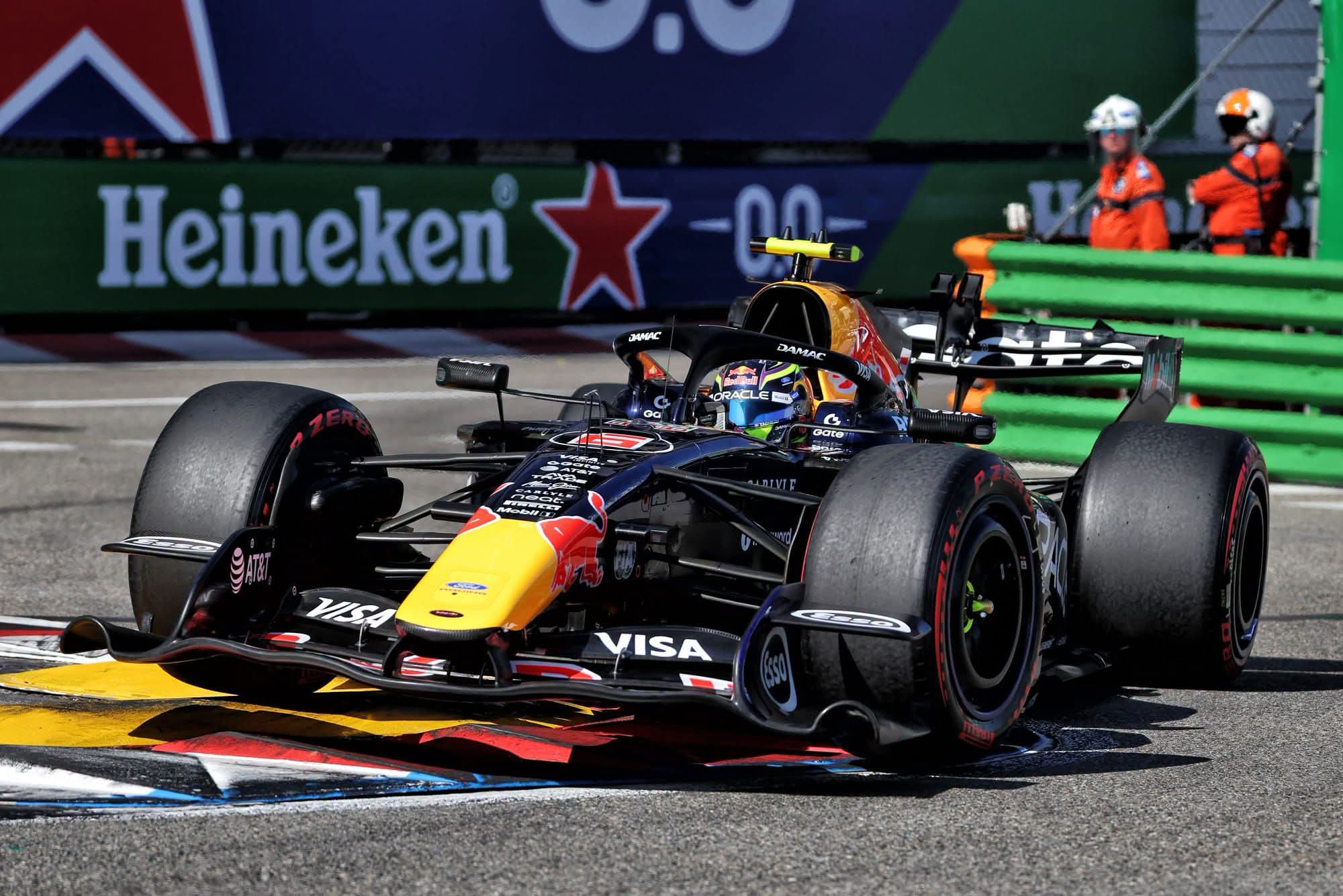
Formula 1’s newest technical controversy has erupted after Red Bull questioned the FIA’s engine performance rankings, prompting the governing body to launch a review of its findings. In a surprising development, the team widely believed to be chasing Mercedes in the power-unit battle has instead been classified as the benchmark manufacturer, leaving Red Bull frustrated and potentially disadvantaged under Formula 1’s catch-up regulations.
The dispute centers around the FIA’s Additional Development and Upgrade Opportunities (ADUO) system, a mechanism designed to help manufacturers close performance gaps in the sport’s new engine era. However, the latest rankings have raised serious questions about how power-unit performance is being measured and whether the current methodology accurately reflects the competitive reality on track.
WHY THE FIA’S RANKING HAS CAUSED SUCH A STIR
The FIA’s analysis of the opening phase of the 2026 season concluded that Red Bull possesses the strongest internal combustion engine on the grid. As a result, the Milton Keynes-based operation has been excluded from receiving additional development opportunities that are available to rival manufacturers.
On paper, being recognized as the benchmark sounds like a major achievement. In practice, it may prove costly.
Under the ADUO system, manufacturers deemed to be trailing the leader are granted extra upgrade allowances, additional testing opportunities, and greater flexibility under the engine development framework. Mercedes, despite winning every race so far this season, reportedly qualified for development assistance because its combustion engine was measured as being more than two percent behind Red Bull’s.
Ferrari, Audi, Honda, and other manufacturers were reportedly classified even further behind, unlocking even greater upgrade opportunities.
That outcome has left many inside the paddock scratching their heads.
RED BULL’S DATA TELLS A DIFFERENT STORY
What makes the situation particularly intriguing is that Red Bull itself reportedly did not expect to be ranked first.
Throughout the season, team figures have openly acknowledged Mercedes’ apparent advantage in power-unit performance. Earlier this year, senior Red Bull personnel suggested that Mercedes held a noticeable edge in straight-line performance and overall engine output.
Those assessments appear to conflict directly with the FIA’s conclusions.
From Red Bull’s perspective, the governing body’s findings do not align with either its own internal data or what has been observed during race weekends. That discrepancy is precisely why the team has sought clarification regarding how the rankings were calculated.
The FIA’s willingness to review the data suggests it recognizes the importance of ensuring complete confidence in a system that could influence competitive balance for years to come.
THE ADUO SYSTEM COULD CHANGE THE CHAMPIONSHIP LANDSCAPE
The controversy extends far beyond technical pride.
Formula 1 introduced the ADUO mechanism to prevent manufacturers from becoming permanently trapped behind dominant rivals. By allowing underperforming engine suppliers access to additional development resources, the FIA hopes to maintain a closer and more competitive field.
However, if the benchmark designation is inaccurate, the consequences could be significant.
A manufacturer incorrectly classified as the leader could lose valuable opportunities to improve, while competitors gain additional resources that help them close the gap. Over multiple seasons, that advantage can dramatically alter the competitive order.
For Red Bull, the concern is obvious. If rivals continue receiving upgrades while it remains restricted, the team could gradually lose ground despite believing it is not actually the strongest power-unit supplier.
WHY THE HYBRID QUESTION REMAINS IMPORTANT
One of the biggest talking points surrounding the ranking system is its focus on internal combustion engine performance rather than overall power-unit effectiveness.
Modern Formula 1 engines are highly complex hybrid systems. While combustion power remains critical, energy recovery, battery efficiency, deployment strategies, and electrical performance often play an equally important role.
Mercedes has historically excelled in hybrid technology, which raises questions about whether combustion-engine measurements alone provide a complete picture of competitive performance.
If one manufacturer possesses a superior hybrid system while another leads only in combustion output, determining the true benchmark becomes far more complicated.
That debate is likely to continue regardless of the FIA’s final review outcome.
THE FIA NOW FACES A CRUCIAL DECISION
The governing body has agreed to re-examine data collected during the opening five races of the season, including information gathered through power sensors fitted to every car.
This does not automatically mean the FIA will alter its conclusions. Instead, it demonstrates a willingness to verify that its original findings are accurate before moving forward.
The review is particularly important because future ADUO assessments will continue throughout the season. Additional evaluations are scheduled later in the year, meaning the current ruling could influence development strategies across the entire paddock.
Manufacturers are already planning upgrades, budget allocations, and long-term engine programs based on these rankings.
Getting the numbers right has never been more important.
WHAT THIS MEANS FOR RED BULL, MERCEDES, AND THE FUTURE OF F1
The timing of this controversy could hardly be more significant.
Formula 1 is already adjusting its new engine regulations after widespread criticism from drivers, teams, and fans regarding excessive energy management and battery limitations. Now, questions surrounding the fairness of the catch-up mechanism have added another layer of complexity.
For Red Bull, the review represents an opportunity to challenge a designation that may ultimately restrict its future development.
For Mercedes, Ferrari, Audi, Honda, and other manufacturers, the outcome could determine how aggressively they pursue upgrades over the next two seasons.
And for Formula 1 itself, the dispute highlights just how difficult it is to create regulations that balance innovation, competition, and fairness in an era of increasingly sophisticated technology.
PREDICTION: THIS DEBATE IS FAR FROM OVER
Even if the FIA confirms its original findings, the discussion surrounding engine measurement methods is unlikely to disappear.
As manufacturers continue developing their power units and the sport prepares for further engine regulation adjustments in 2027 and 2028, pressure will grow for performance assessments to reflect the complete power-unit package rather than isolated components.
The review may settle the immediate dispute, but it could also trigger broader conversations about how Formula 1 measures competitive performance in the hybrid era.
For now, Red Bull finds itself in an unusual position: officially recognized as the best, yet fighting hard to prove it isn’t. That paradox may become one of the defining technical stories of the 2026 Formula 1 season.