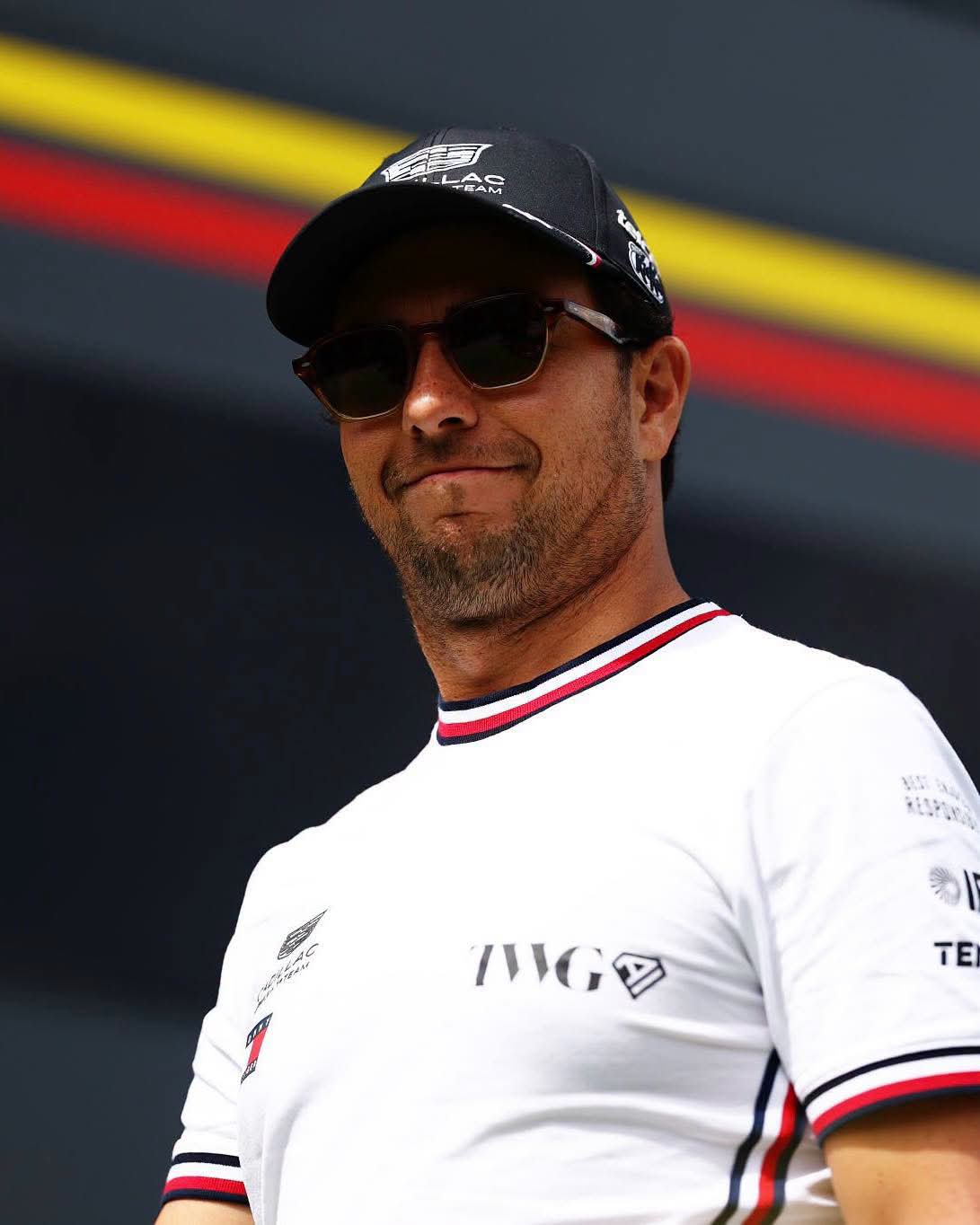
Sergio Perez has responded to criticism surrounding his Monaco Grand Prix penalty, insisting that his mistake came from pushing every possible detail to the limit rather than carelessness.
The Mexican driver, now racing for Cadillac in Formula 1’s new era, has defended his approach by arguing that maximizing every small performance advantage is precisely what allows drivers to outperform the machinery beneath them. While the penalty generated debate among fans and analysts, Perez believes there is a bigger story behind the incident—one that highlights both his racing mentality and Cadillac’s ongoing challenges in 2026.
PEREZ EXPLAINS WHAT WENT WRONG IN MONACO
Monaco is often described as the most unforgiving circuit in Formula 1, where even the smallest misjudgment can have significant consequences.
According to Perez, the penalty stemmed from his habit of pushing operational details to the absolute limit. The veteran driver explained that he typically positions the car as aggressively as possible and works relentlessly to keep tire temperatures in the optimal operating window before the start.
In Monaco, however, that fine balancing act crossed the line.
Perez admitted that he pushed slightly beyond the acceptable limit, resulting in the penalty that attracted criticism after the race. Rather than denying responsibility, he openly acknowledged the mistake while emphasizing that it was a consequence of trying to extract every available fraction of performance.
THE MENTALITY THAT MADE PEREZ A FORMULA 1 WINNER
Perez’s comments offer an interesting insight into the mindset required to compete at Formula 1’s highest level.
The difference between success and failure is often measured in hundredths of a second. Drivers constantly search for marginal gains, whether through tire preparation, race starts, braking techniques, or positioning on the grid.
Many of Perez’s greatest Formula 1 performances throughout his career have come from his ability to maximize opportunities that others might overlook. His reputation as one of the sport’s smartest race managers was built on finding performance in situations where the car itself wasn’t necessarily the fastest.
That same philosophy appears to remain intact at Cadillac.
While critics may focus on the penalty itself, Perez is clearly focused on the bigger picture: extracting results that the car’s raw pace may not naturally deliver.
CADILLAC’S 2026 REALITY REMAINS A CHALLENGE
Perhaps the most revealing part of Perez’s explanation was his assessment of Cadillac’s competitiveness.
The Mexican suggested that the final position he achieved in Monaco was actually better than what the car’s true pace deserved. That statement highlights the reality facing Cadillac during its debut Formula 1 campaign.
Although the American team has shown flashes of promise, it remains a developing operation competing against manufacturers and teams with decades of Formula 1 experience. Every point, every strong qualifying session, and every strategic success carries added significance.
Perez’s ability to place the car higher than expected demonstrates why Cadillac invested heavily in securing an experienced driver capable of accelerating the team’s growth.
WHY MONACO WAS STILL A POSITIVE WEEKEND
Despite the disappointment of receiving a penalty, Perez believes there were important positives to take away from Monaco.
Street circuits often expose weaknesses in cars more aggressively than traditional race tracks. Monaco demands precision, confidence, and mechanical grip, making it one of the most difficult venues for newer teams to master.
The fact that Cadillac was able to compete higher up the order than anticipated suggests progress is being made behind the scenes. While the final result may not fully reflect that progress, the performance itself offers encouragement heading into future races.
For a team still learning the complexities of Formula 1 competition, strong weekends are measured not only by points but also by evidence that development is moving in the right direction.
WHAT THIS MEANS FOR CADILLAC’S FUTURE
Perez’s comments reinforce an important theme surrounding Cadillac’s first Formula 1 season.
The team is unlikely to challenge the likes of Mercedes, Ferrari, or Red Bull consistently in the immediate future. However, success in Formula 1 is often built through incremental gains, and experienced drivers play a crucial role in that process.
Perez continues to provide exactly what Cadillac needs: technical feedback, racecraft, and the ability to capitalize when opportunities arise.
As the season progresses, Cadillac’s objective will be to close the gap to the midfield while building the foundations for future competitiveness. Every strong performance from Perez helps accelerate that journey.
CAN PEREZ TURN THESE SIGNS OF PROGRESS INTO POINTS?
Looking ahead, the key question is whether Cadillac can transform encouraging performances into consistent results.
The Spanish Grand Prix and upcoming races will provide a clearer picture of where the team stands relative to its rivals. Monaco’s unique characteristics make it difficult to use as a direct benchmark, but Perez’s confidence suggests the team believes progress is being made.
If Cadillac can improve reliability, optimize race execution, and continue developing the car, Perez may find himself fighting for points more regularly during the second half of the season.
THE BIGGER PICTURE
Perez’s response to the Monaco controversy reveals a driver who remains as competitive as ever.
Rather than dwelling on the penalty, he has chosen to focus on the fact that he extracted more from the car than many expected. That attitude could prove vital for Cadillac as it navigates the challenges of its debut Formula 1 campaign.
In a sport where every detail matters, Perez’s Monaco mistake may have cost him in the short term. But his willingness to push the limits also explains why he continues to be one of Formula 1’s most respected and resilient competitors.
For Cadillac, that mentality may ultimately be worth far more than the penalty that sparked the debate.