Red Bull believes it has finally solved one of the biggest technical headaches of its 2026 Formula 1 campaign after confirming a fix for the controversial rear wing that Max Verstappen previously described as “super dangerous.” The update is expected to make its competitive debut at this weekend’s Hungarian Grand Prix, marking a potentially decisive moment in Red Bull’s fight to close the gap to championship rivals Mercedes.
The issue has become one of the defining technical stories of the 2026 season, not only because it affected Verstappen’s confidence behind the wheel but also because it highlighted the increasingly complex engineering challenges created by Formula 1’s latest regulations. With every point becoming critical in both championship battles, Red Bull cannot afford another mechanical setback.
RED BULL IDENTIFIES THE ROOT OF THE PROBLEM
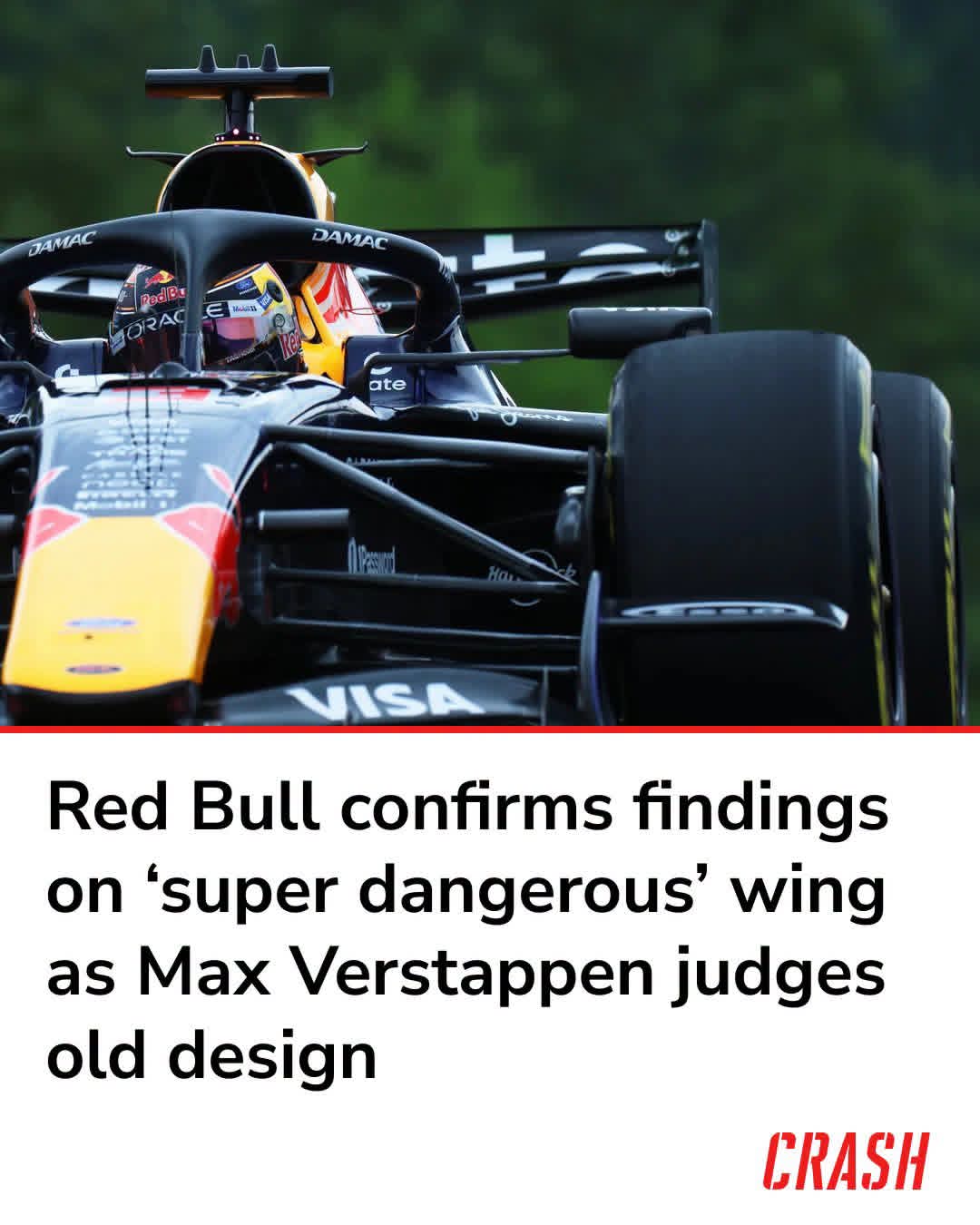
Following alarming rear wing failures that contributed to Verstappen’s heavy crashes during the Austrian and British Grands Prix, Red Bull abandoned its innovative rotating “Macarena” rear wing for the Belgian Grand Prix at Spa-Francorchamps.
Team principal Laurent Mekies has now confirmed that engineers have identified the mechanical fault responsible for both failures and developed a permanent solution ahead of the Hungarian race.
According to Mekies, the two incidents stemmed from separate mechanical failures rather than an aerodynamic design flaw. Technical director Pierre Wache also explained that Red Bull deliberately delayed the wing’s return until the team could be completely certain the issue had been eliminated.
Rather than rushing the upgrade back onto the car, Red Bull spent additional time validating the component through extensive testing, prioritizing driver safety over short-term performance gains.
VERSTAPPEN’S CONFIDENCE RETURNS AFTER USING THE OLD WING
Instead of risking another failure in Belgium, Red Bull returned to an older, more conventional rear wing specification.
The change immediately delivered a more predictable handling package for Verstappen, who finished third and returned to the podium after two difficult weekends.
The Dutchman admitted the older specification improved the car’s balance while joking that its biggest advantage was simply allowing him to “keep it on the road.”
That light-hearted remark carried a serious message. Driver confidence is often overlooked when discussing Formula 1 performance, but even the fastest car becomes difficult to maximize if a driver questions its stability in high-speed corners.
While Red Bull sacrificed some potential aerodynamic gains by reverting to the older design, it provided the consistency needed to rebuild confidence heading into one of the most technical circuits on the calendar.
WHY THE HUNGARIAN GRAND PRIX WILL REVEAL THE TRUTH
The Hungaroring presents a completely different challenge compared to Spa.
Unlike Belgium’s long straights and high-speed sectors, Hungary rewards strong cornering performance, mechanical grip, and aerodynamic stability through a series of slow and medium-speed corners.
That makes the race the perfect testing ground for Red Bull’s redesigned rear wing.
If the revised component performs as intended, it could restore the performance advantage Red Bull originally expected from its rotating wing concept. If problems persist, however, the team may be forced to abandon months of aerodynamic development and rethink its approach for the remainder of the season.
Verstappen himself remains cautious, acknowledging that the characteristics of the Hungaroring make predictions extremely difficult despite improvements seen in Belgium.
THE FIA’S SCRUTINY ADDS EXTRA PRESSURE
The failures naturally attracted attention from Formula 1’s governing body.
However, Red Bull insists the FIA has reviewed the updated design and expressed no concerns regarding its legality or structural integrity.
According to Wache, the team’s current caution is entirely self-imposed.
That distinction matters because Formula 1 teams operate under intense scrutiny whenever new aerodynamic concepts emerge. A component that raises safety concerns can quickly become both a competitive and political issue within the paddock.
By choosing to validate the redesign thoroughly before racing it again, Red Bull is attempting to avoid further controversy while protecting its championship ambitions.
WHAT THIS MEANS FOR THE 2026 TITLE FIGHT
Mercedes has established itself as the benchmark team throughout much of the 2026 season, with Kimi Antonelli leading the Drivers’ Championship after an impressive run of victories.
For Red Bull, every remaining race is becoming increasingly important.
If the upgraded rear wing delivers the intended performance boost without compromising reliability, Verstappen could regain the consistency needed to challenge Mercedes during the second half of the season.
The Hungarian Grand Prix may therefore represent more than just another race weekend. It could determine whether Red Bull’s innovative engineering philosophy remains a genuine weapon or becomes one of the most expensive development setbacks of the year.
As Formula 1 heads toward its summer break, all eyes will be on Verstappen’s RB22—not just to see how fast it is, but whether Red Bull has finally solved the problem that briefly threatened both its driver and its championship hopes.