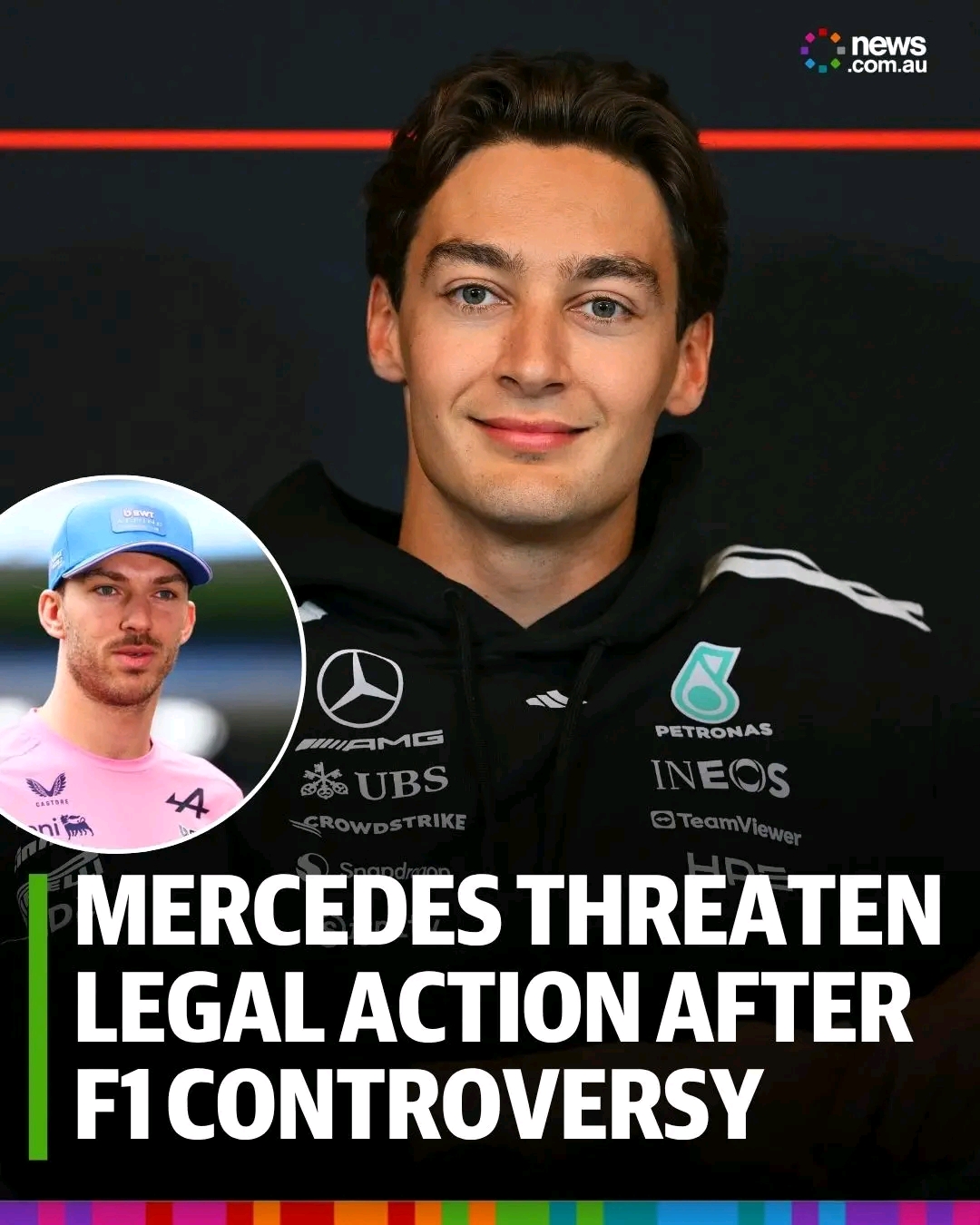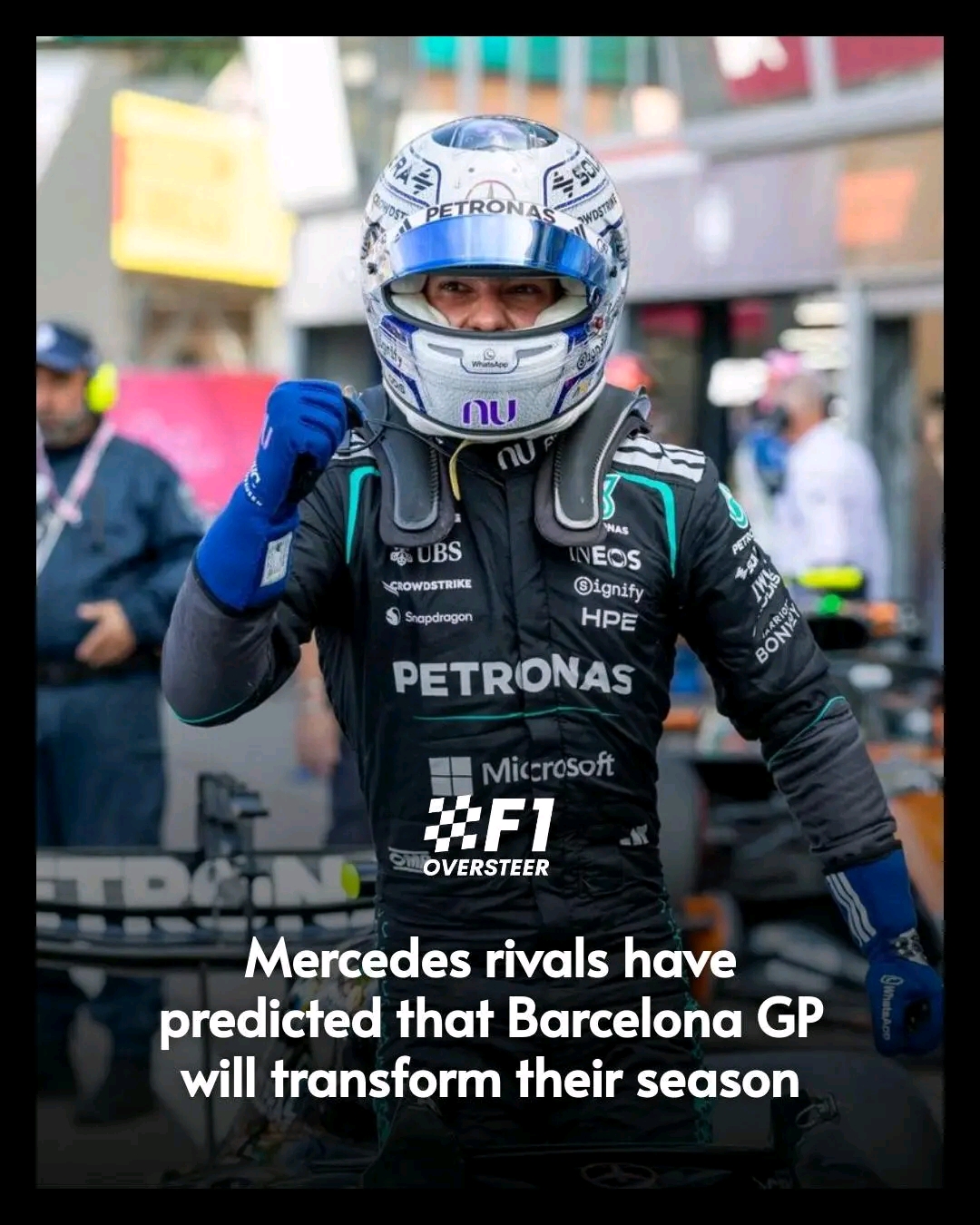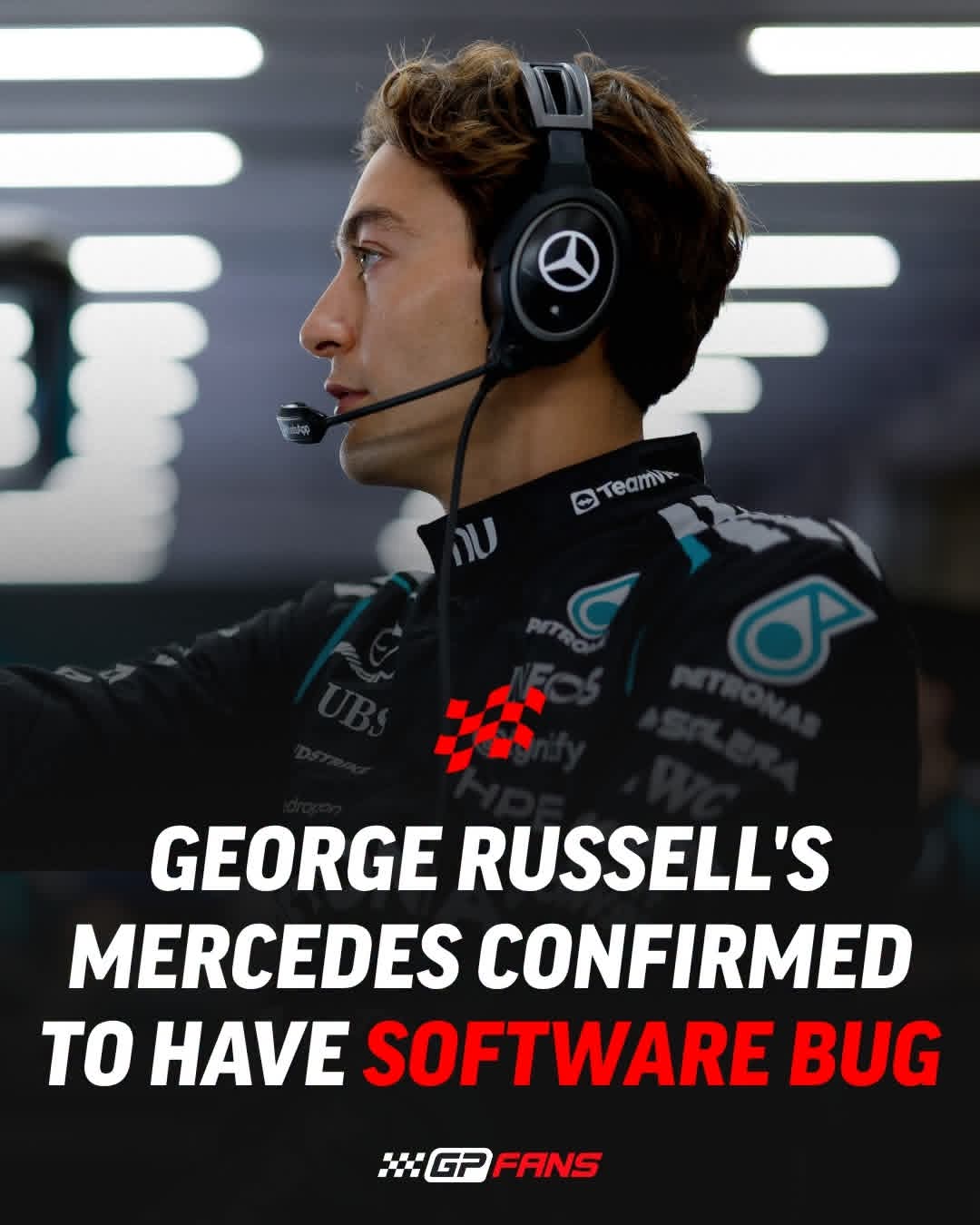
George Russell’s frustrating Belgian Grand Prix retirement has taken another dramatic twist after Mercedes officially confirmed that a software malfunction—not driver error—was responsible for the performance problems that left the British driver vulnerable before his race-ending collision with Lewis Hamilton. The revelation comes at a crucial stage of the 2026 Formula 1 season, as Russell’s championship hopes continue to fade while teammate Andrea Kimi Antonelli extends his grip on the title fight.
The confirmation not only vindicates Russell’s post-race complaints but also raises fresh questions about Mercedes’ reliability under Formula 1’s complex 2026 regulations. More importantly, it highlights how software, energy deployment, and power management have become just as decisive as driver skill in determining race outcomes.
MERCEDES IDENTIFIES THE ROOT OF RUSSELL’S PROBLEM
Following extensive analysis after the Belgian Grand Prix, Mercedes deputy technical director Simone Resta confirmed that both Mercedes cars suffered from a software-related issue affecting their energy deployment.
According to Resta, the problem caused both George Russell and Andrea Kimi Antonelli to reach the harvesting limit at Turn 1, resulting in a significant loss of electrical boost between Turn 1 and Turn 5.
That explains why Russell appeared unusually slow on the Kemmel Straight despite making a strong launch off the grid. Instead of challenging the cars ahead, he was quickly swallowed by the field before attempting an ambitious move around the outside of Lewis Hamilton at Les Combes.
The attempted overtake ended in disaster when Hamilton’s Ferrari made contact with Russell’s Mercedes, sending the Briton into the gravel and ending his race on the opening lap.
RUSSELL’S COMPLAINTS HAVE NOW BEEN BACKED BY HIS TEAM
Immediately after retiring from the race, Russell insisted something was fundamentally wrong with his car.
He argued that without the sudden loss of straight-line performance, he would never have been forced into such a risky battle with Hamilton in the first place.
At the time, some observers questioned whether Russell was simply looking for excuses after another disappointing weekend.
Mercedes’ latest findings tell a different story.
Resta explained that the software malfunction affected both Mercedes cars equally, causing an unexpected reduction in electrical deployment at one of Spa-Francorchamps’ most critical sections.
The confirmation also supports earlier comments from team principal Toto Wolff, who admitted after the race that all Mercedes-powered cars experienced similar issues.
ANTONELLI OVERCAME THE SAME ISSUE TO WIN
Perhaps the most remarkable aspect of Mercedes’ explanation is that championship leader Andrea Kimi Antonelli experienced the very same software problem.
Despite suffering identical deployment limitations, the 19-year-old managed to recover, control the race brilliantly, and secure another victory.
Antonelli’s ability to adapt despite the technical setback further illustrates why he currently leads the Drivers’ Championship.
While Russell’s afternoon ended after a single lap, Antonelli demonstrated exceptional race management, maximizing what remained available from the car and avoiding costly mistakes.
That difference has now widened the gap between the Mercedes teammates to 50 championship points.
THE 2026 REGULATIONS CONTINUE TO CREATE NEW CHALLENGES
Mercedes’ software issue also reinforces growing criticism surrounding Formula 1’s 2026 regulations.
The current power units rely on an intricate balance between internal combustion performance, battery deployment, harvesting systems, and sophisticated software management.
Even tiny programming errors can dramatically alter a driver’s competitiveness within seconds.
Instead of simply pushing flat out, drivers and engineers must constantly monitor energy recovery, deployment windows, battery limits, and system behavior.
As several leading drivers have already argued this season, software is increasingly influencing race outcomes as much as raw driving talent.
Mercedes remains one of the fastest teams on the grid, but reliability and electronic consistency have prevented the Silver Arrows from fully capitalizing on their pace.
THE CHAMPIONSHIP LANDSCAPE IS CHANGING
Russell’s retirement in Belgium could prove to be one of the defining moments of the championship.
Before Spa, he remained firmly in the hunt behind teammate Antonelli. Now, the setback has allowed Lewis Hamilton to move ahead of him into second place in the standings.
For Mercedes, the situation is bittersweet.
The team continues to lead the Constructors’ Championship thanks largely to Antonelli’s outstanding consistency, yet Russell’s repeated misfortune has prevented the Silver Arrows from building an even larger advantage over Ferrari.
Every reliability issue now carries greater weight as Ferrari continues to reduce the gap.
CAN MERCEDES SOLVE THE PROBLEM BEFORE HUNGARY?
The Hungarian Grand Prix now becomes a critical opportunity for Mercedes to prove they have fully understood the issue.
Resta admitted the team is still learning aspects of the radically different 2026 regulations, making software refinement just as important as aerodynamic development.
The encouraging news for Mercedes is that engineers have already isolated the cause of the deployment problem, giving them a chance to implement a fix before the next race.
If successful, Russell could finally compete on equal terms with Antonelli instead of fighting technical limitations.
WHY THIS STORY MATTERS
Formula 1 has always been a battle between driver talent and engineering excellence, but the Belgian Grand Prix demonstrated how software now sits at the heart of that equation.
Mercedes’ confirmation shifts the narrative surrounding George Russell’s disappointing weekend. Rather than exposing weaknesses behind the wheel, the findings reveal how a hidden technical fault fundamentally altered his race before it truly began.
For Russell, the revelation offers some vindication—but it does not recover the championship points he lost.
For Mercedes, it serves as another reminder that in Formula 1’s new era, mastering software can be every bit as important as building the fastest car.
With Hungary marking the final race before the summer break, all eyes will be on whether the Silver Arrows can eliminate these costly electronic gremlins. If they do, the battle between Antonelli, Hamilton, and Russell could become far more intense during the second half of the 2026 season.