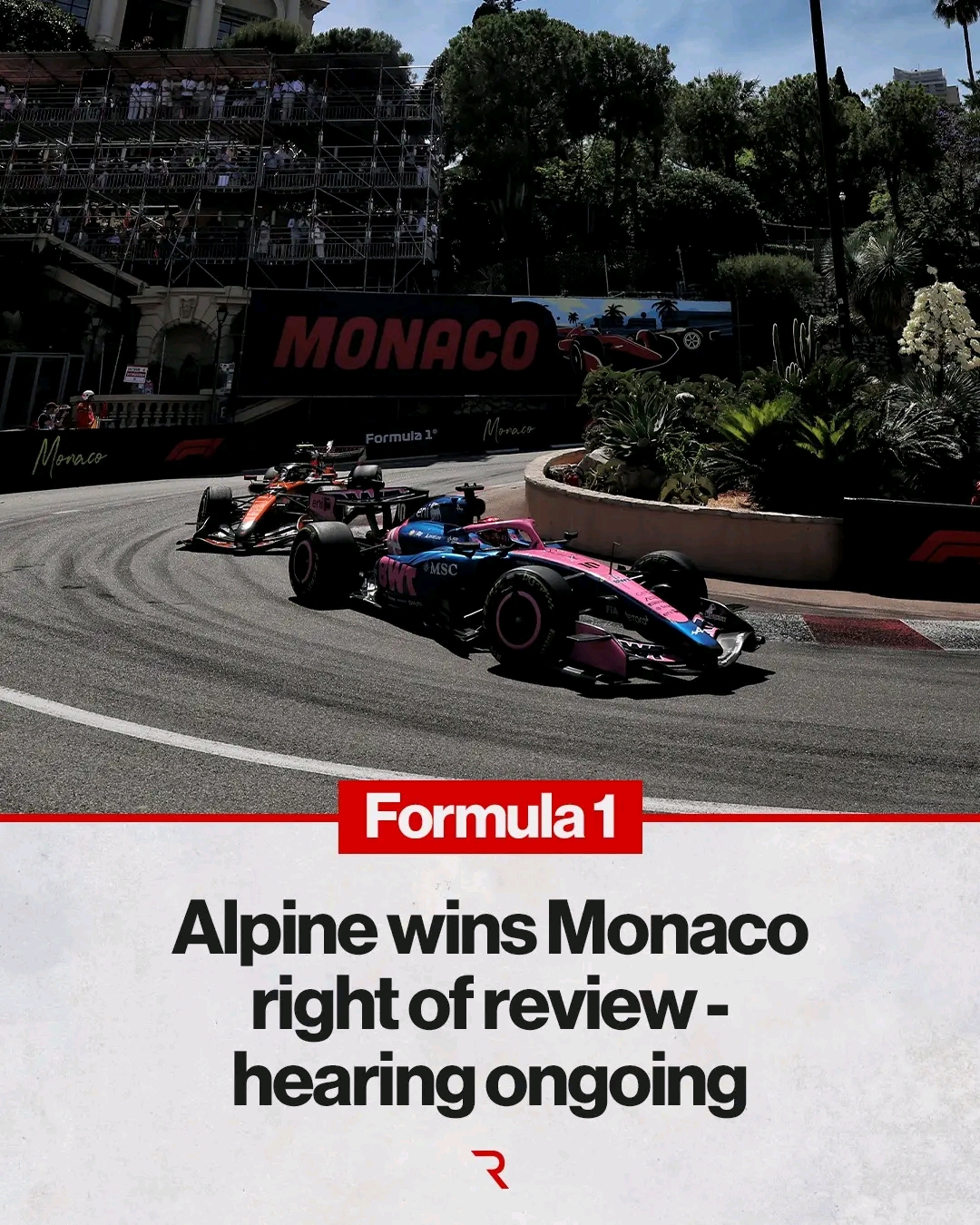
Formula 1 is no stranger to controversy, but Alpine’s successful request for a right of review following the Monaco Grand Prix has introduced a fascinating new chapter in the ongoing discussion about officiating, timing systems, and competitive fairness.
The FIA has agreed to revisit an incident involving Alpine’s Car 10 after new evidence was presented suggesting that the distance used in the Formula 1 Official Timing system may have been inaccurate. According to information revealed during the review process, the distance measurement used to calculate pit lane speed was potentially overestimated, which could have led to an incorrect assessment of the car’s actual speed.
This development is significant because rights of review are not granted lightly in Formula 1. Teams must provide substantial new and relevant evidence that was unavailable at the time of the original decision. Alpine’s success in clearing that first hurdle indicates that officials believe the new information deserves serious consideration.
WHAT IS A RIGHT OF REVIEW IN FORMULA 1?
A right of review allows teams to challenge an FIA decision when they can demonstrate that significant new evidence has emerged after the initial ruling.
The process is intentionally strict. Formula 1’s governing body wants race results and steward decisions to remain stable, so teams cannot simply relitigate every controversial call.
For Alpine to win the right of review, it needed to convince officials that fresh evidence existed and that the information could potentially affect the original judgment.
In this case, the evidence reportedly came from Formula One Management (FOM), adding additional weight to the argument because it relates directly to the official timing and measurement systems used throughout the sport.
WHY THE PIT LANE SPEED ISSUE MATTERS
Pit lane speed limits may seem like a minor technical detail, but they are among the most heavily regulated aspects of a Formula 1 weekend.
Every team is required to operate within strict speed limits while entering and exiting the pit lane. Violations can result in penalties ranging from time additions to more severe sporting consequences depending on the circumstances.
Because teams often gain or lose positions through pit strategy, accuracy is absolutely critical.
Even a small error in distance measurement can have a direct impact on the calculated speed of a car. If the distance used by the timing system is incorrect, the resulting speed calculation could be inaccurate as well.
That possibility is at the heart of Alpine’s challenge.
THE BIGGER QUESTION: CAN FORMULA 1’S DATA SYSTEMS BE TRUSTED?
One reason this story has attracted so much attention is that it touches on a fundamental principle of modern Formula 1.
The sport relies heavily on data.
From timing loops and GPS tracking to telemetry and sector analysis, thousands of pieces of information are collected every second during a race weekend. Teams spend millions of dollars building strategies around this data.
If an official calculation is found to be incorrect, it does not necessarily mean the system is flawed. However, it does raise important questions about verification procedures and quality control.
Formula 1’s credibility depends on teams and fans having confidence in the accuracy of official measurements.
That is why the outcome of this review could have implications extending far beyond a single Monaco incident.
WHAT THIS MEANS FOR ALPINE
For Alpine, the review represents more than just a technical dispute.
The team has endured a difficult period marked by management changes, inconsistent performance, and fierce midfield competition. Every point matters in the Constructors’ Championship, where prize money and competitive momentum are determined by final standings.
If Alpine succeeds in overturning or modifying the original decision, the outcome could potentially affect championship points, team morale, and the perception of its season.
Just as importantly, it would demonstrate that teams can successfully challenge decisions when credible new evidence emerges.
IMPACT ON THE CONSTRUCTORS’ CHAMPIONSHIP
Formula 1 championships are often decided by surprisingly small margins.
History has repeatedly shown that a single point gained or lost in one race can influence the final standings months later.
While Monaco is only one event on a long calendar, any adjustment to results could have consequences for the battle in the midfield, where Alpine is fighting against rivals for valuable championship positions.
The financial impact could also be substantial. Constructor standings directly influence the distribution of prize money, making every result extremely valuable.
HOW THE FIA IS LIKELY TO APPROACH THE HEARING
The FIA faces a delicate balancing act.
On one hand, officials must ensure that any decision made during the Monaco Grand Prix was based on accurate information.
On the other hand, Formula 1 requires consistency and certainty. Frequent revisions to race outcomes would create confusion and undermine confidence in stewarding decisions.
As a result, the governing body will likely focus on one central question:
Would the newly presented evidence have materially changed the original decision if it had been available at the time?
If the answer is yes, Alpine’s case becomes significantly stronger.
WHAT HAPPENS IF ALPINE WINS?
Should the review conclude in Alpine’s favor, several outcomes are possible.
The original penalty or ruling could be amended.
Race classifications could potentially be adjusted.
Championship points could be redistributed depending on the nature of the final decision.
Such an outcome would instantly become one of the most significant stewarding developments of the season and would likely trigger further discussion about timing verification procedures across Formula 1.
WHAT HAPPENS IF THE ORIGINAL DECISION STANDS?
Even if Alpine ultimately fails to overturn the result, the team has already achieved something noteworthy.
The fact that officials accepted the review request suggests that the evidence presented was credible enough to warrant further examination.
In that scenario, the hearing could still lead to procedural improvements, additional safeguards, or updated methods for validating official measurements in future events.
Sometimes the biggest impact of a review is not changing the result but improving the system.
PREDICTIONS FOR THE DAYS AHEAD
The most likely outcome is that the FIA conducts an exhaustive technical analysis before reaching a final decision.
Expect engineers, timing specialists, and regulatory experts to carefully examine every aspect of the data.
Regardless of the final verdict, this case is likely to become an important reference point for future disputes involving timing systems and measurement accuracy.
Teams across the paddock will be watching closely because the precedent established here could influence how similar cases are handled in the future.
FINAL THOUGHTS
Alpine’s successful bid for a Monaco Grand Prix review has transformed what initially appeared to be a routine sporting decision into one of the most intriguing technical stories of the Formula 1 season.
At stake is more than a single penalty or result. The case touches on the reliability of official data, the effectiveness of Formula 1’s review process, and the importance of accuracy in a sport measured by thousandths of a second.
Whether Alpine ultimately wins or loses the hearing, the outcome could shape future discussions about officiating, technology, and competitive fairness throughout Formula 1.
For now, the paddock waits as one of the season’s most consequential reviews unfolds behind closed doors. :::