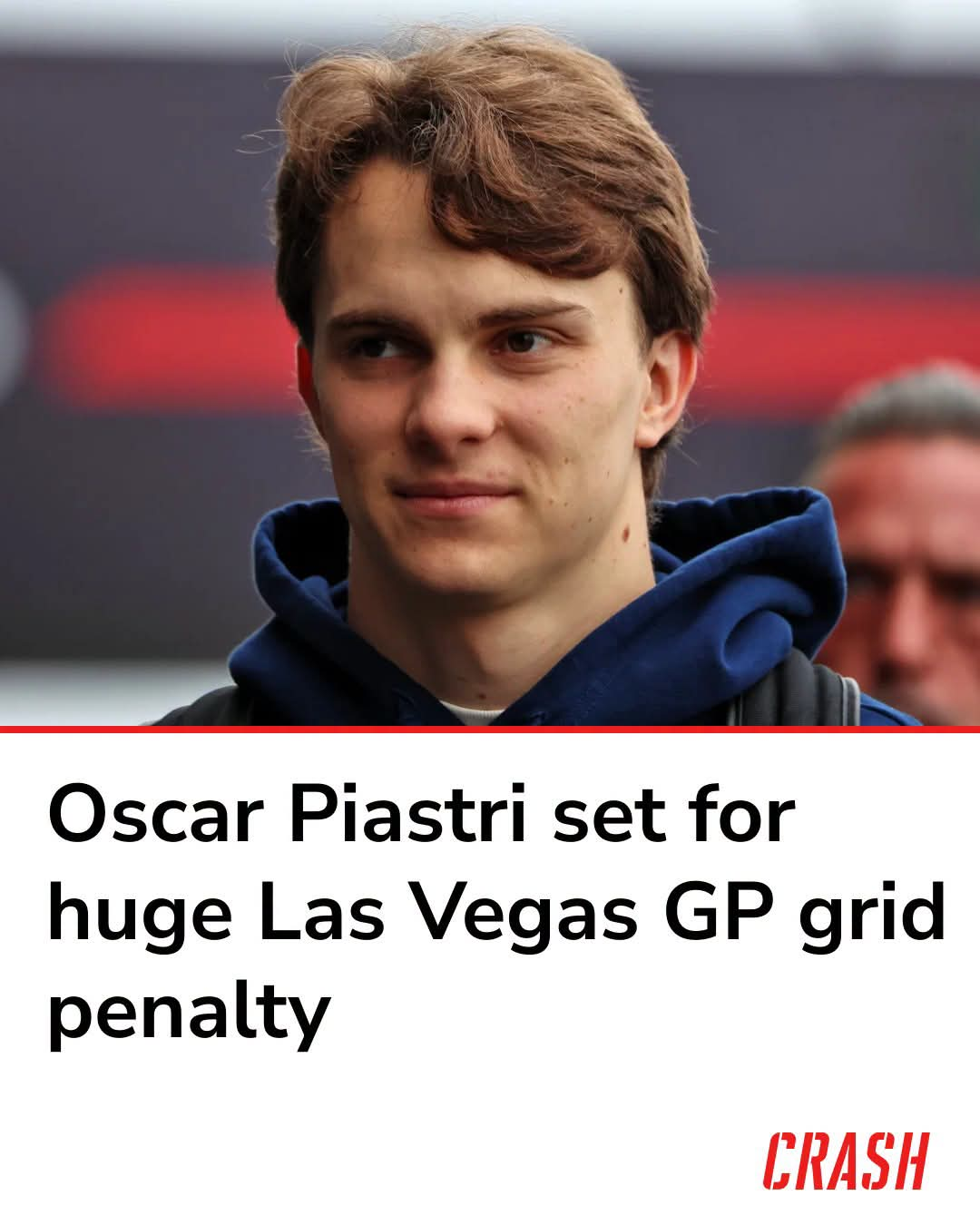
Oscar Piastri faces a significant setback before the 2026 Formula 1 Las Vegas Grand Prix even begins. McLaren has confirmed the Australian will take a 10-place grid penalty after fitting a new internal combustion engine to his MCL40. The unit is his fifth of the season, pushing him beyond the regulated allocation of four and triggering the automatic drop under FIA sporting regulations.
The change stems from a reliability issue rather than a pure performance play. With three races remaining in a long campaign, McLaren prioritised finishing the year without further drama over protecting a strong qualifying position this weekend.
WHY MCLAREN HAD TO MAKE THE CALL NOW
Power unit allocations remain one of the stricter cost and reliability controls in modern Formula 1. Drivers receive four internal combustion engines, four turbochargers, and limited numbers of other components before penalties kick in. Exceeding the ICE limit for the first time costs 10 places; further changes bring additional five-place drops.
Piastri had already used his full allocation. A reliability concern left the team with little choice if they wanted a dependable unit for the final triple-header of Las Vegas, Qatar, and Abu Dhabi. Starting from the back of the midfield or worse is painful, but risking a DNF or reduced power in the closing stages of the season would be worse for both driver and constructors’ standings.
McLaren also confirmed both cars will run Mercedes’ latest ADUO-spec turbocharger. The Additional Development and Upgrade Opportunities programme allows manufacturers some catch-up development. The team expects only a modest performance gain from the new turbo, and neither Piastri nor Lando Norris incurs a penalty for that change.
HOW THE PENALTY CHANGES THE WEEKEND FOR PIASTRI
Even a strong qualifying performance will leave Piastri starting no higher than 11th if he takes pole. On a street circuit that features long straights and several overtaking zones, the recovery path exists, but it is never straightforward. Night racing under the bright lights of the Las Vegas Strip adds its own variables: cooler temperatures, tyre management challenges, and the risk of safety cars that can scramble strategies.
McLaren’s own preview struck a cautiously optimistic note, stating Piastri has a good chance to recover positions through overtaking in the race. That assessment matches the nature of the circuit. Previous Las Vegas events have produced position changes and opportunistic drives from midfield or lower. Still, starting deep in the pack increases the chance of traffic, first-lap incidents, and the need for perfect execution in the opening stints.
For a driver who has not stood on the podium since the Miami Grand Prix in May and remains without a win in 2026, every points opportunity matters. Piastri currently sits seventh in the drivers’ championship. With the title already decided elsewhere, the battle for midfield positions and the final order of the constructors’ championship still carries prestige, prize money, and momentum into the next regulation cycle.
THE BIGGER PICTURE FOR MCLAREN AND THE CONSTRUCTORS’ FIGHT
McLaren continues to chase third in the constructors’ championship. Reliability and maximum points from both cars are critical in the final three rounds. Norris, free of any engine penalty at this stage, becomes even more important as the primary points scorer this weekend. A strong result from the Briton could offset some of the damage if Piastri is forced to fight through the field and finishes outside the top positions.
The team is also bringing a new floor and looking at ways to reduce drag during practice. Development work continues even as attention turns toward the 2027 car. Lessons from the current MCL40 still feed the next project, so extracting data under race conditions remains valuable regardless of starting position.
WHAT THIS MEANS FOR THE CLOSING STAGES OF 2026
Grid penalties of this type are common in the final races as teams stretch limited components. Several drivers have already taken hits in recent events, and more are expected before Abu Dhabi. The difference in Las Vegas is the circuit’s overtaking potential. On tighter or more processional tracks the same 10-place drop can end a driver’s race before it starts. Here, a well-timed safety car, strong race pace, and clean air in the middle sector could still deliver a points finish.
Piastri’s challenge is clear: qualify as high as possible, stay out of trouble early, and use the long straights and DRS zones to climb. McLaren’s confidence in the overtaking opportunities is not empty optimism, but it does require the Australian to deliver a near-perfect race. For a driver still building consistency after a difficult stretch of the season, this weekend becomes both a test and an opportunity to show resilience.
The Las Vegas Grand Prix has developed a reputation for unpredictable nights under the neon. A 10-place penalty makes Piastri’s task harder, yet it also sets up one of the more compelling recovery stories of the final triple-header. Whether he can turn a compromised start into a solid result will say plenty about both the car’s race pace and the driver’s ability to maximise difficult situations as the 2026 season draws to a close.