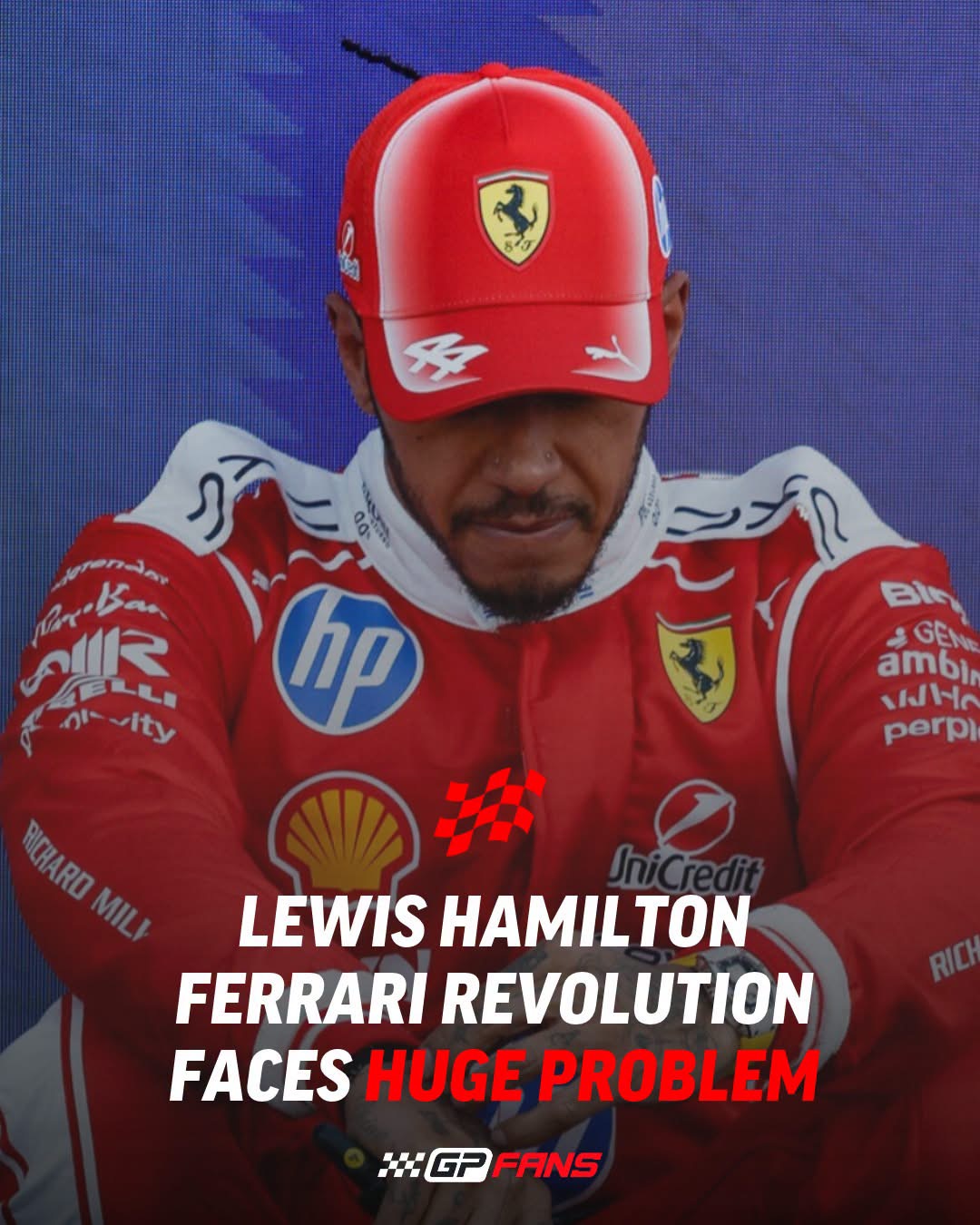
Lewis Hamilton’s attempt to transform Ferrari is facing another uncomfortable challenge, with fresh criticism emerging from Italy over the influence of his inner circle at Maranello.
The seven-time Formula 1 world champion arrived at Ferrari with enormous expectations, hoping to help restore the Italian giants to championship-winning glory. However, reports suggesting that Hamilton and his assistants have taken up a significant amount of space within the organisation have raised questions about the changing atmosphere inside the team.
According to a report from Corriere dello Sport, Hamilton and his staff have occupied such a large space at Maranello that they have changed the internal climate at Ferrari.
The report has reignited discussions about leadership, influence and whether the changes surrounding Hamilton are helping Ferrari move forward or creating another source of tension within an already complicated organisation.
HAMILTON’S INFLUENCE AT FERRARI SPARKS FRESH DEBATE
Hamilton’s arrival at Ferrari was never expected to be an ordinary driver transfer.
After spending more than a decade at Mercedes and winning six of his seven world championships with the German manufacturer, the British driver brought enormous experience and expectations to Maranello.
His move was also expected to introduce a different mentality, particularly after Ferrari’s repeated difficulties converting competitive opportunities into championship success.
However, the latest reports suggest that his influence has become a talking point beyond his performances on the circuit.
The suggestion that Hamilton and his assistants have significantly changed the working environment raises an important question: how much influence should a driver and his personal team have over the wider operations of a historic Formula 1 organisation?
For Ferrari, finding the right balance between accommodating a world champion and maintaining an established organisational structure could become increasingly important.
FERRARI’S BIGGEST PROBLEM MAY BE DEEPER THAN ITS DRIVER LINE-UP
The debate surrounding Hamilton also highlights a much bigger issue that has followed Ferrari for several seasons.
The Scuderia possesses the resources, history and technical reputation to compete for world championships, yet its inability to consistently turn potential into results has remained frustrating.
Ferrari has experienced moments of genuine competitiveness, but strategic errors, operational difficulties and inconsistent execution have repeatedly complicated its championship ambitions.
Changing drivers alone cannot solve those problems.
Even a seven-time world champion cannot guarantee success if the wider organisation struggles to deliver the right decisions at critical moments.
That is why the current discussion about Ferrari’s internal environment matters. The team’s recovery requires more than individual brilliance; it requires an effective structure capable of supporting its drivers and maximising the performance of its machinery.
WHY HAMILTON’S ARRIVAL WAS SUPPOSED TO CHANGE EVERYTHING
Hamilton’s move from Mercedes represented one of the biggest driver transfers in modern Formula 1 history.
Ferrari were not simply signing an experienced driver. They were bringing in someone who had experienced championship-winning environments, worked with elite engineers and competed at the highest level of the sport for nearly two decades.
His experience was expected to provide valuable insight into how a successful team operates.
However, introducing new ideas into an established organisation is rarely straightforward.
Ferrari has its own culture, traditions and internal processes. Hamilton has his own expectations and working methods. Bringing those different approaches together requires cooperation rather than a struggle for influence.
If the relationship works, Ferrari could benefit from a stronger technical and operational environment. If disagreements develop, the situation could make an already difficult rebuilding process even more complicated.
THE INTERNAL CULTURE QUESTION FERRARI CANNOT IGNORE
One of the most interesting aspects of the latest controversy is the suggestion that Hamilton’s presence has changed the atmosphere at Maranello.
That is not necessarily a negative development.
A team that has struggled to deliver consistent championship performances may need new perspectives, stronger accountability and a willingness to question existing methods.
However, meaningful change must also produce measurable improvements.
Ferrari cannot afford to become distracted by internal disagreements while its competitors continue developing their cars and strengthening their championship programmes.
The challenge for team management will be ensuring that every influential figure within the organisation is working towards the same objective.
Hamilton’s experience should be an asset, but the wider team must also have the confidence and structure to turn that experience into results.
CAN FERRARI TURN THE HAMILTON PROJECT INTO A CHAMPIONSHIP SUCCESS?
The biggest test of Hamilton’s Ferrari revolution will ultimately be what happens on the track.
Reports about internal relationships and organisational changes can attract attention, but championship success depends on performance, reliability, strategy and consistent execution.
Ferrari must create an environment where Hamilton and Charles Leclerc can compete effectively while engineers and management deliver a competitive package.
The team also needs to avoid allowing disagreements over working methods to overshadow its long-term ambitions.
Hamilton’s arrival was supposed to represent the beginning of a new chapter. But a successful revolution requires everyone inside the organisation to understand the direction and work towards the same goal.
For now, the reports from Italy have raised fresh questions about whether Ferrari is managing that transition effectively.
The British driver may have brought a new mentality to Maranello, but changing the culture of a historic team is only worthwhile if it eventually brings the results Ferrari desperately wants.