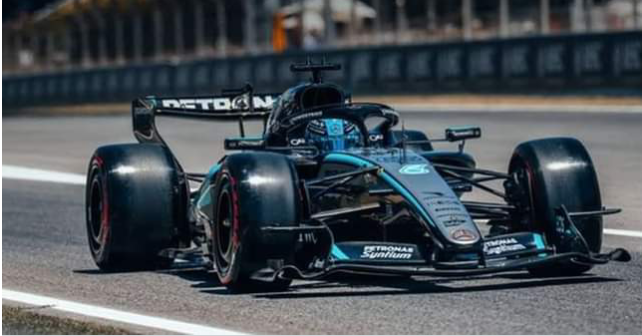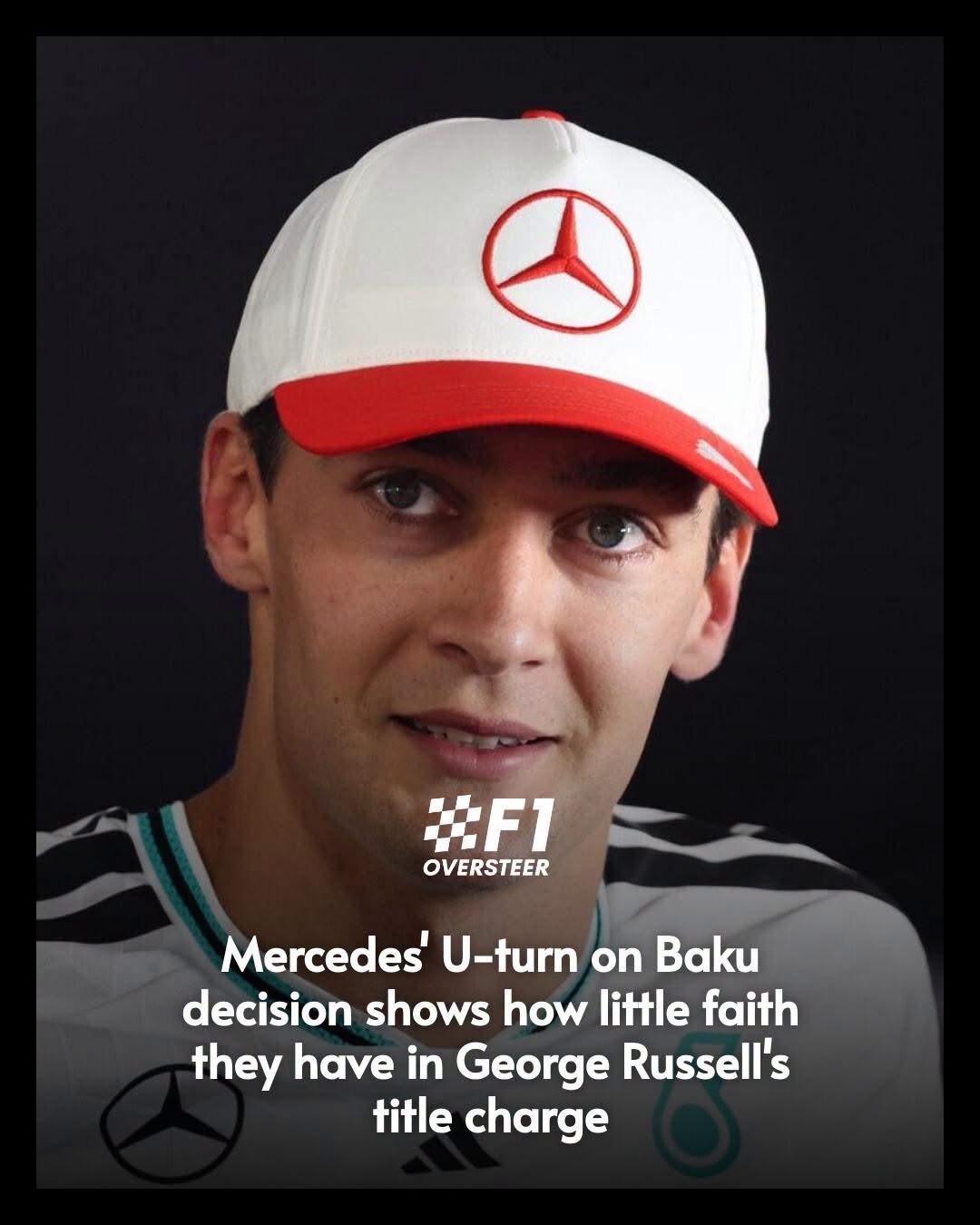
Mercedes’ latest strategic shift ahead of the Azerbaijan Grand Prix has been interpreted as clear evidence that the team no longer views George Russell as a realistic contender for the 2026 world championship. What began as a season of high expectation for the British driver has steadily turned into a campaign defined by the rise of his younger team-mate.
Kimi Antonelli’s breakout year has rewritten the internal hierarchy at Mercedes, and the team’s recent decisions appear to reflect that new reality.
FROM TITLE FAVOURITE TO SECOND DRIVER IN ALL BUT NAME
Russell entered the 2026 season as many people’s favourite for the drivers’ championship. After years of solid performances during Mercedes’ more difficult period, he was expected to capitalise on a more competitive car and establish himself as the team’s clear leader.
Instead, rookie Kimi Antonelli has consistently outperformed him. The Italian’s speed, composure and ability to convert opportunities into victories have left Russell playing catch-up. The points gap has grown large enough that even Mercedes team principal Toto Wolff has publicly encouraged Russell to shift his focus toward 2027.
THE BAKU DECISION THAT SPOKE VOLUMES
Mercedes’ reported U-turn on a key operational or strategic call related to the Baku weekend has been widely read as confirmation of this shift in priority. While teams routinely adjust plans based on data and circumstance, the timing and nature of the change have fuelled the perception that resources and focus are being directed toward maximising Antonelli’s campaign rather than sustaining a dual title challenge.
In modern Formula 1, such decisions are rarely neutral. When a team begins prioritising one driver’s long-term development or championship position over the other’s immediate prospects, the message to the paddock is unmistakable.
ANTONELLI’S RISE HAS CHANGED EVERYTHING
Antonelli’s emergence as a genuine superstar in his debut season has been the defining story of Mercedes’ year. What was expected to be a learning campaign has instead produced multiple wins and a commanding championship lead. His performances have not only elevated his own status but also altered the internal dynamic within the team.
For Russell, the comparison has been uncomfortable. A driver once tipped for a sustained period of success now finds himself overshadowed by a teenager in the same machinery.
THE WIDER IMPLICATIONS FOR RUSSELL’S FUTURE
Russell’s situation raises broader questions about his long-term role at Mercedes. Drivers of his calibre rarely accept second status indefinitely. If the team continues to build its future around Antonelli, Russell may eventually face a decision about whether his own ambitions are best served elsewhere.
For now, the public messaging from Mercedes suggests a pragmatic acceptance of the current championship picture. With Antonelli firmly in control, the priority has shifted toward consolidating that advantage and preparing for the next regulatory era.
A SEASON THAT FAILED TO DELIVER ON PROMISE
Few would have predicted at the start of the year that Russell would be fighting to stay relevant in the title conversation by mid-to-late season. The rapid ascent of Antonelli has rewritten the script, and Mercedes’ recent decisions indicate the team has adapted accordingly.
Whether the Baku U-turn proves to be a one-off adjustment or part of a longer-term reorientation remains to be seen. What is already clear is that George Russell’s path to the 2026 world championship has been effectively closed — and Mercedes no longer appear interested in pretending otherwise.