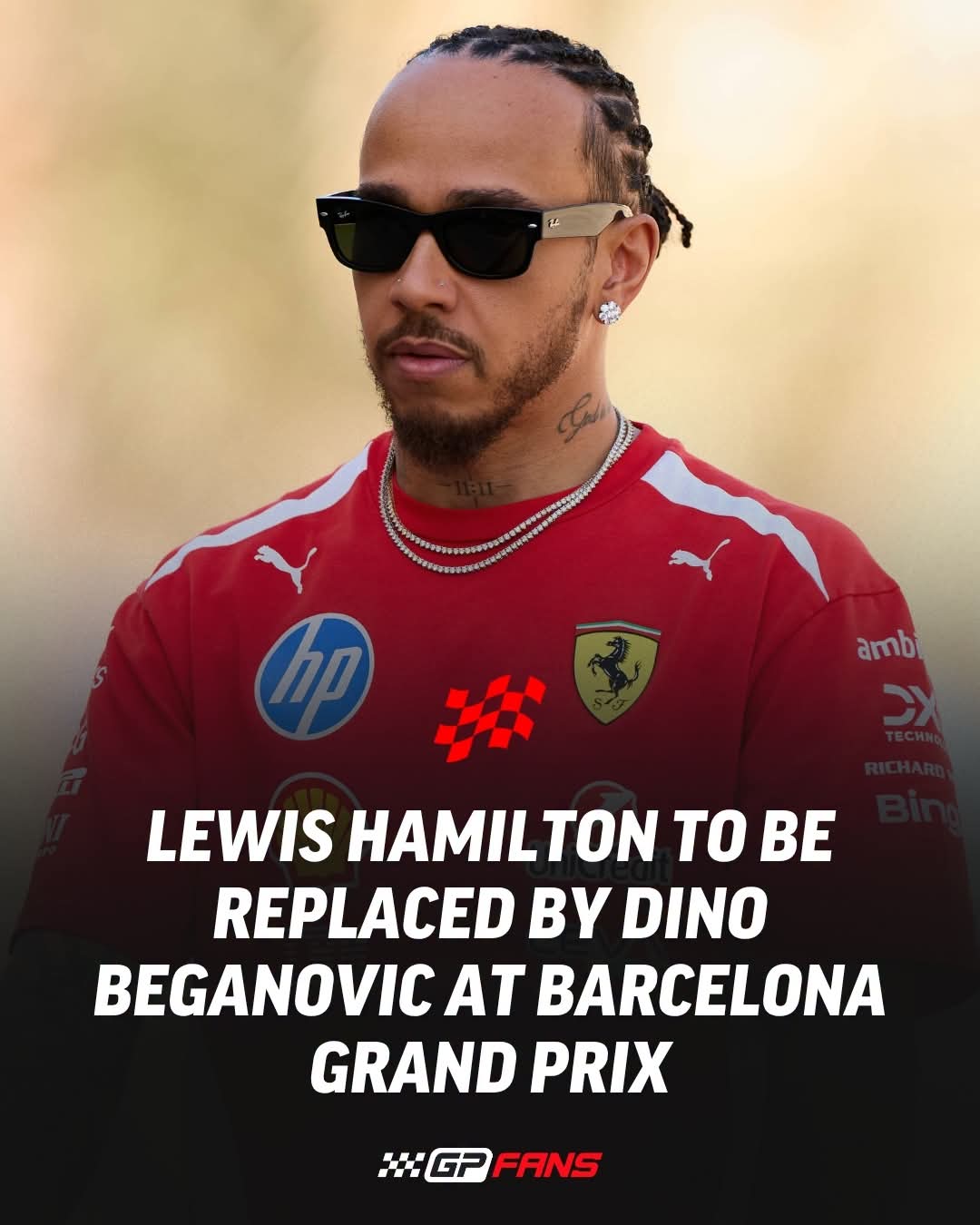
Ferrari will temporarily hand over Lewis Hamilton’s SF-26 during the opening practice session of the Spanish Grand Prix weekend, giving academy prospect Dino Beganovic another valuable opportunity to prove himself at Formula 1 level.
The move comes as part of Formula 1’s mandatory rookie driver program, which requires every team to field young drivers in official practice sessions throughout the season. While Hamilton will return for the remainder of the weekend, Friday’s FP1 session at Circuit de Barcelona-Catalunya will offer Beganovic a rare chance to gain experience in the sport’s new-generation machinery and demonstrate why Ferrari continues to invest heavily in his development.
For Ferrari, the session is more than just a regulatory requirement. It represents another important step in evaluating future talent while collecting crucial data during one of the most technically demanding weekends on the calendar.
WHY THIS FP1 SESSION MATTERS MORE THAN IT SEEMS
At first glance, a rookie appearance in a single practice session may appear insignificant. In reality, it can have a major impact on both the driver and the team.
The 2026 regulations introduced radically different cars and power units, meaning every lap completed by a young driver provides valuable information. Teams use these sessions to assess adaptability, technical understanding, feedback quality, and overall race-weekend professionalism.
For Beganovic, the challenge will be immediate. He must familiarize himself with a car vastly different from previous Ferrari machinery while delivering meaningful data to engineers in a session that lasts just one hour.
Unlike private testing, FP1 places drivers under real race-weekend pressure. Every lap matters, every mistake is visible, and every piece of feedback can influence setup decisions for the rest of the weekend.
DINO BEGANOVIC’S RISE THROUGH THE FERRARI SYSTEM
Beganovic has quietly built an impressive reputation within Ferrari’s driver academy.
Currently competing in Formula 2, the Swedish driver has shown flashes of strong pace throughout the 2026 season, including a standout second-place finish in the Miami feature race. More importantly, Ferrari values his technical approach and simulator work, qualities that often separate future Formula 1 drivers from talented junior racers.
His previous FP1 appearance gave him a taste of Formula 1 machinery, but Barcelona presents an entirely different challenge because of the new regulations.
The circuit is one of the most complete tests in motorsport. Drivers must handle high-speed corners, long-radius turns, heavy braking zones, and varying aerodynamic demands. If a driver can perform effectively at Barcelona, teams gain confidence in their ability to adapt elsewhere.
WHAT THIS MEANS FOR LEWIS HAMILTON
Hamilton’s absence from FP1 should not be viewed as a disadvantage.
Veteran drivers frequently sacrifice practice sessions for rookie appearances because teams already possess extensive data on their driving styles and preferences. Hamilton’s experience allows Ferrari engineers to quickly bring him up to speed once he returns for FP2.
In fact, Hamilton could benefit indirectly. Any useful data gathered by Beganovic during the opening session may help Ferrari refine setup directions before the seven-time world champion gets behind the wheel.
Ferrari will likely use the rookie session to test components, aerodynamic configurations, or setup concepts that might otherwise consume Hamilton’s valuable track time later in the day.
FERRARI’S LONG-TERM VISION IS BECOMING CLEARER
The decision also highlights Ferrari’s commitment to developing its next generation of talent.
While Hamilton and Charles Leclerc remain the team’s cornerstone drivers, Ferrari understands that building a sustainable future requires continuously evaluating young prospects.
Recent years have shown how quickly Formula 1 can change. Teams that maintain strong junior programs often find themselves better positioned when opportunities arise.
Beganovic joins a growing list of Ferrari academy drivers who have received meaningful Formula 1 exposure, and every successful outing increases his chances of eventually securing a full-time seat somewhere on the grid.
BARCELONA WILL PROVIDE A REAL TEST OF ROOKIE TALENT
Ferrari will not be alone in giving young drivers an opportunity this weekend.
Several teams are expected to field rookies during FP1, including Mercedes, McLaren, Williams, Audi, Cadillac, and Red Bull. That creates an intriguing benchmark because teams will be able to compare performances across multiple young prospects on the same circuit under similar conditions.
For observers, it could offer an early glimpse into Formula 1’s next wave of talent.
Some drivers will simply complete their programs without incident. Others may produce standout performances that elevate their reputations significantly within the paddock.
WHAT TO EXPECT FROM BEGANOVIC IN SPAIN
Expectations should remain realistic.
Beganovic’s primary objective will not be to set headline-grabbing lap times. Instead, Ferrari will focus on consistency, clean execution, and useful technical feedback.
If he avoids mistakes, adapts quickly to the new-generation Ferrari, and provides engineers with reliable information, the session will be considered a success.
However, if he manages to deliver competitive pace alongside those objectives, Ferrari’s confidence in his long-term potential could grow even further.
With Formula 1 entering a new era and teams increasingly searching for the next breakthrough star, Barcelona may prove to be another important chapter in Dino Beganovic’s journey toward a future full-time seat on the Formula 1 grid.