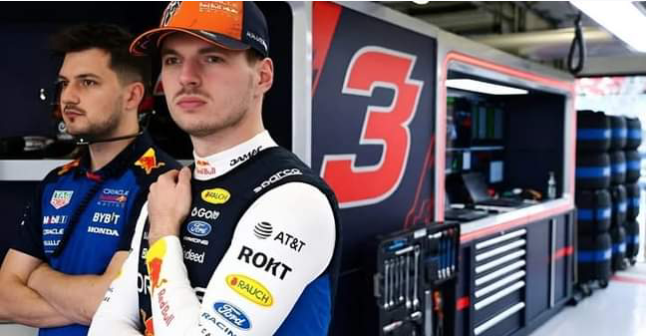
Max Verstappen has never been shy about expressing his concerns over Formula 1’s direction, and his long-running warnings about the sport’s 2026 power-unit regulations are now receiving renewed attention.
The Red Bull Racing driver reportedly raised concerns as far back as 2023 about the increasing role of electrical power in Formula 1’s next-generation hybrid engines. At the time, his comments were met with skepticism in some quarters, with critics suggesting that the reigning champion was simply resistant to change or worried about losing a competitive advantage.
But as the 2026 season develops, the debate surrounding the new regulations has become much bigger than one driver’s personal preferences.
The central question now facing Formula 1 is whether the sport’s new hybrid formula has gone too far in prioritizing energy management over outright racing performance.
With the Hungarian Grand Prix approaching, discussions throughout the paddock have intensified. Drivers, teams and engineers are increasingly examining whether the 50/50 balance between combustion-engine power and electrical energy is producing the kind of racing that Formula 1 actually wants to showcase.
VERSTAPPEN WARNED ABOUT THE DIRECTION OF F1 YEARS AGO
Verstappen’s concerns about the 2026 regulations were not exactly a secret.
The new generation of Formula 1 power units was designed around a major technological shift. The regulations reduce the role of the traditional internal combustion engine while dramatically increasing the contribution of electrical power. The result is a power unit that places far greater importance on battery deployment, energy recovery and strategic management.
From a technological perspective, the concept is ambitious.
From a racing perspective, however, it introduces a complicated question: What happens when drivers are forced to manage energy rather than simply attack?
That concern has become increasingly relevant during the 2026 season.
Verstappen’s argument has never simply been about whether he can win races. His latest comments have emphasized that the issue is the quality of the product Formula 1 delivers to fans.
That distinction is important.
A driver can tolerate a regulation that makes his own car slower if the resulting racing is exciting. But if the regulations force every driver on the grid to compromise speed, overtaking opportunities and race strategy because of energy limitations, then the conversation becomes much bigger than any single team.
THE BATTERY PROBLEM IS NOW PART OF THE RACING CONVERSATION
One of the biggest concerns surrounding the 2026 regulations is the amount of electrical energy available to drivers during a lap.
Reports and paddock discussions have pointed to situations at high-speed circuits where cars have struggled to maintain electrical deployment over long sections of track. At Spa-Francorchamps, concerns emerged over cars losing battery performance before reaching the end of the long Kemmel Straight.
Silverstone has generated similar discussion, with drivers reportedly experiencing significant reductions in speed approaching the finish line.
These examples highlight the fundamental challenge of the new regulations.
Formula 1 cars are supposed to be the fastest racing machines on the planet. Yet if drivers are required to lift, coast or sacrifice speed because the battery cannot provide sufficient energy for the final part of a lap, fans may understandably question whether the technology is improving the spectacle or restricting it.
Energy management has always been part of modern Formula 1. But the 2026 regulations have pushed that concept to another level.
The difference is that energy management can be exciting when it creates strategic variation.
It becomes problematic when every driver is forced into the same defensive behavior simply because the available energy is insufficient.
IS THE 50/50 HYBRID SPLIT HURTING THE RACING?
The 2026 power-unit regulations were introduced with a clear objective: make Formula 1 more sustainable while maintaining its position at the forefront of automotive technology.
The internal combustion engine remains important, but the electrical component now plays a dramatically larger role than before.
That creates an interesting contradiction.
Formula 1 wants to demonstrate the future of high-performance automotive engineering, but it also needs to produce racing that is entertaining and unpredictable.
The challenge is finding the right balance.
If the electrical side of the power unit becomes too dominant, drivers may spend more time calculating energy usage than fighting for position. If the combustion engine is too heavily restricted, the distinctive character that has historically defined Formula 1 could gradually disappear.
However, it would also be too simplistic to blame every racing problem on the hybrid system.
Aerodynamics, tire management, circuit characteristics and the effectiveness of overtaking aids all contribute to the quality of a Grand Prix.
The 2026 regulations are therefore just one part of a much larger puzzle.
Still, the energy deployment issue deserves attention because it affects every team equally. Unlike a team-specific aerodynamic weakness, this is a fundamental characteristic of the regulations themselves.
WHY THE HUNGARIAN GRAND PRIX COULD BE AN IMPORTANT TEST
The Hungarian Grand Prix could provide another fascinating case study.
The Hungaroring is traditionally a technically demanding circuit where track position, tire management and qualifying performance are extremely important. Overtaking is often difficult, meaning drivers need to maximize every opportunity they receive.
That makes energy deployment particularly significant.
If drivers are forced to manage battery usage aggressively, teams may have to rethink how they approach qualifying and the race. A car that appears incredibly fast over one lap may not necessarily have the same advantage over a full Grand Prix distance.
This could create new strategic possibilities.
Teams may deliberately sacrifice short-term performance to preserve electrical energy for critical sections of the lap. Drivers could choose when to deploy their available power based on defending or attacking rather than simply using it whenever possible.
In theory, that could make races more strategic.
The danger is that excessive energy management could have the opposite effect.
If drivers cannot attack because they are protecting battery reserves, the result could be more processional racing rather than closer competition.
The Hungarian GP may therefore provide valuable evidence about whether the 2026 concept is delivering the intended balance.
THE IMPACT ON MAX VERSTAPPEN AND RED BULL
For Verstappen and Red Bull, this debate carries an additional layer of significance.
Red Bull is no longer operating with the same level of dominance that characterized some of the previous regulation era. The arrival of new power-unit technology has reshuffled the competitive order, placing even greater importance on engine development and energy efficiency.
The ability to extract maximum performance from the hybrid system could become just as important as aerodynamic efficiency.
That means Verstappen’s criticism should not automatically be interpreted as opposition to technological progress.
In fact, Red Bull has a major stake in ensuring that the new regulations work effectively.
The team’s technical direction, power-unit performance and ability to manage energy across a race distance could directly influence Verstappen’s championship ambitions.
If the regulations remain unchanged, the teams that master energy deployment could gain a significant advantage.
That could make the championship less about who has the fastest car in pure terms and more about who can best manage the complicated relationship between electrical power, fuel consumption, battery recovery and aerodynamic performance.
THE BIGGEST WINNER COULD BE THE TEAM THAT MANAGES ENERGY BEST
One of the most intriguing consequences of the 2026 rules is that the competitive hierarchy may depend increasingly on efficiency.
A team could have an impressive peak power output but still struggle if its battery deployment cannot be sustained effectively.
Another team might produce slightly less outright performance but recover energy more efficiently and maintain stronger electrical deployment throughout a lap.
That creates a new engineering battlefield.
Teams will be looking closely at braking zones, energy recovery, battery temperatures and deployment strategies. Drivers will also have to adapt their driving styles to maximize regeneration without compromising lap time.
In this environment, the driver who manages the system most intelligently could gain an advantage over a teammate who is marginally faster in pure qualifying conditions.
That could make driver feedback more important than ever.
The best drivers are not simply fast. They understand how to extract performance from a car while preserving tires, managing fuel and adapting to changing conditions.
The 2026 regulations add another layer to that skill set.
F1 MUST FIND THE BALANCE BETWEEN TECHNOLOGY AND ENTERTAINMENT
Formula 1 has always been a technological competition.
The sport has never been afraid of complexity, innovation or radical engineering ideas. Hybrid technology itself has produced some of the most impressive power units ever seen in motorsport.
But Formula 1 also has an obligation to preserve the spectacle.
Fans tune in to watch drivers race.
They want to see overtakes, wheel-to-wheel battles, strategic gambles and drivers pushing their machines to the limit. Technology should enhance those moments rather than prevent them.
That is why the current debate is so important.
The question is not whether Formula 1 should remain technologically advanced. It absolutely should.
The real question is whether the regulations are creating a technological challenge that complements the racing or one that sometimes gets in its way.
If drivers are routinely forced to lift off the throttle because they are running out of electrical energy, the FIA and Formula 1’s technical leaders may eventually need to consider adjustments.
WHAT COULD HAPPEN NEXT?
The most likely outcome is not an immediate abandonment of the 2026 regulations.
Formula 1 and the FIA invested years of development into the new power-unit formula, and major manufacturers have committed significant resources to the technology.
Instead, the sport is more likely to monitor the situation closely and consider targeted adjustments if the racing consistently suffers.
Those changes could involve how electrical energy is deployed, how much energy can be recovered or how the power units are balanced between electric and combustion performance.
However, any modification would need to be carefully considered.
Changing the rules too quickly could create new competitive imbalances and reward manufacturers that have already designed their cars around the existing formula.
The bigger possibility is that the regulations gradually evolve rather than undergo a complete transformation.
MAX VERSTAPPEN’S WARNING HAS BECOME A SPORT-WIDE CONVERSATION
Whether fans agree with Verstappen or not, his concerns have succeeded in starting an important conversation.
Formula 1’s 2026 regulations represent one of the biggest technical changes in the sport’s modern history. With greater electrical power, new engine development challenges and a renewed emphasis on sustainability, the championship is entering a fundamentally different era.
But innovation alone does not guarantee great racing.
The sport must constantly evaluate whether its technical ambitions are aligned with what fans want to see on track.
If the 2026 regulations eventually prove capable of producing closer competition while maintaining spectacular racing, Verstappen’s early concerns may fade into the background.
If energy limitations continue to affect overtaking and force drivers to sacrifice speed at critical moments, however, his warnings may increasingly look like an early diagnosis of a problem that Formula 1 should have addressed sooner.
The Hungarian Grand Prix could offer another important chapter in that debate.
For now, the biggest question is not whether Max Verstappen is winning or losing.
It is whether Formula 1’s pursuit of a more advanced hybrid future is making the racing better—or simply making the drivers work harder to manage the technology.