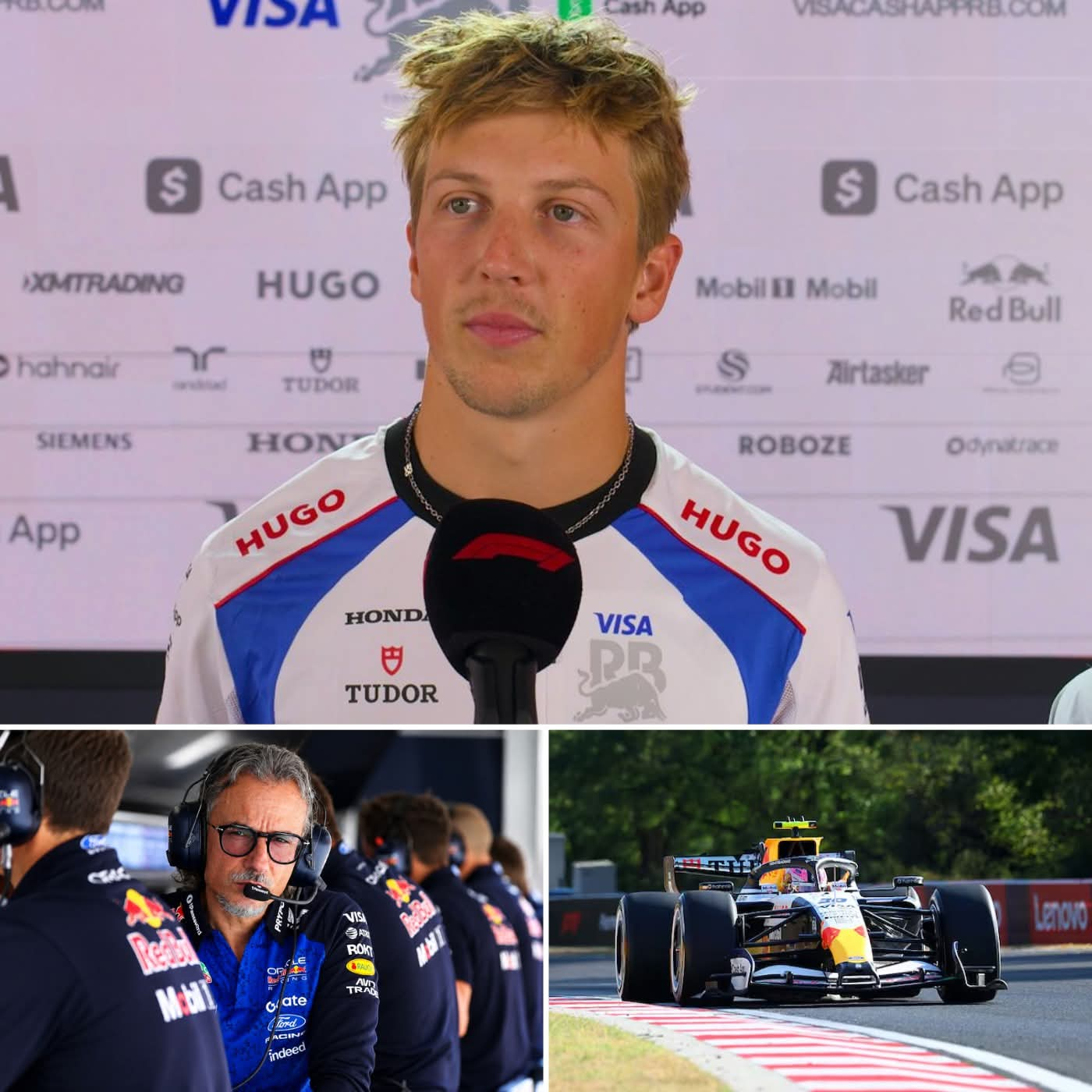
A fresh controversy surrounding Liam Lawson and Racing Bulls has raised serious questions about the relationship between Formula 1 drivers and their teams when technical problems affect performance.
A report circulating online makes explosive allegations about a pre-race fuel leak, mechanical complications and an alleged attempt to blame Lawson for excessive tyre degradation. The claims suggest that the New Zealander believes his driving was unfairly criticised while deeper technical problems were left out of the team’s public explanation.
However, the allegations have not been independently verified, and there is no reliable confirmation in the supplied report that Lawson personally made the accusations or that Racing Bulls deliberately concealed a mechanical failure.
Nevertheless, the story highlights an important issue in Formula 1: when a driver struggles with an uncompetitive or unreliable car, separating technical responsibility from driving performance can become a major challenge.
FUEL LEAK CLAIMS RAISE SERIOUS QUESTIONS
The most dramatic allegation concerns an alleged fuel leak shortly before the Grand Prix.
According to the report, Racing Bulls mechanics were working around Lawson’s car before the start after identifying a potential fuel-system problem. It further claims that temporary repairs were carried out rather than a complete component replacement.
If such an incident occurred as described, it would raise important questions about the team’s pre-race procedures and its decision-making under pressure.
Fuel-system integrity is fundamental to Formula 1 operations. A serious leak can create safety concerns, while problems with fuel delivery can affect engine performance and race reliability.
However, the supplied article offers no supporting technical documentation, official team statement or verified telemetry evidence to establish that the alleged incident happened in the manner described.
That distinction matters because a serious accusation involving a team’s safety procedures should not be treated as established fact without credible evidence.
WHY TYRE DEGRADATION CAN BECOME A TEAM-WIDE PROBLEM
One of the central issues in the report is the suggestion that Lawson was blamed for excessive tyre degradation despite allegedly struggling with mechanical problems.
Tyre management is among the most complicated responsibilities facing modern Formula 1 drivers. Drivers must control temperature, manage sliding and preserve grip while maintaining competitive lap times.
However, tyre degradation is not determined by driving style alone.
Aerodynamic balance, suspension characteristics, mechanical grip, track conditions and setup decisions can all influence how quickly tyres lose performance.
A car suffering from instability can force its driver to make additional corrections through corners, increasing sliding and potentially accelerating tyre wear.
This is why teams rely heavily on telemetry and engineering analysis when evaluating a driver’s performance.
If Lawson genuinely experienced a mechanical problem that affected the car’s balance, it would be important for Racing Bulls to distinguish that issue from any mistakes made behind the wheel.
But without verified evidence of the alleged fuel-system failure, it would be premature to conclude that tyre degradation was simply a consequence of a technical defect.
LAURENT MEKIES FACES THE BIGGER ACCOUNTABILITY QUESTION
Racing Bulls team principal Laurent Mekies would naturally be central to any investigation into serious operational problems involving the team’s cars.
His responsibility extends beyond race strategy. It includes ensuring that engineering, mechanics and trackside operations work together effectively.
Formula 1 teams regularly face unexpected mechanical challenges, but the way they respond can determine whether a difficult weekend becomes a minor setback or a major controversy.
If the allegations are eventually supported by credible evidence, Racing Bulls would need to explain how the problem was identified, what corrective action was taken and whether the car was safe to compete.
Equally important would be the team’s communication with Lawson.
Drivers need confidence that their feedback is being taken seriously, particularly when they report instability or performance problems during a race.
A breakdown in that relationship can affect more than one weekend. It can damage morale, complicate technical development and create uncertainty about the driver’s future.
LAWSON’S FUTURE MAKES THE CONTROVERSY EVEN MORE IMPORTANT
Lawson’s position in Formula 1 has already been a major talking point, making any suggestion of internal disagreement particularly sensitive.
For a driver competing in such a demanding environment, reputation matters enormously. Teams assess not only race results but also consistency, technical feedback, adaptability and the ability to work with engineers.
Being associated with poor tyre management could influence how rival teams assess a driver. Conversely, demonstrating that difficult performances were caused by technical limitations would be important in protecting his standing.
That is why transparency is essential.
Lawson needs a car capable of delivering consistent performance, while Racing Bulls needs a driver who can provide reliable feedback and maximise the available machinery.
Neither side benefits from an atmosphere in which technical problems and driving mistakes become competing explanations for disappointing results.
RACING BULLS MUST LET THE EVIDENCE SPEAK
The biggest question surrounding this story is whether there is genuine evidence supporting the allegations.
A verified technical report, official confirmation of a fuel leak or documented disagreement between Lawson and team management would significantly change the situation.
Until then, claims of deliberate scapegoating or a coordinated cover-up remain unproven.
Formula 1 is an environment where information is carefully managed, and teams do not always disclose every technical problem publicly. That does not automatically mean they are hiding misconduct.
For Mekies and Racing Bulls, the best response to any genuine concerns would be clear communication and a transparent technical explanation.
For Lawson, the priority remains delivering strong performances and ensuring that his feedback is properly understood.
The controversy may yet develop into a significant story, but one thing is clear: in Formula 1, trust between a driver and the engineering team is just as important as outright speed. Without it, even a talented driver can find himself fighting problems that cannot be solved behind the steering wheel alone.