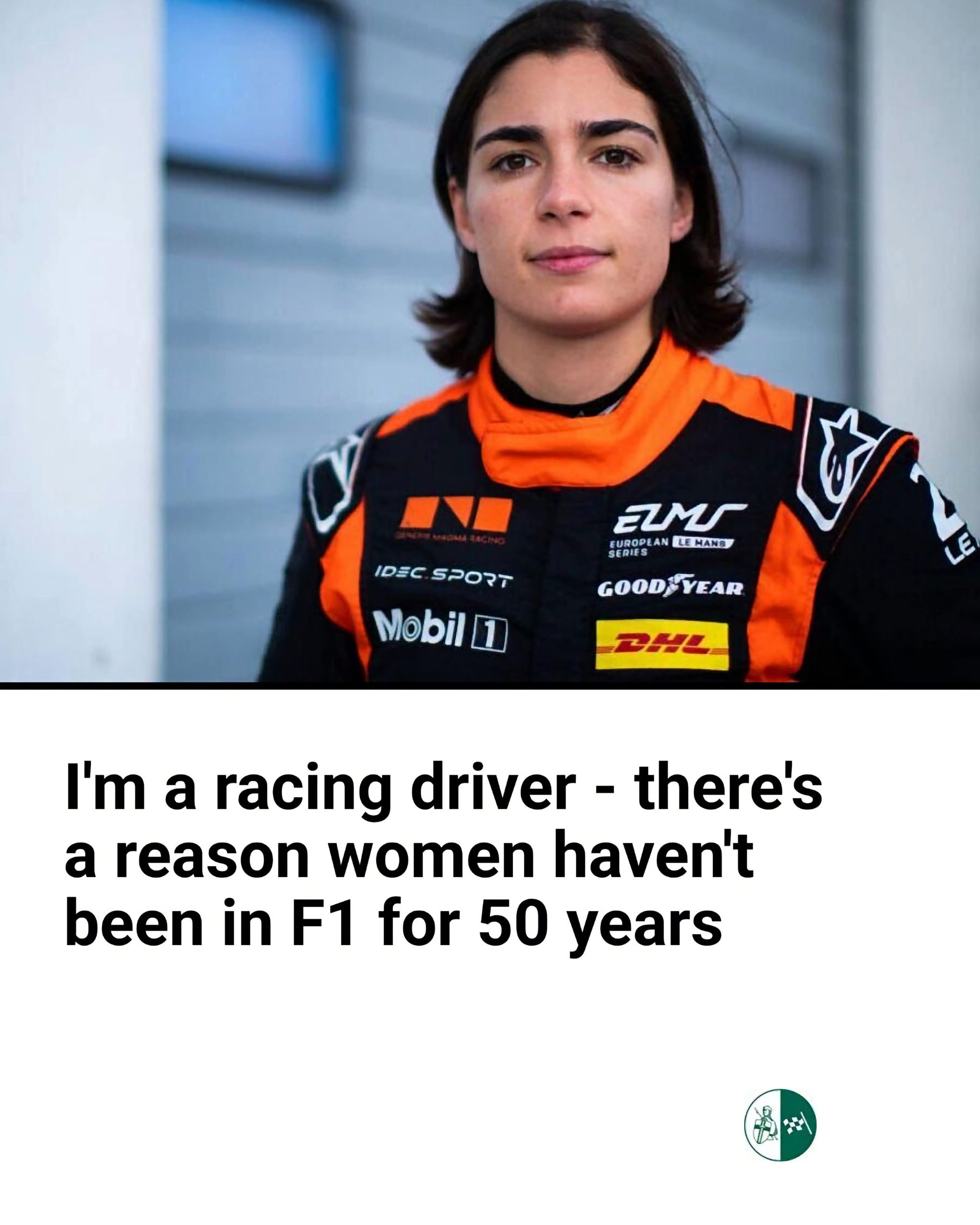
The possibility of seeing a woman compete in Formula 1 again has become one of motorsport’s most discussed subjects, but Jamie Chadwick believes there is still one major obstacle standing between female drivers and the sport’s highest level.
Despite the progress made through initiatives such as W Series and F1 Academy, no woman has competed in a Formula 1 Grand Prix since Lella Lombardi in 1976. Almost 900 races have passed since that historic appearance, leaving a gap that continues to attract attention across the racing world.
Chadwick, one of the most successful female drivers of her generation, believes opportunities for women have improved considerably. However, she has also delivered a frank assessment of what is still missing, arguing that reaching Formula 1 requires more than visibility and financial support.
Her comments have reignited an important debate about talent development, opportunity and what it will take for a woman to earn a place on the F1 grid.
JAMIE CHADWICK IDENTIFIES THE BIGGEST OBSTACLE
Speaking exclusively to Express Sport at the 6 Hours of Monza, Chadwick described the current environment for women in motorsport as the best she has experienced.
She credited the now-defunct W Series with giving her a major opportunity at an important stage of her career. Without that platform, she admitted, she might not have continued racing at the level she eventually reached.
She also highlighted F1 Academy and the involvement of Formula 1 teams in supporting young female drivers as important developments.
However, Chadwick offered a particularly direct assessment when discussing what is still required for a woman to reach Formula 1.
“Maybe one thing that is missing, which is talent,” she said, acknowledging that while talented female drivers have emerged, she has not yet seen someone progress through the junior categories with the level required to compete in Formula 1.
Her comments were not an argument that women cannot reach the championship. Instead, she believes the sport needs to identify more potential drivers early, develop their abilities and create a larger pool of competitors capable of reaching the highest level.
WHY FORMULA 1 HAS NOT SEEN A FEMALE DRIVER FOR FIVE DECADES
The absence of women from the Formula 1 grid cannot be separated from the historical barriers that have limited female participation in motorsport.
The journey to F1 is extremely expensive and competitive. Drivers generally begin in karting at a young age before progressing through junior single-seater championships, with each stage demanding significant financial resources, technical support and consistent results.
The competition becomes increasingly intense as drivers move closer to Formula 1.
Chadwick’s argument highlights the importance of increasing participation at the earliest stages. If fewer girls enter karting and junior racing, the number who eventually reach Formula 3, Formula 2 and potentially Formula 1 will naturally remain limited.
That makes the development of young talent a long-term project rather than something that can be solved through a single championship or promotional campaign.
It also explains why creating opportunities is only one part of the challenge. Those opportunities must lead to competitive development and progression through the same demanding ladder used by male drivers.
F1 ACADEMY AND W SERIES HAVE CHANGED THE LANDSCAPE
Chadwick believes the introduction of dedicated development opportunities has helped change the outlook for women in motorsport.
Her own career provides an example of how these platforms can influence a driver’s development. She won three consecutive W Series titles before moving into other racing categories, including Indy NXT in the United States.
F1 Academy has continued the effort to increase female participation and provide young drivers with greater visibility.
The involvement of established Formula 1 teams is particularly significant because it connects emerging talent with organisations that understand what is required to progress through professional motorsport.
Chadwick also highlighted the inspirational value of seeing young women wearing the colours of major Formula 1 teams.
She believes that visibility can encourage girls to enter racing and potentially develop into future competitors without necessarily needing to follow exactly the same development route as previous generations.
However, the ultimate measure of success will be whether these initiatives produce drivers capable of competing consistently at the highest level.
WHY CHADWICK BELIEVES MERIT MUST REMAIN THE PRIORITY
One of the strongest points in Chadwick’s assessment was her insistence that any female driver reaching Formula 1 must earn the opportunity through performance.
She argued that Formula 1 is too demanding to accommodate drivers who are not competitive enough, regardless of their background.
The championship regularly exposes weaknesses through qualifying sessions, race results and comparisons with teammates. Even established drivers can struggle to maintain their positions when performance drops.
Chadwick believes a female driver must reach the grid because her ability justifies the opportunity, not simply because the sport wants to make history.
That position also places greater importance on developing enough young female competitors to increase the chances of finding exceptional talent.
A larger talent pool creates more competition, more opportunities for standout performances and a stronger pathway towards the professional categories.
CHADWICK’S OWN FORMULA 1 DREAM HAS EVOLVED
Although Chadwick has not reached Formula 1, her career continues to develop at the highest levels of endurance racing.
After competing in British Formula Three, winning three W Series championships and racing in Indy NXT, she has increasingly focused on sports cars.
She finished third in the European Le Mans Series with IDEC Sport and has taken on reserve driver responsibilities with Genesis Magma Racing in the World Endurance Championship.
Her ambition is now to win the 24 Hours of Le Mans, with a victory in the Hypercar category representing a particularly significant achievement.
The growth of women’s participation in endurance racing has provided another route for female drivers to establish themselves internationally.
Chadwick pointed to Doriane Pin’s pole position at the 24 Hours of Le Mans as an example of the progress being made.
She believes the opportunities available across different racing categories are expanding, creating more possibilities for women to build successful professional careers.
THE NEXT FEMALE F1 DRIVER COULD ALREADY BE IN KARTING
Perhaps the most encouraging part of Chadwick’s assessment was her belief that a future female Formula 1 driver already exists somewhere in the current or emerging generation.
The challenge, in her view, is identifying that talent early enough and ensuring the necessary support is available throughout the development process.
That requires investment in karting, stronger junior programmes, access to competitive machinery and opportunities to progress into increasingly demanding championships.
F1 Academy can contribute to that process, but its success should ultimately be measured by how many drivers progress into higher-level international competition.
The next woman to reach Formula 1 will need to overcome the same performance demands facing every other driver. But creating a bigger and more competitive pool of female racers could make that historic breakthrough more achievable.
For now, Lombardi’s achievement remains unmatched. Chadwick’s message, however, is that the future does not have to look like the past. The opportunities are improving, but the next step is producing a driver capable of turning that progress into a place on the Formula 1 grid.