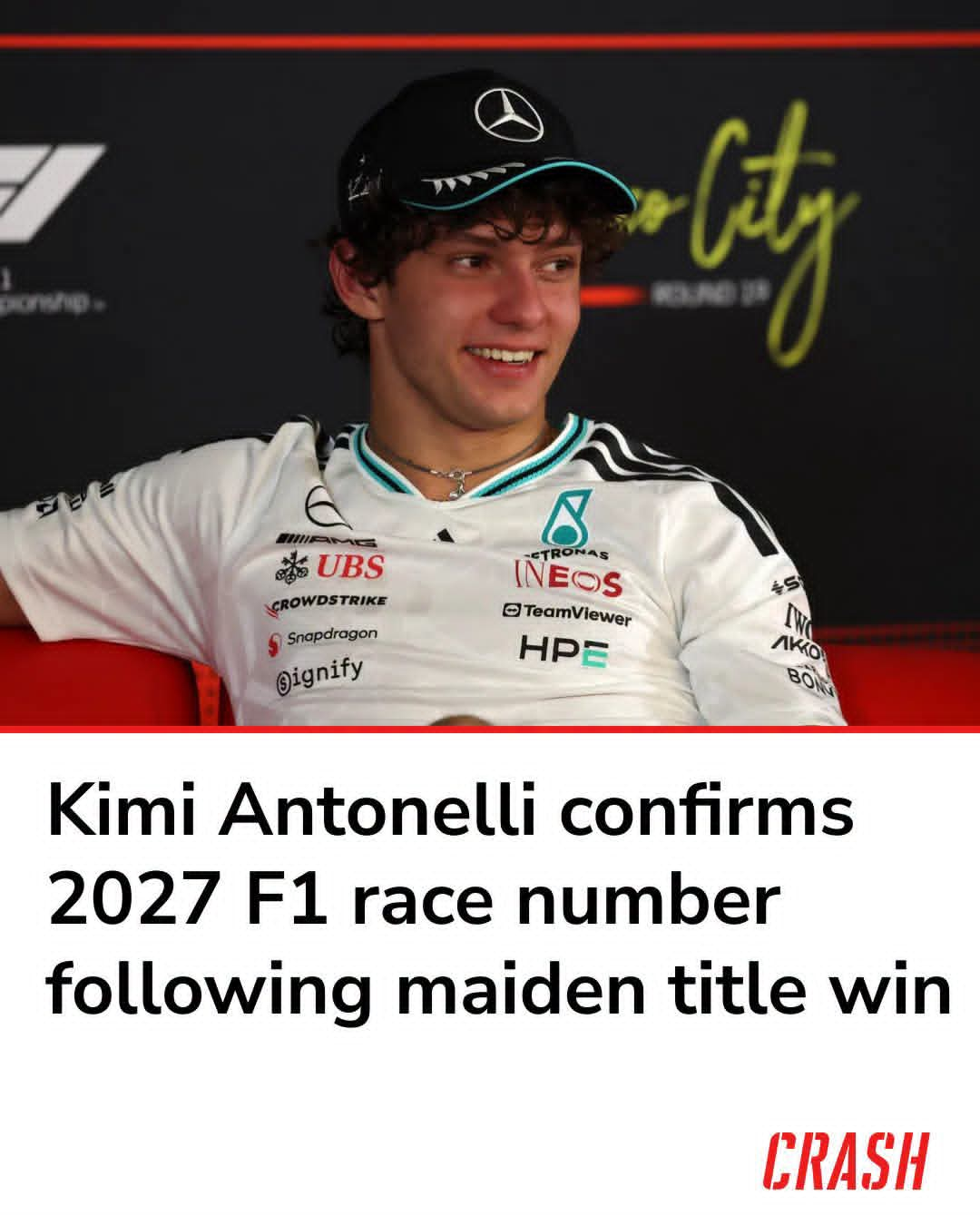
Newly crowned Formula 1 world champion Kimi Antonelli has made his decision for the 2027 season clear: the number 1 will not appear on his Mercedes. The Italian will stick with the number 12 that carried him to glory.
Antonelli sealed the 2026 drivers’ title with a third-place finish at the Mexico City Grand Prix. At just 20 years and 68 days old, he became the youngest world champion in Formula 1 history, breaking Sebastian Vettel’s long-standing record. He also ended Italy’s 73-year wait for a title winner, the first since Alberto Ascari in 1953, and became the first driver to claim the championship with number 12 since Ayrton Senna in 1988.
In the aftermath of the race, Antonelli explained his choice with characteristic honesty and self-awareness.
WHY ANTONELLI TURNED DOWN THE CHAMPION’S NUMBER 1
Since permanent driver numbers were introduced in 2014, the reigning world champion has the option to run number 1 the following season. Max Verstappen and Lando Norris both took that privilege after their titles. Lewis Hamilton, by contrast, never abandoned his iconic 44.
Antonelli is firmly in the Hamilton camp. “I think I’ll stay with number 12,” he said after the Mexico race. “I’ll stay with number 12 because, obviously, it’s a very special number for me. But also it’s a way for me to stay grounded, to stay humble, and I feel like by keeping number 12 it allows me to have a new point where to start and build on everything again and try to improve.
“And also, to be honest, I’m very superstitious, and number 1 has never been a good number for me. Whenever I put it, it went extremely badly. So one more reason to stay with number 12.”
The number 12 has deep personal meaning. It was the number Senna used during his Lotus years and when he claimed his first title with McLaren in 1988. Antonelli has raced with it since his Formula 4 days and through his dominant junior career. For him, it is both a tribute and a lucky charm.
THE BIGGER PICTURE: HUMILITY IN A HIGH-PRESSURE SPORT
Antonelli’s decision stands out in a paddock where image, branding, and status often take center stage. Choosing to forgo the ultimate symbol of supremacy sends a clear message about how the young Italian views his own success. He treats the 2026 title not as a destination but as a starting point for further growth.
This mindset could prove valuable as he enters the next phase of his career. Defending a championship brings different pressures. Expectations rise, rivals raise their game, and the margin for error shrinks. By keeping the same number that defined his rise, Antonelli is signaling continuity and focus rather than celebration.
It also strengthens the emotional connection with fans. Number 12 now carries the weight of a championship-winning campaign, a Senna link, and a story of a teenager who delivered under intense scrutiny. Merchandising, fan identification, and brand storytelling all benefit from that consistency.
WHAT THIS MEANS FOR MERCEDES AND THE 2027 SEASON
Mercedes has found its new generation star. Antonelli’s rapid development from junior standout to title winner validates the team’s decision to promote him early. Keeping number 12 maintains a clear visual identity for the team’s lead car as they prepare for the next regulation cycle and the challenges that come with being the hunted rather than the hunters.
Across the grid, the absence of number 1 will be noticeable. For the first time since 2021, no car will carry the champion’s traditional digit. That small detail underlines how personal and non-mandatory the choice has become.
LOOKING AHEAD: A CHAMPION BUILDING HIS OWN LEGACY
Antonelli has already spoken about the title marking “a new beginning.” Retaining number 12 reinforces that philosophy. It suggests a driver more interested in sustained excellence than symbolic gestures.
History shows that some of the greatest champions preferred continuity over the number 1. Hamilton’s long association with 44 is the modern benchmark. Antonelli appears set on a similar path, one rooted in personal meaning and self-awareness rather than tradition.
As the Formula 1 circus heads into the final races of 2026 and prepares for 2027, the youngest champion in the sport’s history will continue racing under the same number that brought him the crown. For a driver who has already rewritten the record books, that choice feels entirely consistent with the grounded approach that helped him get there.
The number 12 is no longer just a tribute or a lucky charm. It is now the mark of a world champion who prefers to keep building rather than rest on the symbol of past success.