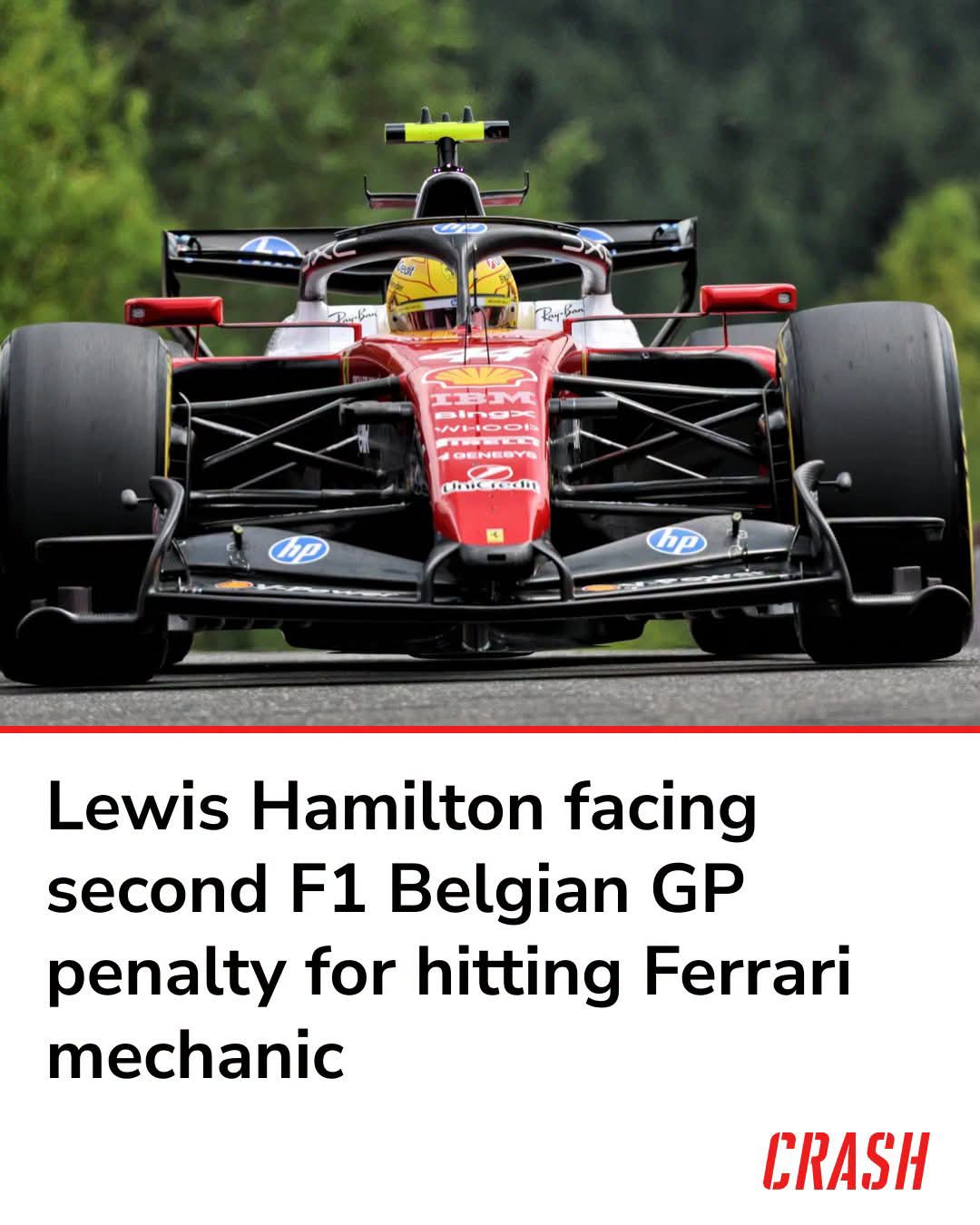
Lewis Hamilton’s Belgian Grand Prix weekend nearly became even more chaotic after Ferrari found itself under FIA scrutiny for a pit lane incident involving one of its mechanics. Already carrying a time penalty for an opening-lap collision with George Russell, the seven-time Formula 1 world champion faced the possibility of an additional sanction after making contact with a crew member during his only pit stop of the race at Spa-Francorchamps.
Although the incident immediately triggered an FIA investigation for a potential unsafe release, Hamilton ultimately escaped further punishment, allowing him to keep a valuable fourth-place finish. The episode nevertheless highlighted how even a perfectly timed strategy can quickly unravel under Formula 1’s intense pressure.
FERRARI’S PERFECT STRATEGY ALMOST TURNED INTO DISASTER
Hamilton entered the Belgian Grand Prix looking to recover from a difficult weekend that had already included a practice crash and an opening-lap penalty.
Ferrari’s race strategy appeared to come alive when the Virtual Safety Car was deployed around lap 20. Taking advantage of the slower race pace, the Italian team immediately called Hamilton into the pits, aiming to complete his mandatory tyre change while losing minimal track position.
On paper, it was exactly the kind of strategic opportunity every team hopes for.
However, the stop became memorable for all the wrong reasons.
As Hamilton accelerated away from his pit box, his Ferrari clipped one of Ferrari’s mechanics, instantly raising concerns over both the crew member’s safety and whether the release complied with FIA regulations.
HAMILTON’S FIRST REACTION SHOWED HIS IMMEDIATE CONCERN
Rather than focusing on the race itself, Hamilton’s first instinct was to check on the wellbeing of the mechanic.
Over team radio, the Ferrari driver immediately asked whether the crew member was alright after realizing contact had occurred as he exited the pit lane.
His race engineer quickly reassured him that everyone was unharmed, allowing Hamilton to return his attention to the race.
The moment reflected Hamilton’s awareness of the dangerous environment Formula 1 pit crews operate in, where fractions of a second separate flawless execution from potentially serious accidents.
Fortunately, the mechanic escaped without injury.
WHY THE FIA OPENED AN INVESTIGATION
Despite the absence of injuries, race control immediately noted the incident and referred Ferrari to the stewards after the race.
Under Formula 1’s sporting regulations, teams have a responsibility to release cars safely from the pit box. If officials believe a driver has been released into an unsafe situation, penalties can range from financial sanctions to time penalties—or, in more serious cases, drive-through penalties during the race.
Because Hamilton had already received a five-second penalty for his collision with George Russell on the opening lap, another sporting sanction could have dramatically affected his final classification.
Ferrari representatives were summoned to explain exactly what happened during the stop before the FIA reached its verdict.
WHY THE DECISION MATTERED FOR THE CHAMPIONSHIP
Hamilton eventually crossed the finish line in fourth place after another determined recovery drive.
Had the FIA imposed an additional five-second penalty, there was genuine concern that he could lose valuable championship points depending on the time gaps behind him.
Those points are becoming increasingly significant.
Following the Belgian Grand Prix, the championship picture remains extremely competitive:
Drivers’ Championship
Andrea Kimi Antonelli – 204 points
Lewis Hamilton – 159 points
George Russell – 154 points
Constructors’ Championship
Mercedes – 358 points
Ferrari – 285 points
McLaren – 195 points
With several races still remaining before the season finale in Abu Dhabi, every position now carries major championship implications.
FERRARI CONTINUES TO SHOW IMPROVED RACE EXECUTION
Despite the pit lane scare, Ferrari can still take positives from another competitive weekend.
The SF-26 has steadily developed into one of the strongest cars on the grid, allowing Hamilton and Charles Leclerc to consistently challenge Mercedes at the front.
Perhaps even more encouraging has been Ferrari’s improved operational consistency throughout recent race weekends. While strategy mistakes and reliability issues defined much of the team’s recent past, Ferrari has increasingly looked capable of maximizing race opportunities.
The Belgian Grand Prix pit incident served as a reminder, however, that perfection remains essential in modern Formula 1.
Even one minor lapse can trigger investigations and potentially cost crucial championship points.
HAMILTON’S RESILIENCE CONTINUES TO DEFINE HIS SEASON
If there has been one consistent theme throughout Hamilton’s 2026 campaign, it has been resilience.
Whether overcoming qualifying setbacks, recovering from penalties, or adapting after abandoning Ferrari’s simulator program earlier this season, the British driver has repeatedly demonstrated an ability to limit damage during difficult weekends.
Spa was another example.
After serving an opening-lap penalty, navigating the pit lane investigation, and managing race-long pressure from rivals behind, Hamilton still secured another strong points finish that strengthened his championship position.
Those recovery performances could become just as important as race victories if the title battle remains this close during the second half of the season.
ATTENTION NOW TURNS TO HUNGARY
With the Belgian Grand Prix complete, Formula 1 immediately shifts its focus to the Hungarian Grand Prix, where Ferrari will hope to continue its upward trajectory.
The tighter and more technical Hungaroring presents a very different challenge from Spa’s high-speed layout, potentially playing more to Ferrari’s strengths.
Mercedes still leads both championships, but Ferrari’s momentum suggests the battle is far from over.
For Hamilton, escaping Belgium without additional punishment may prove almost as valuable as the points themselves.
As the championship enters its decisive stretch, avoiding costly mistakes—both on track and in the pit lane—could ultimately determine who lifts Formula 1’s biggest trophies at the end of the season.