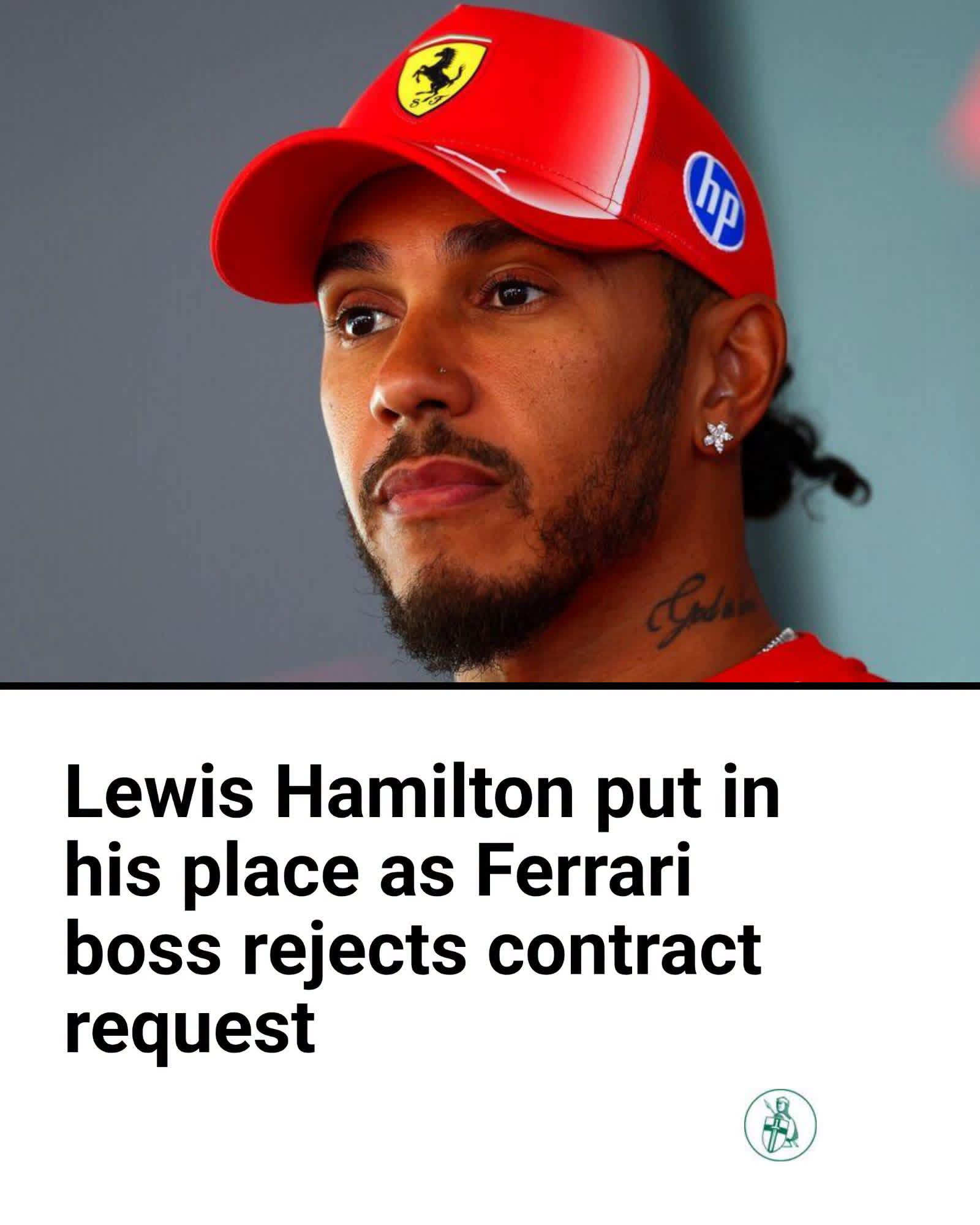
Ferrari team principal Fred Vasseur has firmly shut down Lewis Hamilton’s call for clearer “rules of engagement” following the pair’s first-corner clash at the Italian Grand Prix. The Frenchman’s public response leaves little doubt that Ferrari will not be rewriting its internal racing protocols to suit its star driver.
Hamilton’s comments after Monza had suggested a fundamental difference between his time at Mercedes and his current situation at Ferrari. Vasseur’s reply made it clear he does not share that view.
HAMILTON’S POST-MONZA FRUSTRATION
Hamilton finished sixth at Monza after starting fourth. A first-corner collision with team-mate Charles Leclerc left him playing catch-up for most of the afternoon, while Leclerc’s race ended with a crash on lap two.
Speaking afterwards, Hamilton pointed to the lack of structure in how Ferrari allows its drivers to race. “I think it comes down to rules of engagement,” he said. “When I was at Mercedes, we had written rules of engagement. We never really, really had it too bad… Here, there are no rules. We need to address that.”
The remarks were widely interpreted as a public push for Ferrari to impose clearer boundaries between its two drivers.
VASSEUR’S BLUNT RESPONSE
Vasseur rejected the premise of Hamilton’s criticism. While he acknowledged the difficulty of creating rules that cover every possible racing scenario, he pushed back against the idea that Ferrari operates without any framework or principles.
The team principal’s stance is consistent with his previous comments during the Spanish Grand Prix weekend, when he confirmed Leclerc had accepted responsibility for the Monza incident but insisted he would not introduce rigid team orders.
WHY FERRARI IS RESISTING WRITTEN RULES
Modern Formula 1 teams walk a fine line between allowing their drivers to race and protecting the overall championship position. Mercedes, during Hamilton’s dominant years, often operated with clear internal guidelines designed to avoid costly collisions. Ferrari under Vasseur has preferred a more flexible approach, trusting the drivers to manage battles themselves.
Implementing strict written rules can reduce on-track tension, but it can also create new problems when incidents fall into grey areas. Vasseur appears unwilling to hand either driver a formal hierarchy or a rigid set of engagement protocols that could limit their ability to fight.
THE WIDER CONTEXT OF HAMILTON’S FERRARI CHAPTER
Hamilton’s public airing of the issue highlights the ongoing adjustment period since his move from Mercedes. At Brackley he was the established number one in a tightly controlled environment. At Ferrari he shares the garage with a younger, hungry team-mate in Leclerc and a team principal determined to avoid the political pitfalls that have plagued the Scuderia in the past.
The Monza clash and its aftermath have kept the spotlight on that internal dynamic at a time when Ferrari needs maximum points rather than internal debate.
WHAT HAPPENS NEXT
Vasseur’s public rejection of Hamilton’s comments draws a line under the immediate discussion. Whether private conversations lead to any informal understanding between the drivers remains to be seen. What is already clear is that Ferrari will not be issuing a Mercedes-style written code of engagement in response to Hamilton’s request.
For now, both drivers are expected to continue racing each other hard. The risk of further flashpoints remains, and the responsibility for avoiding them sits squarely with Hamilton, Leclerc and the judgement of their team principal. In Vasseur’s Ferrari, the rules of engagement are simple: race, but don’t make the team look foolish.