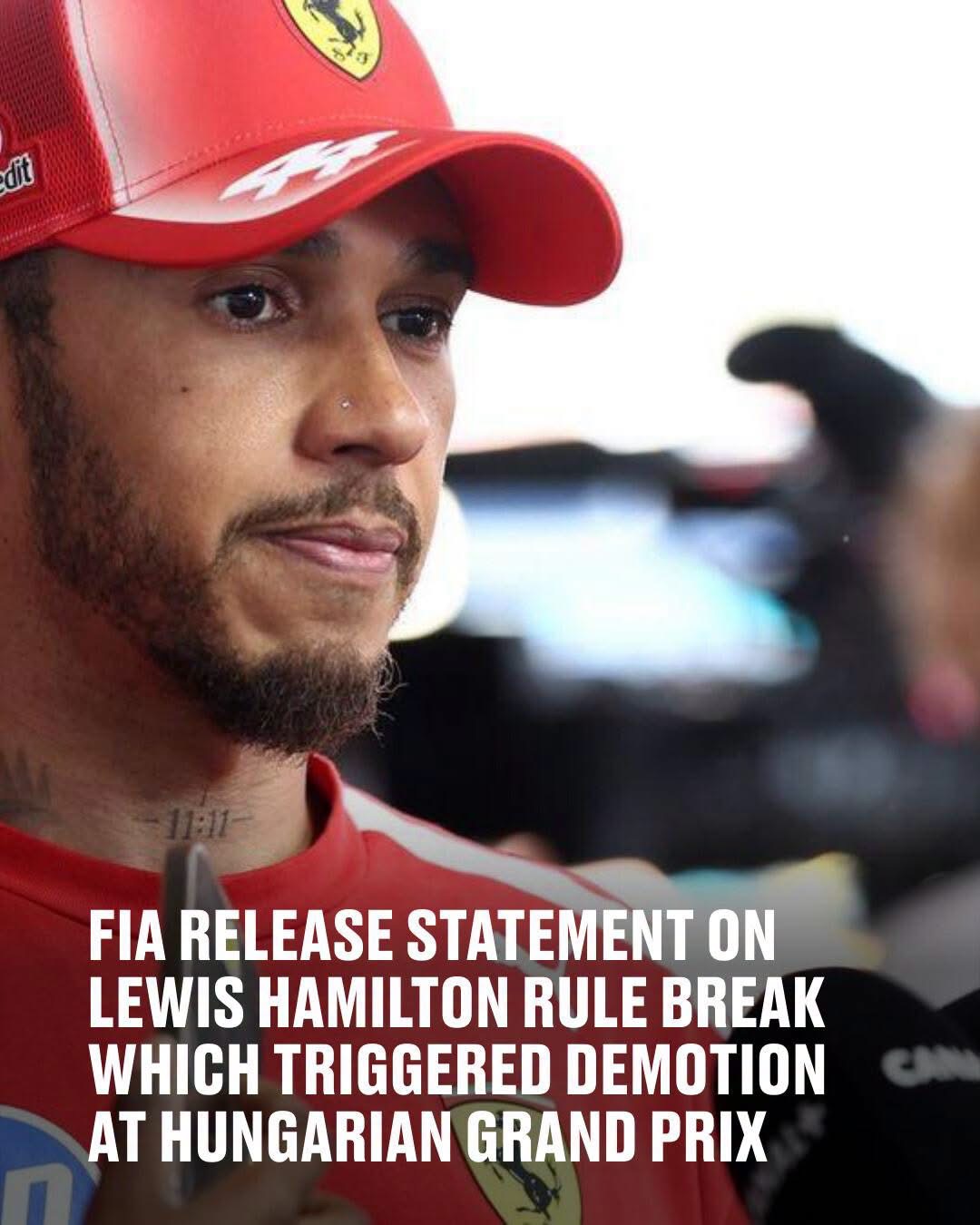
The Belgian Grand Prix delivered another dramatic chapter in Formula 1’s increasingly unpredictable 2026 season, but one of the most talked-about moments had nothing to do with overtaking or strategy. Instead, it unfolded in Ferrari’s pit box, where Lewis Hamilton accidentally struck one of his own mechanics during a tense pit stop that later resulted in a substantial financial penalty for the Scuderia.
Although Hamilton escaped additional sporting punishment and retained his finishing position, Ferrari’s operational mistake has reignited discussions about pit lane safety, communication protocols, and the enormous pressure teams face during modern Formula 1 races.
HOW THE INCIDENT UNFOLDED DURING THE VIRTUAL SAFETY CAR
Hamilton’s stop came during a Virtual Safety Car period, offering Ferrari an opportunity to make a relatively inexpensive pit stop while simultaneously serving the five-second penalty he had already received for his opening-lap collision with George Russell.
However, the stop quickly became chaotic.
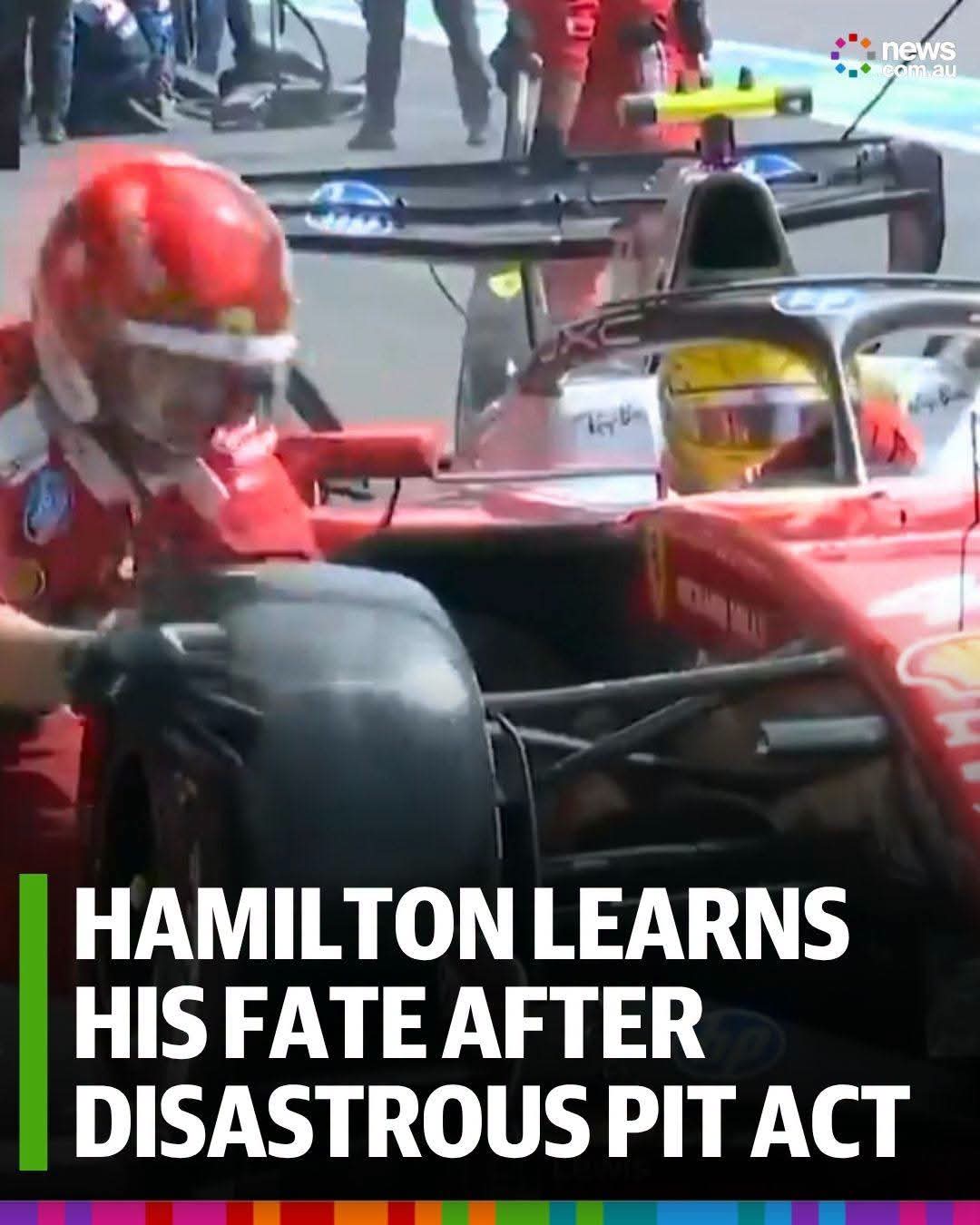
Because Hamilton’s Ferrari had sustained front-wing damage earlier in the race, a mechanic attempted a late front-wing adjustment just as the pit crew completed the tyre change. At almost the same moment, the pit exit light turned green, signalling Hamilton that he was free to leave.
Like every Formula 1 driver, Hamilton’s attention was focused on the release light rather than the mechanics surrounding the car. As he accelerated away, he made contact with the mechanic, who fortunately escaped without injury.
Realizing something had gone wrong almost immediately, Hamilton stopped briefly before continuing and later asked over team radio whether the crew member was okay.
FERRARI ACCEPTS RESPONSIBILITY FOR THE MISTAKE
Following an investigation, race officials concluded that the unsafe release resulted from Ferrari’s internal procedures rather than driver error.
The FIA imposed a $50,000 fine on Ferrari after the team admitted responsibility, citing several contributing factors, including:
A late decision to adjust Hamilton’s damaged front wing.
Poor communication between the pit wall and pit crew.
The mechanic failing to recognize that the release signal had already been given.
Because the error originated within Ferrari’s operational process rather than Hamilton ignoring instructions or driving recklessly, the stewards chose not to issue the seven-time world champion another time penalty.
The decision allowed Hamilton to keep his fourth-place finish despite what could have become an even more costly afternoon.
HAMILTON’S IMMEDIATE REACTION SHOWED HIS CONCERN
Hamilton’s first reaction after leaving the pit box revealed just how seriously drivers view incidents involving mechanics.
Speaking after the race, Hamilton explained that once the release light illuminated, he had little choice but to follow standard procedure.
“The green light went and so I went,” Hamilton said.
He admitted that his thoughts immediately went back to one of Formula 1’s most infamous pit-lane accidents—when Ferrari’s Kimi Räikkönen accidentally ran over a mechanic during the 2018 Bahrain Grand Prix, causing serious leg injuries.
Hamilton revealed that his heart “sank” when he realized contact had been made, adding that he was relieved the mechanic escaped unharmed.
His comments reflected the reality every Formula 1 driver faces: while they trust their crews completely, split-second decisions during pit stops leave almost no margin for error.
WHY THIS INCIDENT MATTERS BEYOND ONE RACE
Modern Formula 1 pit stops are engineering masterpieces, regularly completed in under two seconds. That incredible speed, however, leaves virtually no room for hesitation or confusion.
Every mechanic has a precisely timed responsibility. If even one person receives delayed information or reacts a fraction of a second too slowly, dangerous situations can develop almost instantly.
Ferrari’s admission highlights how even elite teams remain vulnerable to communication breakdowns under race conditions.
For Formula 1 as a whole, the incident serves as another reminder that operational excellence extends far beyond designing the fastest car. Championship campaigns can also hinge on flawless execution from dozens of team members working together in high-pressure environments.
FERRARI CANNOT AFFORD MORE OPERATIONAL ERRORS
Ferrari remains locked in an intense Constructors’ Championship battle with Mercedes, while Hamilton continues fighting near the top of the Drivers’ Championship.
With Andrea Kimi Antonelli extending his championship lead after another impressive victory in Belgium, every point has become increasingly valuable.
Hamilton’s fourth-place finish kept him second in the standings, but Ferrari will know that repeated operational mistakes could prove just as costly as a lack of outright pace.
As Formula 1 heads to the Hungarian Grand Prix before the summer break, Ferrari’s focus will almost certainly extend beyond improving performance. Eliminating preventable errors in the garage may become just as important if the Italian team hopes to sustain its title challenge throughout the remainder of the 2026 season.