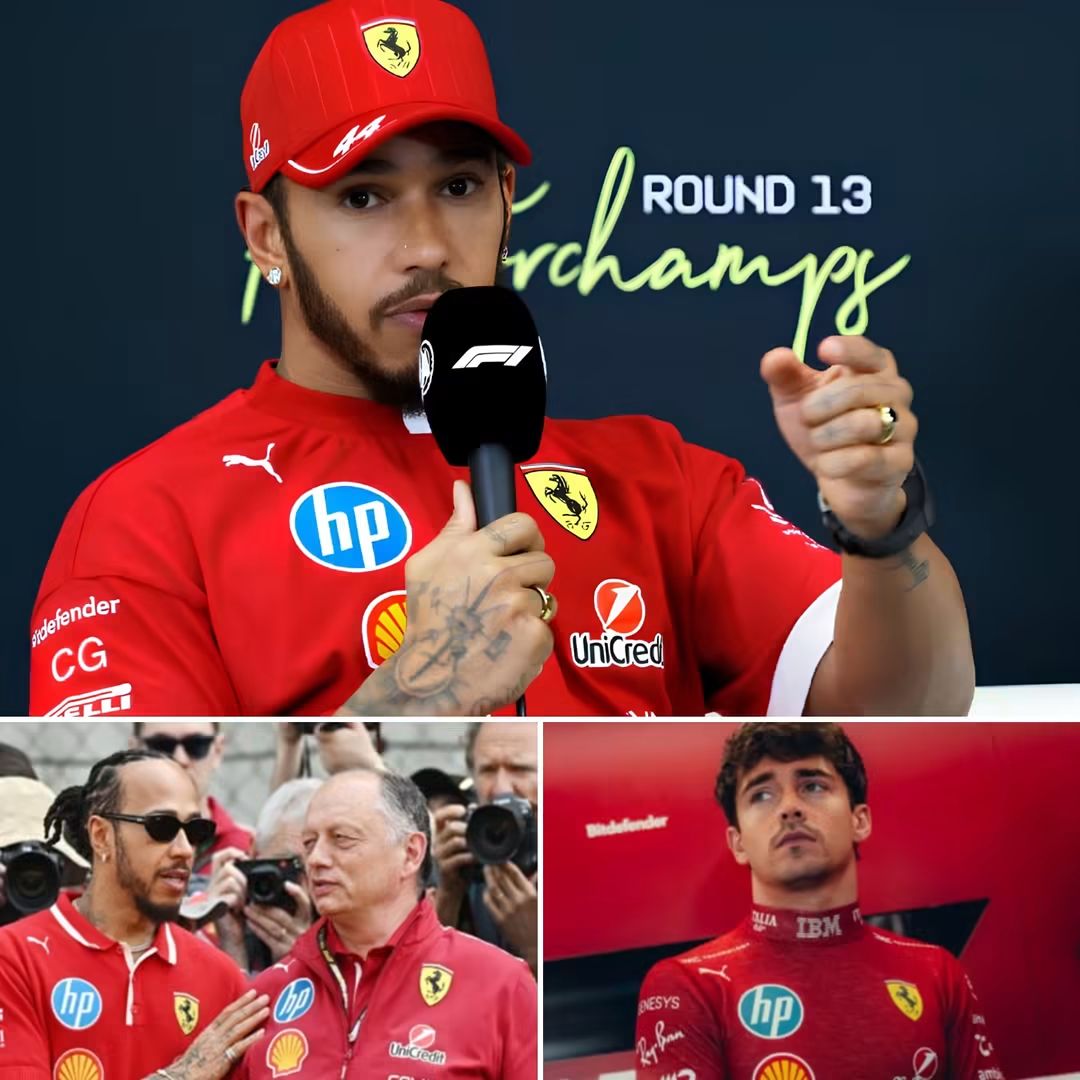
Lewis Hamilton has drawn a clear line under speculation about his Formula 1 future. The seven-time world champion made it plain that retirement talk is not on his agenda and that he intends to remain a Ferrari driver well beyond the immediate seasons, even as Charles Leclerc’s lengthy new contract has sharpened the internal competition at Maranello.
Hamilton’s comments, delivered earlier in the 2026 season and reinforced through subsequent appearances, leave little room for ambiguity. He is under contract through at least 2027, is already thinking in multi-year terms, and has told critics trying to write him off to “get used to it.” The message arrives against a backdrop of teammate tension, evolving team orders debates, and a Ferrari that has shown flashes of competitiveness but continues to lag in key performance areas.
HAMILTON’S CLEAR STANCE ON HIS FUTURE
In May 2026, ahead of the Canadian Grand Prix, Hamilton addressed the retirement noise head-on. He confirmed he remained under contract with Ferrari for the following season and stated he still loved the sport “with all my heart.” More significantly, he revealed he was already planning for the next five years.
“I’m going to be here for quite some time, so get used to it,” he said. The remarks came after a difficult 2025 debut campaign in which he failed to score a single grand prix podium for the first time in his career. The 2026 season has been markedly better, featuring his first Ferrari victory and several podiums, yet the broader narrative around his longevity has persisted.
Hamilton has shown no interest in rushing further contract talks. When Ferrari announced Leclerc’s extension in the lead-up to Monaco, Hamilton was asked whether it prompted discussions about his own future. His response was measured: the timing was not right, he had “a lot of time,” and continuing with Ferrari was less a conversation and more an ongoing engagement.
These statements matter because they remove uncertainty at a moment when Ferrari needs stability. At 41, Hamilton is operating in rare territory. Few drivers remain at the sharp end into their mid-40s, yet he continues to extract strong performances and influence the team’s direction.
LECLERC’S LONG-TERM DEAL CHANGES THE EQUATION
Charles Leclerc’s new agreement, signed in June 2026 and understood to run into the 2030s, represents a different kind of commitment. Ferrari has positioned the Monegasque as its long-term cornerstone. The deal effectively locks him in as the driver around whom the team can build for the better part of a decade.
This creates a natural tension. Hamilton arrived with the explicit goal of chasing an eighth championship and bringing experience to a team that has struggled to convert potential into titles. Leclerc, already the most experienced Ferrari driver in recent years and on course to surpass historical markers, represents continuity and institutional knowledge.
Team principal Fred Vasseur has been consistent on the philosophical point: Ferrari operates with two number-one drivers. Both men knew the arrangement when they signed. Vasseur has publicly stated that the approach is clear in the contracts and that the team will not artificially rank them. Performance on track is expected to dictate priority when the situation demands it.
In practice, that ideal has been tested. Clashes, delayed team orders, and public frustration—most notably around the Italian Grand Prix—have exposed the difficulty of managing two highly competitive, high-profile drivers without a rigid hierarchy. Hamilton has referenced the clearer “rules of engagement” he experienced at Mercedes. Ferrari, by contrast, has preferred a more fluid approach.
WHY THE DYNAMIC MATTERS FOR FERRARI AND THE CHAMPIONSHIP
The power balance between Hamilton and Leclerc is not merely a media storyline. It affects strategy calls, resource allocation, and the psychological atmosphere inside the team. When one driver sits higher in the standings, the absence of decisive intervention can cost points that prove decisive over a season. When both are closely matched, the risk of on-track incidents rises.
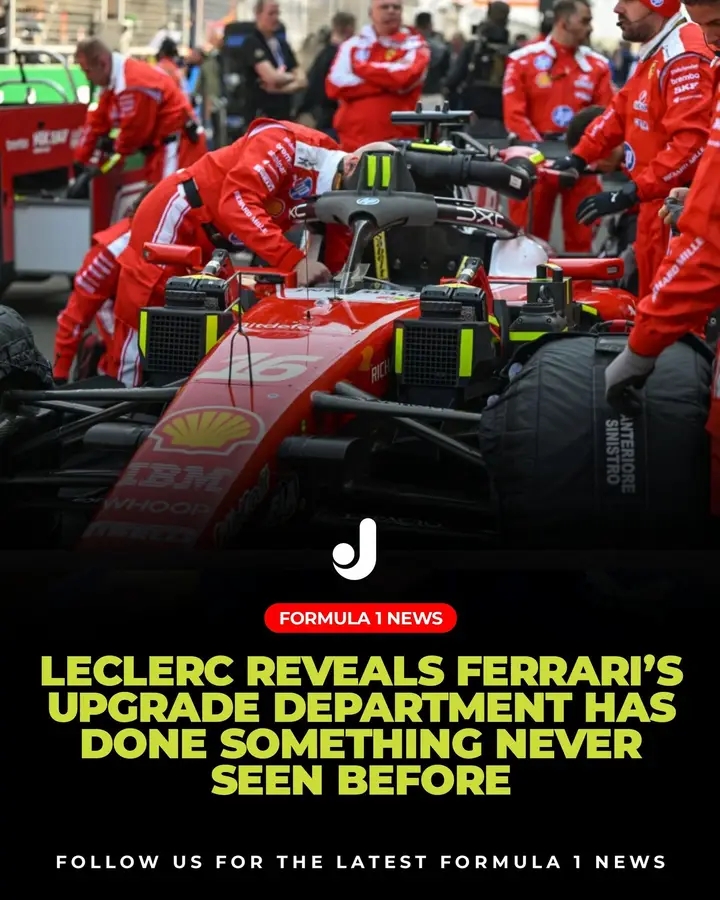
For Ferrari, the stakes are structural. The team has improved its chassis performance in 2026 but continues to concede ground in straight-line speed. Closing that deficit is a multi-year engineering project. Hamilton’s presence accelerates the learning process through his detailed feedback and experience across regulation cycles. Leclerc’s long-term deal ensures the team retains a driver who has grown up inside the organization and understands its political and technical nuances.
The broader industry impact is also notable. Long contracts for established stars—Leclerc into the 2030s, similar moves by rivals—reduce the free-agent market and force younger talents to wait longer for top seats. Ferrari’s dual commitment signals confidence in its current pairing while limiting flexibility if performance plateaus.
Hamilton’s insistence on staying also challenges conventional career timelines. Drivers of his generation rarely maintain elite form this late. His physical preparation, mental approach, and willingness to adapt (including engineering changes and personal training adjustments) offer a template for longevity in a sport that increasingly demands both speed and sustainability.
WHAT COMES NEXT FOR THE SCUDERIA
Looking ahead, several variables will shape the next phase. Ferrari must deliver meaningful progress on power unit performance for 2027. The team’s ability to implement clearer operational protocols without alienating either driver will be watched closely. Hamilton’s contract situation beyond 2027 remains open in public statements, though his planning horizon suggests he is not treating the current deal as a final chapter.
Predictions are inherently uncertain in Formula 1, but the current trajectory points to continued coexistence rather than a sudden rupture. Hamilton has repeatedly backed Vasseur while suggesting that structural elements higher in the organization may need examination. That combination of loyalty to the team principal and constructive pressure for improvement is characteristic of a driver who still believes the project can deliver.
Leclerc, secured for the long term, has the security to develop without constant future speculation. The real test will come when one driver clearly outperforms the other over a sustained period or when championship contention forces harder choices.
Hamilton’s public stance has cut through the noise. He is not retiring. He is not looking elsewhere in the short term. And he intends to keep racing at the highest level while Ferrari works to close the remaining gaps. For a team that has spent years searching for consistency and a driver still chasing history, that clarity is valuable—even if the internal competition remains as intense as ever.
The story of Hamilton at Ferrari is still being written. The latest chapter confirms the seven-time champion plans to stay in the narrative for years to come.