Jeremy Clarkson has sparked a fresh controversy in Formula 1 after making a provocative joke about Franco Colapinto’s Argentine nationality during a live Sky Sports F1 broadcast at the 2026 United States Grand Prix. The comment immediately drew attention, with former F1 driver Martin Brundle chuckling beside Clarkson as the exchange unfolded on television.
Clarkson, who was visiting the Circuit of the Americas in Austin as a guest of Alpine, was discussing the team’s prospects when the conversation turned to Colapinto’s grid penalty. Rather than focusing solely on the technical reason behind the punishment, the British television presenter delivered a tongue-in-cheek remark that quickly circulated on social media. Although Clarkson appeared to intend it as humour, the comment triggered criticism from Argentine supporters and prompted a strong response from Colapinto’s management.
CLARKSON’S LIVE TV REMARK TRIGGERS BACKLASH
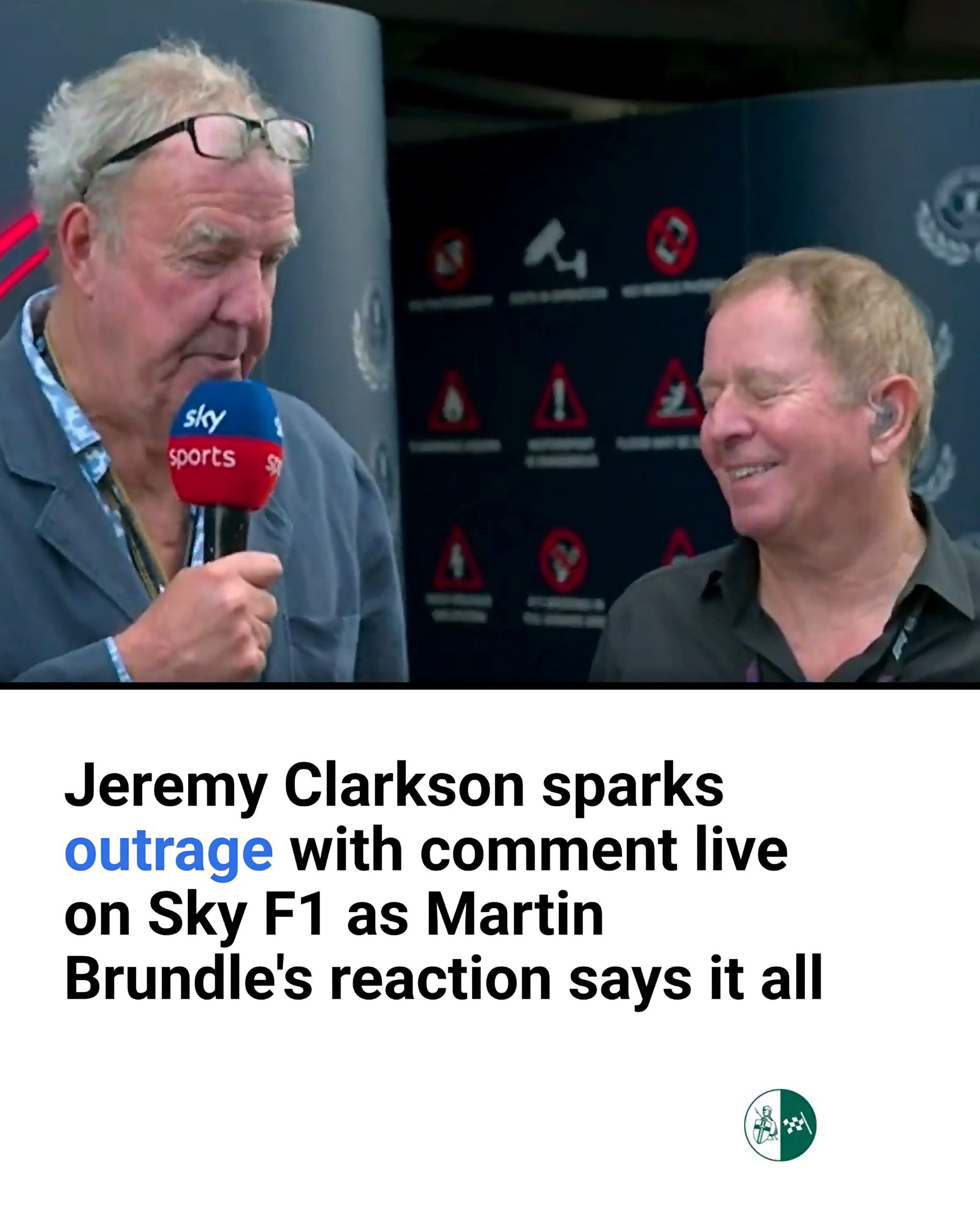
During the broadcast, Clarkson referred to Colapinto’s penalty by joking that the Argentine driver had received it because of his nationality. He then added another remark referencing what happened during his previous visit to Argentina.
Brundle, who was standing alongside Clarkson, responded with a chuckle and a slight shake of his head. His reaction became part of the moment that viewers discussed online, although it did not necessarily indicate agreement with the joke.
The controversy quickly grew beyond the original television exchange. Some fans criticised Clarkson for bringing a driver’s nationality into a discussion about a sporting penalty, while others argued that the remark was intended as a joke rather than a serious attack on Colapinto.
The incident also raised questions about the responsibility of prominent personalities appearing on Formula 1 broadcasts, particularly when their comments can reach millions of viewers around the world.
THE HISTORY BEHIND CLARKSON’S ARGENTINA REFERENCE
Clarkson’s remark carried additional significance because of his previous controversial visit to Argentina while filming Top Gear with Richard Hammond and James May.
During the programme’s infamous 2014 South American road trip, the presenters and production crew encountered intense hostility in Argentina before eventually leaving the country and crossing into Chile.
The dispute centred on the number plate of a Porsche 928 driven by Clarkson. The registration, H982 FKL, was interpreted by some locals as a reference to the 1982 Falklands War between Britain and Argentina.
The BBC maintained that the registration was coincidental, but the situation escalated, forcing the production team to abandon the filming location amid security concerns.
Clarkson’s latest comment revived memories of that episode, making his joke about Colapinto’s nationality particularly sensitive for some Argentine fans. For supporters who remember the earlier incident, the reference was not simply another throwaway television joke.
WHY COLAPINTO WAS GIVEN A GRID PENALTY
Despite Clarkson’s suggestion, Colapinto’s penalty had nothing to do with his nationality.
The Alpine driver was handed a 10-place grid penalty after exceeding the permitted allocation of control electronics components for the season. Formula 1 imposes strict limits on certain power-unit-related components, and exceeding those limits can result in grid penalties.
Colapinto qualified 14th on the road in Austin, meaning the penalty pushed him towards the back of the grid. Gabriel Bortoleto faced an even larger penalty total, leaving him subject to the rules requiring drivers with more than 15 accumulated grid places of penalties to start from the rear.
The distinction is important because Formula 1 penalties are governed by technical regulations, not a driver’s country of origin. Clarkson’s remark was presented as a joke, but it touched on a subject that some supporters felt should not have been used to ridicule a competitor.
COLAPINTO’S MANAGER ISSUES A STRONG RESPONSE
Jamie Campbell-Walter, the director of Bullet Sports Management, which represents Colapinto, publicly condemned Clarkson’s comments.
He argued that remarks targeting the driver’s nationality were unacceptable, regardless of whether they were intended as humour. He also stressed that Formula 1 should promote respect and discourage hostility and abuse across the sport.
His response highlighted a wider concern within the paddock: the need for consistent standards when it comes to how drivers, teams and their supporters are treated.
The reaction also reflected the increasingly intense environment surrounding Colapinto, whose passionate Argentine fanbase has made him one of the most closely followed drivers among Latin American supporters.
While fans and public figures can disagree over what constitutes acceptable humour, the criticism showed how quickly a brief television exchange can become a much larger debate about respect and responsibility in Formula 1.
ALPINE DISTANCES ITSELF FROM THE COMMENTS
Alpine also responded to the controversy, making clear that Clarkson’s remarks did not represent the team’s official position.
The team described the comments as a personal opinion that did not align with its values of kindness and respect. It also reaffirmed its support for Colapinto, underlining that he remained an important member of the team.
The response was significant because Clarkson had attended the United States Grand Prix as an Alpine guest. Although teams regularly welcome celebrities and other personalities into the paddock, they must also consider how a guest’s public comments could affect their drivers and wider reputation.
By issuing a statement, Alpine sought to separate itself from the controversy and make its position clear without allowing the incident to overshadow the team’s competitive objectives in Austin.
A CONTROVERSY THAT GOES BEYOND ONE JOKE
The Clarkson incident demonstrates how Formula 1’s global audience can transform a brief moment on live television into an international controversy.
Clarkson is well known for his provocative humour, and his supporters may view the remark as consistent with his established television persona. However, critics argue that jokes involving nationality can carry a different meaning when delivered by a prominent figure on a major sporting broadcast.
For Colapinto, the immediate priority remains his performance on track and his efforts to establish himself in Formula 1. Nevertheless, the public response illustrates the additional pressure drivers can face when their nationality and fanbase become part of a wider media debate.
Brundle’s reaction added another memorable element to the broadcast, but the more consequential responses came from Colapinto’s management and Alpine, both of whom made their concerns clear.
Whether the controversy fades quickly or continues to attract attention, the episode serves as a reminder that humour in a live sporting environment can have consequences beyond the moment itself. In a championship followed by millions across different countries and cultures, public figures must recognise that a joke intended to entertain one audience may offend another.