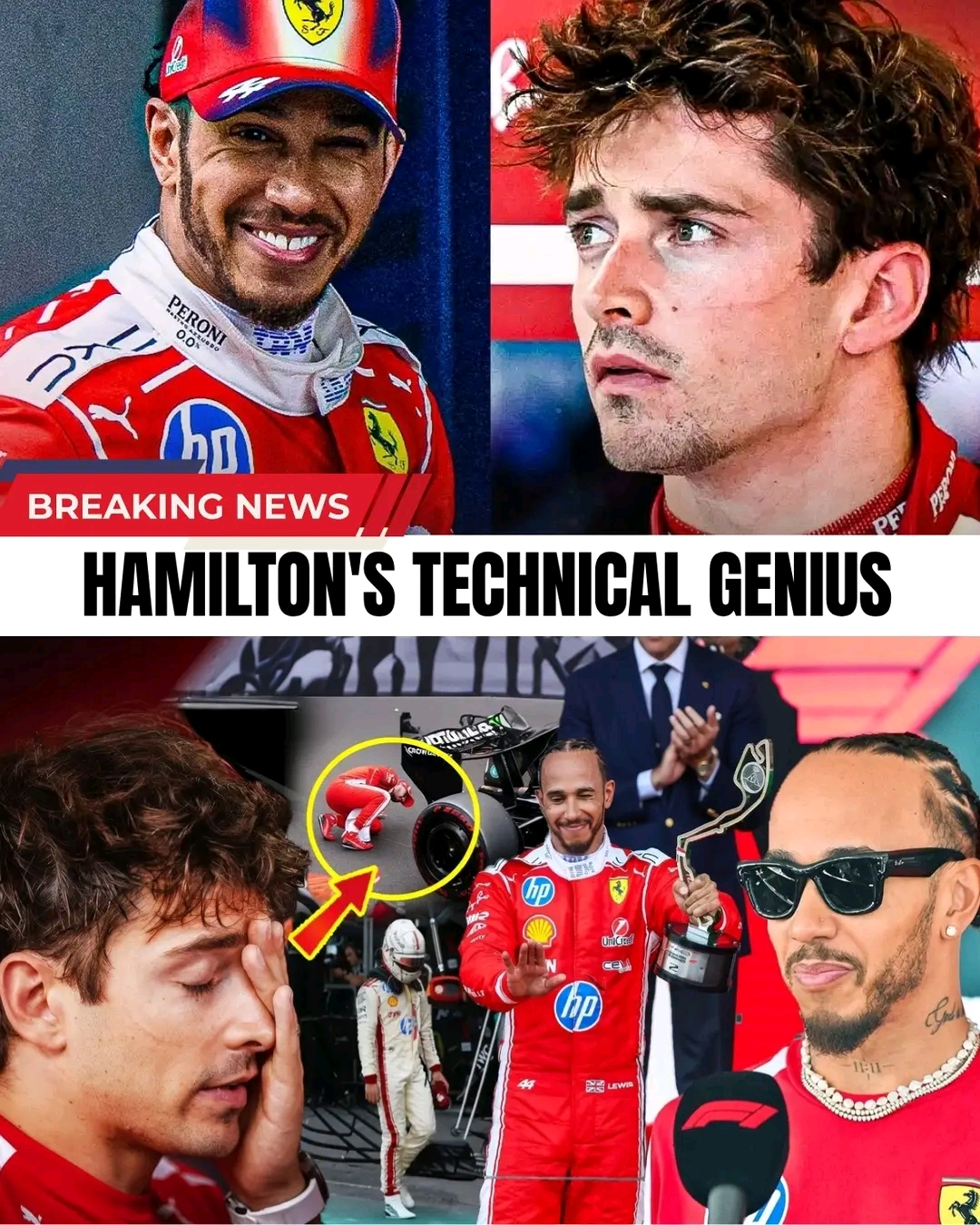
A dramatic narrative has circulated online following the Monaco Grand Prix, suggesting that Lewis Hamilton “destroyed” Charles Leclerc in a psychological sense during an intense on-track battle. The viral framing paints a picture of mental collapse, tunnel dive drama, and emotional breakdown in front of a home crowd.
However, while the Monaco GP did deliver close racing and high-pressure moments, the reality is far more nuanced than the sensational claims being pushed across social media.
What actually matters here is not the exaggerated storyline, but the growing competitive tension between two elite drivers operating at very different points in their careers.
WHAT THE VIRAL CLAIMS ARE SAYING
Online posts and highlight clips have suggested that Lewis Hamilton applied sustained pressure on Charles Leclerc during key phases of the Monaco race, particularly around the Casino section and the tunnel entry.
Some versions of the story go further, claiming a “psychological collapse” and a decisive moment involving an aggressive dive that supposedly unsettled Leclerc in front of his home fans.
One widely circulated page even frames the moment as mental “warfare” between the two drivers.
Watch source here: �
qb.networthgorilla.top
But it is important to separate race drama from storytelling exaggeration.
WHAT REALLY HAPPENS IN MONACO UNDER PRESSURE
Monaco is one of the most mentally demanding circuits in Formula 1.
Unlike high-speed tracks that reward raw power, Monaco punishes hesitation. Overtaking is extremely difficult, and every defensive move is amplified by narrow barriers and zero margin for error.
In that environment, drivers like Lewis Hamilton rely heavily on experience, tyre management, and timing rather than constant aggressive lunges.
Meanwhile, drivers like Charles Leclerc carry an additional emotional layer at Monaco, where expectations from home fans increase pressure significantly.
That combination alone is enough to create moments that look dramatic on broadcast cameras, even when both drivers are performing within normal competitive limits.
THE CASINO SECTION AND TUNNEL MYTHS VS REALITY
The Casino corner and tunnel entry at Monaco are often described as “pressure points” in race analysis because they are areas where mistakes are punished instantly.
If a chasing car closes the gap there, it often looks like psychological pressure is building. In reality, this is usually a combination of:
Slipstream effects on exit
Tyre temperature differences
Fuel load variation
ERS deployment timing
An apparent “dive” into the tunnel is often a late-braking attempt that either gets defended or resets the gap on exit, rather than a decisive mental turning point.
Modern F1 telemetry shows that race swings in Monaco are more mechanical and strategic than emotional.
DID HAMILTON REALLY “BREAK” LECLERC?
There is no credible evidence that either driver experienced a psychological breakdown during the race.
What is more accurate is this:
Hamilton applied experienced race pressure in key phases
Leclerc defended under intense home crowd expectations
Both drivers managed high-stakes moments without major error
This is standard elite-level Formula 1 racing, not a mental collapse scenario.
What fans often interpret as “breaking” is usually just a driver losing a single defensive phase or choosing to preserve tyres instead of risking a crash.
WHY THIS RIVALRY NARRATIVE IS EXPLODING
The reason this story gained traction is simple: both drivers carry huge global fanbases and strong emotional branding.
Hamilton represents legacy, control, and experience. Leclerc represents youth, precision, and homegrown Ferrari ambition.
When those two profiles meet on a circuit like Monaco, storytelling naturally becomes amplified.
But Formula 1 reality is rarely about psychological domination. It is about:
Tyre degradation windows
Pit strategy timing
Track position control
Car balance across stints
The mental game exists, but it is subtle, not theatrical.
IMPACT ON FERRARI AND MERCEDES STRATEGY THINKING
For Ferrari, having Leclerc under pressure in Monaco highlights one key challenge: converting emotional home advantage into consistent execution.
For Mercedes and Hamilton’s side, any strong Monaco performance reinforces the value of experience in low-overtaking circuits, where decision-making matters more than outright speed.
If anything, these battles influence future race strategies more than driver psychology:
When to undercut
When to defend aggressively
How early to commit to pit stops
Whether to prioritize track position over tyre life
WHAT THIS MEANS GOING FORWARD IN THE CHAMPIONSHIP
As the season develops, battles like this will continue to shape momentum between top teams.
However, championship outcomes are rarely decided by single emotional moments. They are built on consistency across:
Street circuits like Monaco
High-speed tracks like Silverstone
Tyre-heavy circuits like Barcelona
Mixed-condition races with unpredictable weather
Both Hamilton and Leclerc remain key reference points in their teams, and neither can afford emotional instability narratives to define their seasons.
FINAL VERDICT
The Monaco GP did deliver tension, close racing, and high-pressure moments between Lewis Hamilton and Charles Leclerc, but the idea of psychological “destruction” is an overstatement shaped by viral storytelling.
What we actually saw was something more familiar in Formula 1: two elite drivers pushing each other to the limit on one of the most unforgiving circuits in the world.
And in Monaco, that alone is enough to look dramatic without needing anything exaggerated.