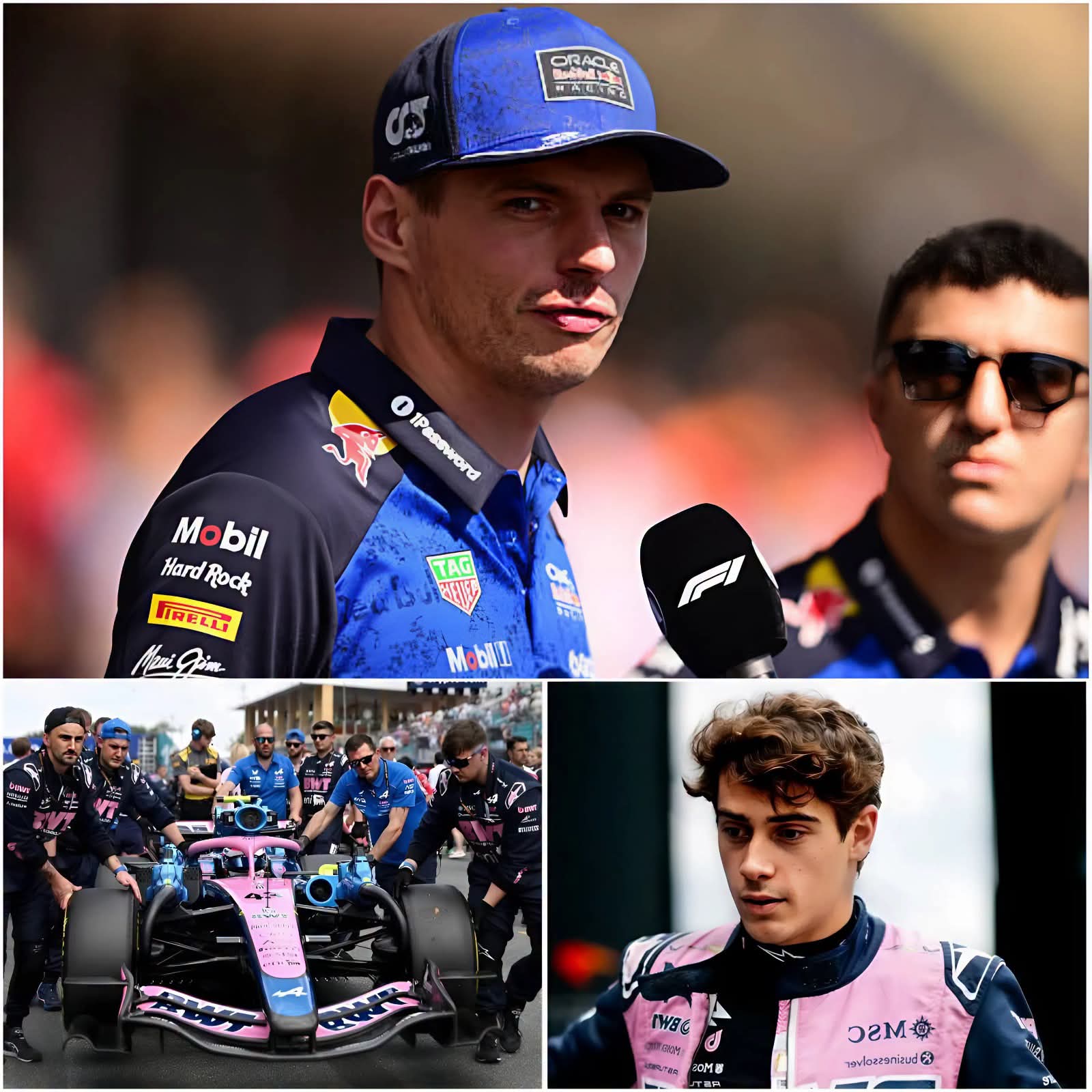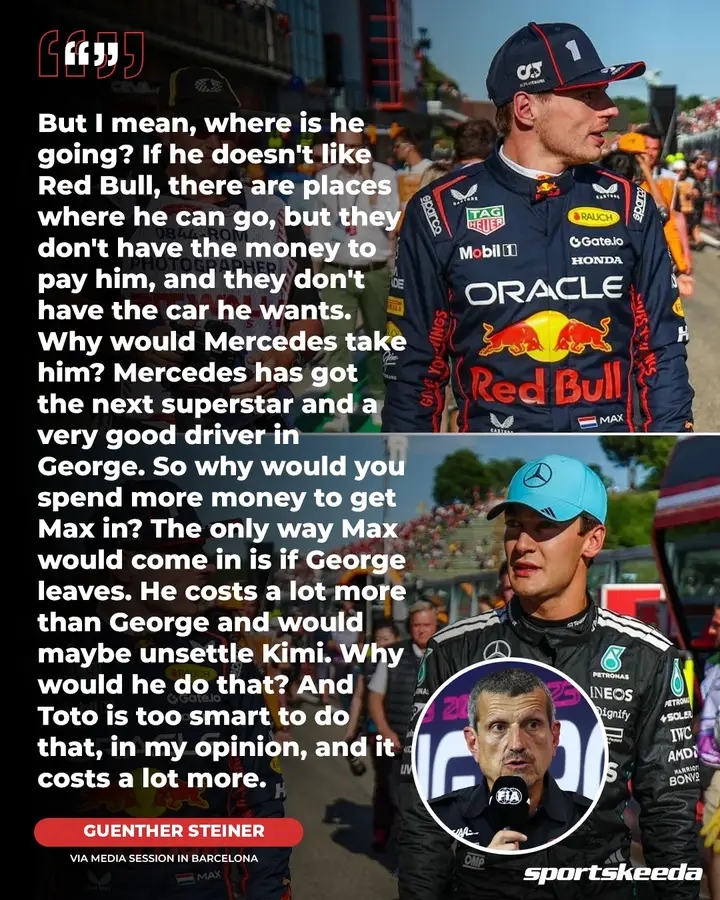
Rumors surrounding Max Verstappen’s Formula 1 future refuse to disappear, and former Haas team principal Guenther Steiner has now added his own perspective to one of the biggest talking points in the paddock. While speculation continues to link the four-time world champion with Mercedes, Steiner believes the situation is far more complicated than many fans assume.
As Formula 1 prepares for a major regulation overhaul in 2026, every top team is evaluating its long-term future. Mercedes has repeatedly been mentioned as a possible destination for Verstappen if Red Bull’s competitive advantage fades, but Steiner argues that changing teams is never as straightforward as simply moving to a famous name.
WHY VERSTAPPEN’S FUTURE REMAINS THE BIGGEST STORY IN FORMULA 1
Verstappen has built one of the most dominant eras in Formula 1 history with Red Bull, winning multiple world championships and rewriting record books along the way. However, recent internal changes at Red Bull and uncertainty over the team’s future performance have naturally fueled speculation about whether he could eventually seek a new challenge.
Mercedes, meanwhile, continues rebuilding after struggling to consistently match Red Bull since Formula 1 introduced the current ground-effect regulations. Although the Silver Arrows have shown encouraging signs of progress, they are still chasing the consistency that once made them the sport’s dominant force.
That combination has made Verstappen-to-Mercedes one of the most discussed transfer possibilities in recent seasons.
STEINER BELIEVES SUCCESS IS NOT GUARANTEED
Steiner’s assessment is refreshingly realistic. In his view, even a driver of Verstappen’s extraordinary talent cannot assume immediate success simply by joining another elite team.
Formula 1 is built around more than individual brilliance. Every championship-winning operation depends on engineers, strategists, mechanics, aerodynamic development, and an environment designed to maximize a driver’s strengths. Verstappen has spent years helping Red Bull shape its car philosophy, creating a partnership that consistently delivers race-winning performances.
Moving to Mercedes would mean adapting to a completely different culture, technical philosophy, and development process. Even if Mercedes produces a competitive car under the new regulations, there would still be no guarantee that everything would immediately click.
Steiner’s comments highlight an important truth that is often overlooked during transfer speculation: championships are won by complete teams, not drivers alone.
WHAT THE 2026 REGULATIONS COULD CHANGE
The arrival of Formula 1’s all-new technical regulations in 2026 could completely reshape the competitive order.
New chassis rules, revised aerodynamics, and significantly updated power units will offer every manufacturer a fresh opportunity to move to the front of the grid. Mercedes is widely regarded as one of the strongest engine manufacturers in Formula 1 history, leading some observers to believe the German team could emerge as one of the biggest winners of the regulation reset.
However, history shows there are no guarantees whenever Formula 1 introduces sweeping technical changes. Teams expected to dominate have sometimes struggled, while outsiders have unexpectedly become title contenders.
For Verstappen, making a decision before seeing how the new regulations unfold would involve considerable risk.
WHAT THIS MEANS FOR RED BULL
Red Bull’s priority remains convincing Verstappen that it can continue fighting for championships beyond the current era.
Despite recent challenges, the team still possesses one of the strongest technical organizations in Formula 1 and has repeatedly demonstrated its ability to respond under pressure. Losing a driver of Verstappen’s caliber would not simply affect race results—it could reshape the entire team’s long-term trajectory.
His leadership, feedback, and relentless consistency have become central to Red Bull’s success. Replacing those qualities would be an enormous challenge regardless of who stepped into the cockpit.
THE MERCEDES DRIVER PUZZLE
Mercedes also faces difficult decisions regarding its own driver lineup.
If Verstappen ever became available, few teams would ignore the opportunity to sign arguably the best driver of his generation. Yet bringing him in would require balancing team harmony, long-term planning, and the development of emerging talent already within the Mercedes program.
A blockbuster signing could instantly boost Mercedes’ championship ambitions, but it would also create new challenges that extend beyond raw pace.
WHAT COULD HAPPEN NEXT
The transfer market often moves quickly once major decisions begin falling into place. Until Verstappen publicly commits his long-term future, speculation is unlikely to disappear.
Everything may ultimately depend on which teams appear strongest once preparations for the 2026 regulations become clearer. If Red Bull remains a title contender, Verstappen will have little reason to leave. If Mercedes produces another championship-caliber package, the rumors could become significantly louder.
FINAL THOUGHTS
Guenther Steiner’s comments serve as a reminder that Formula 1 success is rarely as simple as changing uniforms. While Verstappen possesses the talent to compete anywhere, championships depend on the strength of the entire organization behind the driver.
For now, the Verstappen-to-Mercedes story remains one of Formula 1’s most fascinating possibilities rather than a certainty. As the sport moves closer to its biggest technical reset in years, every decision made by the leading teams could shape the next era of Formula 1—and Verstappen’s future will remain at the center of that conversation.