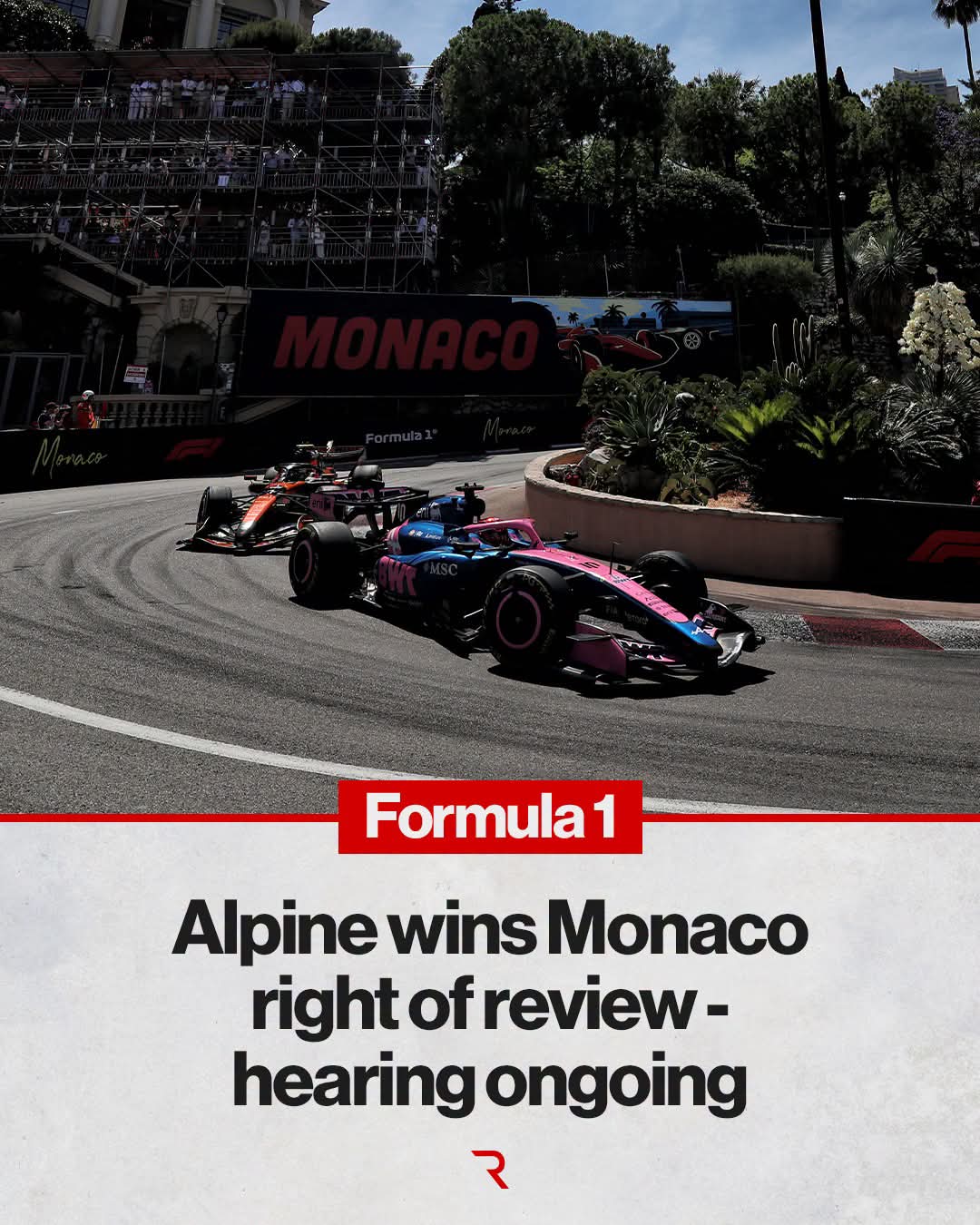
The fallout from the Monaco Grand Prix is far from over. In a dramatic development that could alter the final classification of one of Formula 1’s most prestigious races, Alpine has successfully convinced the FIA to review the penalties that stripped Pierre Gasly of a podium finish.
What initially appeared to be a routine case of pit-lane speeding has now evolved into a much bigger story involving timing accuracy, data reliability, and the possibility that Formula 1’s official calculations may have been flawed. If Alpine’s challenge succeeds, the consequences could extend beyond Monaco and raise serious questions about how race penalties are determined across the championship.
WHY GASLY’S MONACO PODIUM DISAPPEARED
Gasly crossed the line in an impressive third place at Monaco, delivering what should have been one of the standout results of Alpine’s season. However, two separate five-second penalties for pit-lane speeding dramatically changed the outcome.
The margins involved were incredibly small. Gasly was judged to have exceeded the pit-lane speed limit by just 0.1 km/h and 0.4 km/h. While Formula 1 has always enforced strict pit-lane regulations, such tiny differences immediately sparked debate among fans and analysts.
Those penalties ultimately dropped Gasly from the podium positions to seventh place, costing both the driver and Alpine a significant haul of championship points.
At the time, the verdict seemed final. Now, that assumption has been turned upside down.
THE SHOCKING DISCOVERY AT THE CENTER OF THE CASE
The most important revelation to emerge from Alpine’s review request is that the distance used by Formula One Management to calculate pit-lane speed may have been inaccurate.
According to evidence presented during the hearing, the distance measurement used in the official timing system may have overestimated the speed at which Gasly was travelling.
That detail is crucial because Formula 1 calculates average speed through specific sections by measuring both distance and time. If the distance itself was incorrect, then the resulting speed calculation could also be wrong.
The FIA considered this evidence significant enough to accept Alpine’s right-of-review request and immediately move forward with a second hearing to reassess the penalties themselves.
That decision alone indicates the governing body believes there is a legitimate question worth examining.
WHY THIS CASE MATTERS BEYOND ALPINE
This is no longer just about Pierre Gasly.
If Formula 1’s timing calculations contained inaccuracies, it could create wider concerns about how similar penalties have been issued in the past and how they will be handled in the future.
Pit-lane speeding penalties often determine race outcomes. Teams trust that the data being used is precise, especially when penalties are measured in fractions of a kilometer per hour.
Should Alpine succeed in overturning the decision, the sport may be forced to review its processes and implement additional safeguards to prevent similar controversies.
For Formula 1, maintaining confidence in its officiating systems is essential. In a championship where races, podiums, and even titles can be decided by tiny margins, accuracy is non-negotiable.
ALPINE’S ARGUMENT GOES BEYOND THE DISTANCE ISSUE
The timing discrepancy was the key factor that convinced the FIA to reopen the case, but Alpine presented several other pieces of supporting evidence.
The team reportedly provided telemetry showing Gasly activated his pit-lane speed limiter before entering the pits and never intentionally exceeded the limit.
Alpine also highlighted that Gasly had been warned by his engineers and adopted a conservative approach during his pit stop sequence.
Additionally, the team argued that concerns existed regarding pit-lane timing loops before the race. While FIA and Formula One Management representatives reportedly disputed that claim, it adds another layer to a story that is becoming increasingly complicated.
WHAT HAPPENS IF THE PENALTY IS OVERTURNED?
If the FIA concludes that the original speed calculations were inaccurate, Gasly could potentially regain his Monaco podium.
Such a decision would significantly boost Alpine’s championship position and provide a major morale boost for a team that has struggled for consistency throughout the season.
For Gasly personally, it would restore one of the strongest results of his recent Formula 1 career. Monaco podiums carry enormous prestige, and reclaiming that achievement would be a major moment.
However, reversing the result could also create fresh controversy.
Other drivers received pit-lane penalties during the Monaco weekend, and some may question whether similar reviews should now be considered. The FIA will need to carefully balance fairness, consistency, and the integrity of the championship when delivering its final verdict.
THE BIGGER CHAMPIONSHIP IMPLICATIONS
While Monaco represents only one race, every point matters in modern Formula 1.
Alpine is locked in a fiercely competitive midfield battle where a single podium can dramatically alter the standings. The difference between third and seventh place is substantial in terms of points, prize money, and momentum.
As teams continue developing their 2026 cars under intense competitive pressure, those extra points could prove valuable later in the season.
The outcome of this review may not affect the title fight directly, but it could significantly influence the battle behind the front-runners.
WHAT TO EXPECT NEXT
The FIA now faces an important decision.
If the review confirms the original penalty was justified, the Monaco result will stand and the focus will shift to preventing similar disputes in the future.
But if the governing body determines the speed calculations were flawed, Formula 1 could witness one of the most unusual post-race revisions in recent memory.
Either way, the case has already exposed how even the smallest technical detail can have massive consequences in modern Formula 1.
With championship points, podium finishes, and reputations on the line, the Monaco controversy serves as another reminder that in Formula 1, precision matters just as much off the track as it does on it.