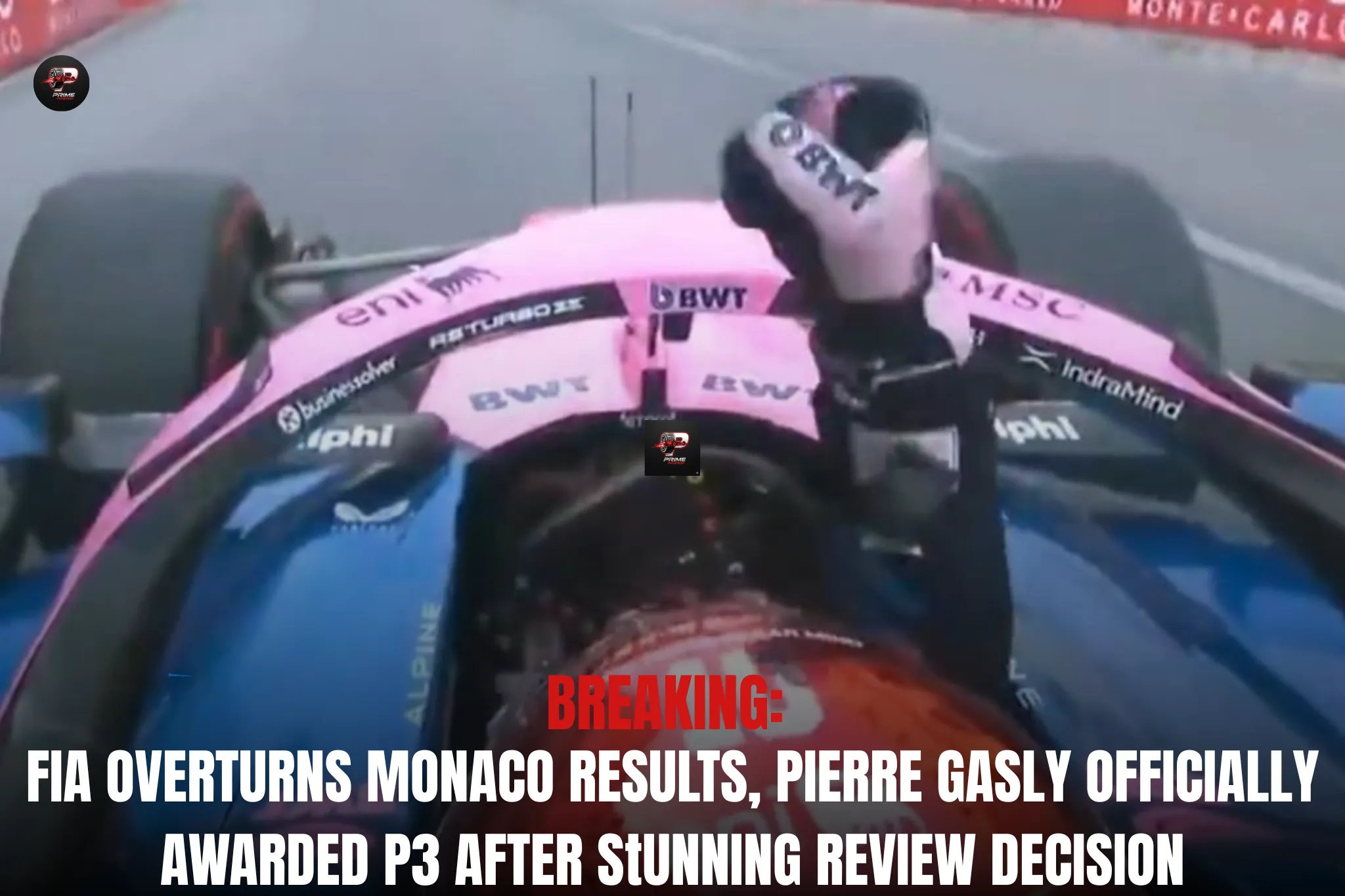
The Monaco Grand Prix has been thrown into chaos after the FIA officially overturned its previous decision and restored Pierre Gasly to third place following a dramatic review process. In one of the most controversial officiating reversals of the 2026 Formula 1 season, Alpine’s persistence has paid off, transforming what was initially a frustrating seventh-place finish into a podium result.
The decision has not only reshaped the Monaco classification but has also reignited debate about Formula 1’s timing systems, stewarding procedures, and the role technology plays in determining race outcomes.
HOW THE MONACO CONTROVERSY BEGAN
Gasly originally crossed the line in a position worthy of celebration, only to see his result unravel after receiving two separate five-second penalties for alleged pit-lane speeding violations. The penalties were incredibly marginal, with the Frenchman reportedly exceeding the speed limit by fractions of a kilometer per hour.
Those sanctions dropped him from a podium position to seventh place in the final classification, dealing a major blow to both Gasly and Alpine.
At the time, many accepted the decision as another example of Formula 1’s strict enforcement of regulations. However, behind the scenes, Alpine’s engineers and legal team continued examining the evidence and soon uncovered what they believed was a critical flaw in the calculations used to determine pit-lane speeds.
THE EVIDENCE THAT CHANGED EVERYTHING
The turning point came when Alpine presented new information suggesting the distance used in the official timing calculations was inaccurate. According to the team’s findings, the measurement method may have overestimated the speed of cars traveling through the Monaco pit lane.
The FIA deemed the evidence significant enough to grant Alpine a formal right of review, a rare move that immediately raised questions about the reliability of the original decision.
Following further analysis, the governing body concluded that the evidence warranted a reversal of the penalties, resulting in Gasly being reinstated to third place.
For Alpine, it was a remarkable victory away from the racetrack. For Formula 1, it became a reminder that even highly sophisticated systems are not immune from errors.
WHY THIS PODIUM MATTERS SO MUCH FOR GASLY
The restoration of third place is about far more than a trophy.
Gasly has consistently delivered strong performances despite Alpine’s struggles in recent seasons. A Monaco podium carries enormous prestige due to the unique demands of the circuit and the difficulty of overtaking around the Principality’s narrow streets.
For a driver fighting to re-establish himself among Formula 1’s elite performers, this result provides both validation and momentum.
Monaco is often considered a driver’s circuit, where precision, confidence, and race management matter more than outright car performance. Reclaiming a podium there reinforces Gasly’s reputation as one of the grid’s most underrated talents.
A MASSIVE BOOST FOR ALPINE’S SEASON
Alpine entered 2026 under intense pressure. Questions surrounding the team’s competitiveness, technical direction, and future ambitions have dominated headlines throughout the year.
A podium finish changes the narrative.
Not only does the result add valuable championship points, but it also provides a morale boost for a team desperately seeking signs of progress. Success in Formula 1 often creates momentum, and even an off-track victory like this can strengthen belief within the organization.
The additional points could prove crucial in the Constructors’ Championship battle, where positions are often decided by narrow margins at season’s end.
THE FIA FACES TOUGH QUESTIONS
While Alpine and Gasly celebrate, the FIA must now deal with the fallout.
Formula 1 relies heavily on precision timing systems and data analysis to enforce regulations. If a fundamental calculation error contributed to a race-changing penalty, many teams will naturally wonder whether similar issues could have affected other decisions.
The governing body will likely conduct a deeper review of its procedures to ensure similar situations do not arise again.
Maintaining confidence in officiating is critical. Drivers, teams, sponsors, and fans need to trust that race results are determined fairly and accurately.
WHAT THIS MEANS FOR FUTURE RACES
The Monaco reversal could have implications far beyond a single race weekend.
Teams are likely to scrutinize future steward decisions more aggressively, particularly those involving timing data and technical measurements. Any controversial ruling may now face increased pressure from competitors willing to challenge the evidence behind it.
The case also demonstrates that Formula 1’s review process can work when substantial new evidence emerges. While not every appeal succeeds, Alpine has shown that teams can overturn decisions if they present compelling technical proof.
CHAMPIONSHIP IMPLICATIONS COULD BE SIGNIFICANT
Every point matters in modern Formula 1.
Gasly’s promotion to third place delivers a substantial points increase compared to seventh, while Alpine gains valuable ground in the Constructors’ standings.
Although the result may not immediately transform either championship battle, the cumulative effect of those extra points could become extremely important later in the season.
In a year where midfield competition remains fierce, a single podium can ultimately make the difference between multiple positions in the standings and millions in prize money.
A MOMENT THAT WILL BE REMEMBERED FOR YEARS
Monaco has produced countless unforgettable Formula 1 stories over the decades. This latest chapter will be remembered not for an overtake or a dramatic crash, but for a post-race investigation that completely changed the final outcome.
For Pierre Gasly, the podium he thought he had lost has finally been restored.
For Alpine, persistence has delivered one of the team’s most important results in recent memory.
And for Formula 1, the incident serves as a powerful reminder that in a sport defined by precision, getting every detail right remains absolutely essential.