The fallout from the Monaco Grand Prix refuses to fade away, and many Formula 1 fans are beginning to ask the same question: was the original result ever completely accurate?
Following Alpine’s successful petition for a right of review regarding Pierre Gasly’s penalties, the integrity of Monaco’s final classification has suddenly come under intense scrutiny. What initially appeared to be a routine post-race penalty situation has evolved into one of the most controversial officiating stories of the 2026 Formula 1 season.
If the FIA ultimately determines that the pit-lane speed calculations used during the race were flawed, Monaco’s final results could be significantly altered weeks after the checkered flag.
THE CONTROVERSY THAT REFUSES TO DISAPPEAR
Formula 1 is built on precision.
Teams spend millions chasing thousandths of a second, and penalties are often decided by incredibly small margins. That is precisely why the Monaco situation has attracted so much attention.
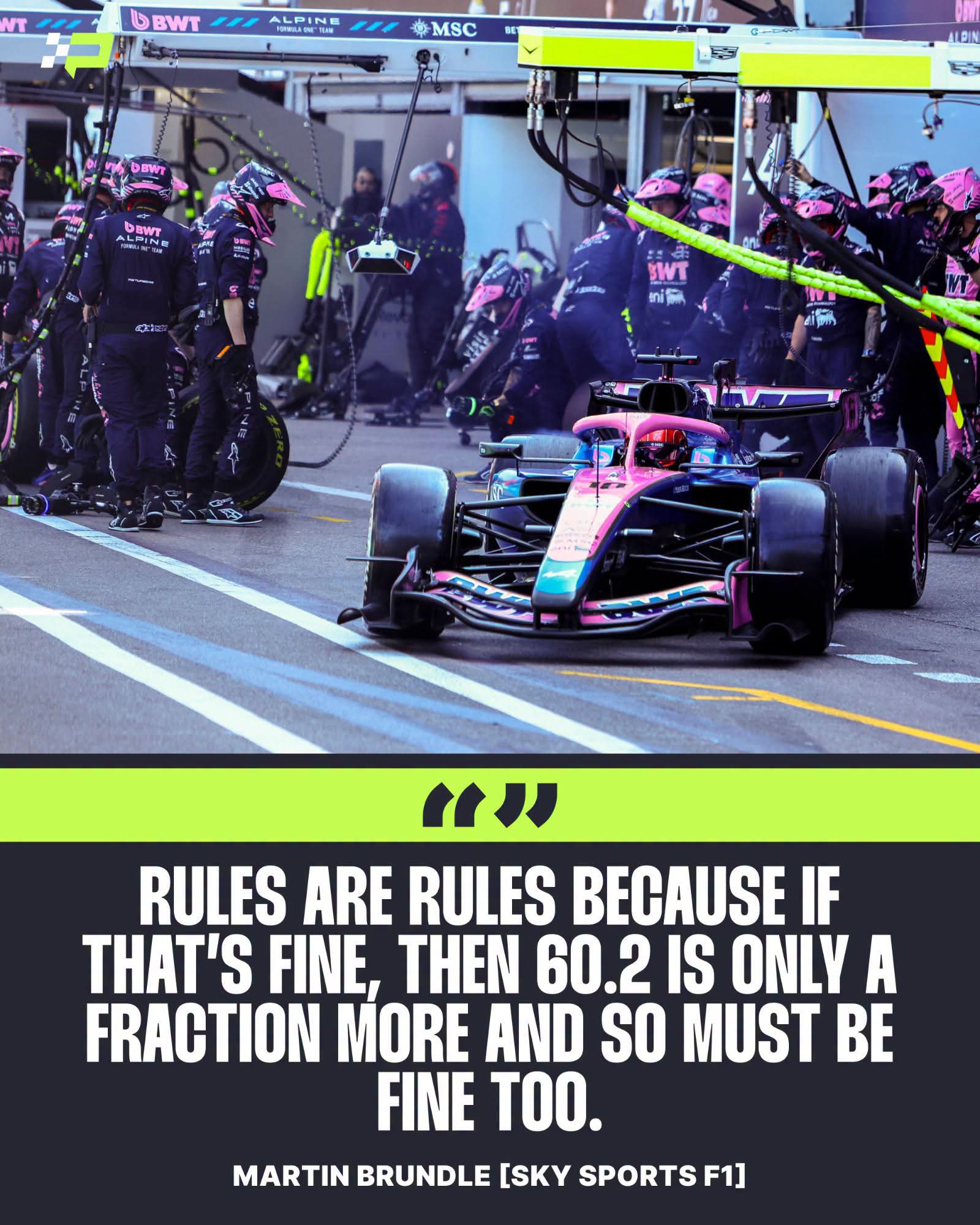
Pierre Gasly was penalized twice for exceeding the pit-lane speed limit by tiny margins. Those penalties ultimately cost him a podium finish and dropped him several positions in the final classification.
At the time, the penalties appeared straightforward. The timing system showed violations, the stewards acted, and the results were finalized.
But the situation changed dramatically when new evidence emerged suggesting that the distance used to calculate pit-lane speeds may have been inaccurate.
WHY ALPINE’S CASE CHANGES EVERYTHING
The most significant revelation isn’t that Alpine disagreed with the penalties. Teams challenge steward decisions regularly.
What makes this case different is that the FIA deemed Alpine’s new evidence important enough to warrant a formal review.
According to information presented during the hearing, the data used to calculate pit-lane speed may have overestimated how fast Gasly was actually traveling.
That distinction is crucial.
If the underlying calculation was incorrect, then the penalties themselves become questionable. Suddenly, this is no longer about a driver exceeding the limit by a fraction of a kilometer per hour. It becomes a debate about whether the measurement system produced an accurate result in the first place.
THE POSSIBILITY OF A REWRITTEN PODIUM
The implications could be enormous.
Should the FIA determine that the penalties were wrongly applied, Gasly could be reinstated to the position he earned on track. That scenario would potentially elevate him back onto the Monaco podium, transforming what was viewed as a disappointing outcome into one of Alpine’s biggest achievements of the season.
For Gasly, the difference between seventh and third is massive.
Not only would he gain valuable championship points, but he would also receive recognition for a drive that many observers already considered one of the strongest performances of the Monaco weekend.
For Alpine, it would represent a critical boost in a fiercely competitive midfield battle.
WHAT THIS SAYS ABOUT FORMULA 1’S MODERN ERA
The controversy highlights an increasingly important reality in modern Formula 1.
The sport relies heavily on data, algorithms, sensors, and timing systems. While technology has improved fairness and accuracy in many areas, it has also created situations where a technical discrepancy can influence race results.
Fans often debate strategy decisions, overtakes, and driver mistakes. Rarely do they question the mathematical foundations used to enforce regulations.
Monaco has changed that conversation.
If an official speed calculation can potentially be challenged after the race, teams may begin examining future steward decisions with even greater scrutiny.
WHY THE FIA MUST GET THIS RIGHT
Regardless of the final verdict, the FIA faces a delicate balancing act.
If it overturns the penalties, questions will inevitably arise about how the error occurred in the first place.
If it upholds the penalties despite the newly discovered evidence, critics will demand transparency regarding the review process and the conclusions reached.
The governing body’s credibility depends on ensuring that every decision is backed by accurate and reliable information.
That is why the Monaco review has become about far more than Pierre Gasly or Alpine.
It is about maintaining trust in Formula 1’s officiating systems.
THE IMPACT ON THE CHAMPIONSHIP BATTLE
While Monaco is only one race, the championship implications should not be overlooked.
Every point matters in modern Formula 1. Constructor standings influence prize money, sponsorship value, and team morale. Driver standings affect reputations, contract negotiations, and career momentum.
A restored podium would not suddenly transform Alpine into a title contender, but it could significantly strengthen their position in the midfield fight.
For Gasly, it would reinforce his reputation as one of the grid’s most consistent performers despite driving machinery that rarely challenges the frontrunners.
COULD MORE REVIEWS FOLLOW?
One intriguing consequence of this controversy is the precedent it could establish.
If Alpine successfully overturns the penalties, other teams may become more aggressive in reviewing race data and challenging steward decisions in future events.
Formula 1 teams are already among the most detail-oriented organizations in world sport. Knowing that a result can potentially be altered through data analysis weeks later may encourage even deeper investigations after controversial races.
That could increase pressure on both Formula One Management and the FIA to ensure every measurement system is beyond question.
THE BIGGER PICTURE
The Monaco Grand Prix was supposed to be remembered for the racing, strategy battles, and standout performances.
Instead, it has become a case study in how a tiny technical discrepancy can create enormous consequences.
Whether Gasly ultimately regains his lost podium or not, the controversy has already exposed an uncomfortable reality: even in a sport obsessed with precision, mistakes can still happen.
And until the FIA delivers its final verdict, many Formula 1 fans will continue wondering whether the Monaco results we saw on race day were truly the correct ones.