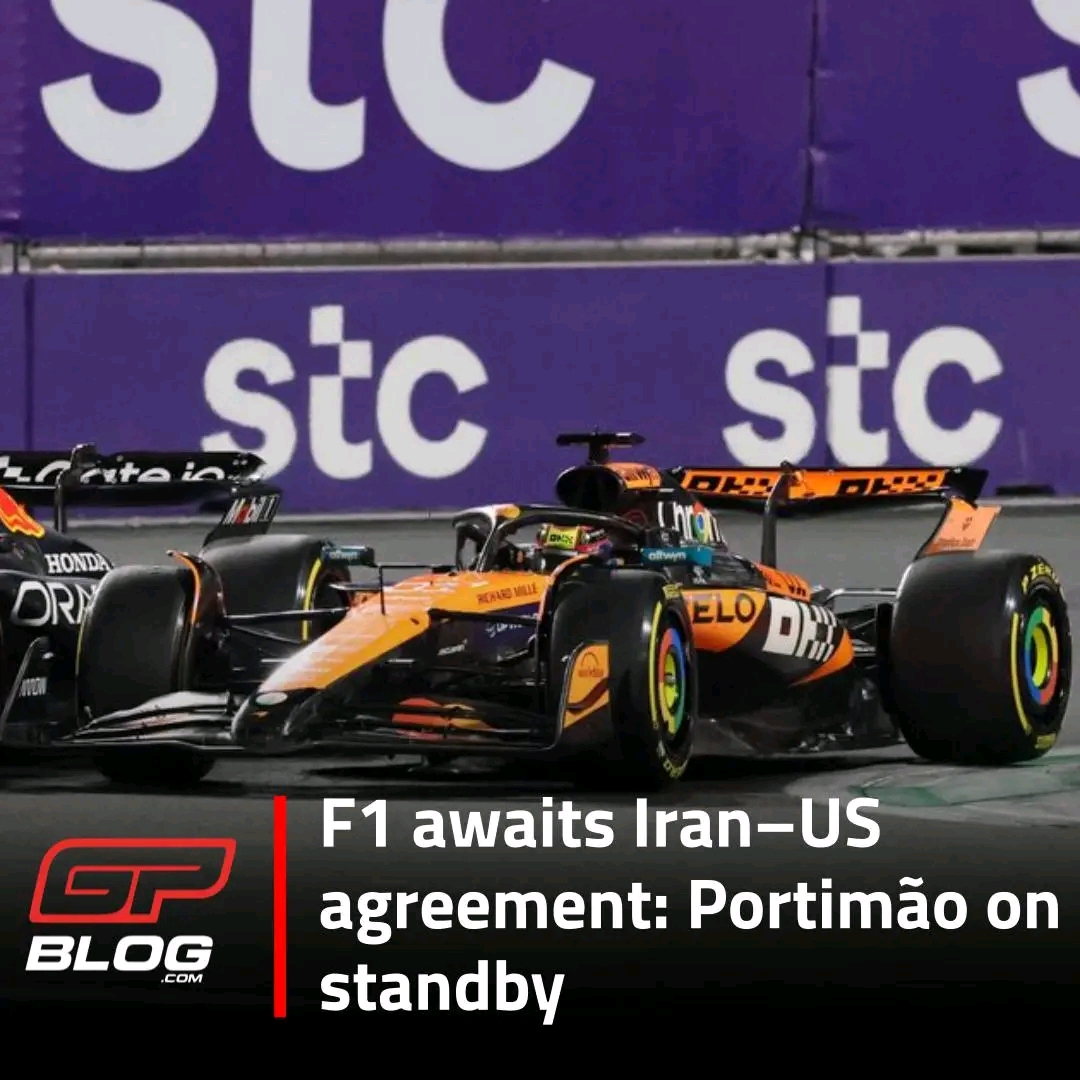
Formula 1’s disrupted 2026 calendar could yet receive a late-season twist after reports suggested that improving diplomatic relations between the United States and Iran may create an opportunity for one of the cancelled Middle East Grands Prix to be rescheduled.
Earlier this year, Formula 1 was forced to cancel both the Bahrain and Saudi Arabian Grands Prix due to escalating regional tensions and security concerns. The cancellations left a significant gap in the championship calendar and reduced the total number of races on the schedule. However, recent developments have sparked fresh speculation that the sport could explore a return to the region before the season concludes.
WHY THE MIDDLE EAST RACES WERE CANCELLED
The Bahrain and Saudi Arabian Grands Prix were originally scheduled as key early-season events. However, worsening regional instability forced Formula 1 and the FIA to prioritize the safety of drivers, team personnel, media staff, and fans.
With air travel disruptions, security concerns, and uncertainty surrounding the conflict, the championship had little choice but to remove both races from the calendar. The decision echoed previous instances where Formula 1 altered its schedule due to global crises, including the COVID-19 pandemic and other geopolitical events.
At the time, many believed the races were lost for good because the modern F1 calendar leaves very few open weekends available for rescheduling.
A PEACE DEAL COULD CHANGE EVERYTHING
According to reports, improving relations between the United States and Iran could provide Formula 1 with a window of opportunity to revisit its scheduling options.
While no official announcement has been made, Formula 1 leadership has repeatedly confirmed that contingency plans exist should circumstances improve. Liberty Media has acknowledged that rescheduling one cancelled event remains a possibility if logistical and political conditions allow.
The challenge is not simply finding a race weekend. Formula 1 must coordinate freight transportation, television contracts, circuit preparations, staffing requirements, and team logistics. Even under ideal conditions, adding a Grand Prix to an already crowded schedule is an enormous undertaking.
WHICH CIRCUIT COULD RETURN?
Current speculation centers around the possibility of fitting a race into one of the limited gaps remaining on the calendar.
One scenario involves inserting an event between existing flyaway races, while another would see Formula 1 reorganize part of the season-ending stretch that already includes Middle Eastern events. Reports suggest a standby option has been considered should Formula 1 require a replacement or additional venue.
From a logistical perspective, Bahrain may have a slight advantage. The circuit has extensive experience hosting Formula 1 and serves as a major testing and operational hub for the sport. However, Saudi Arabia remains a valuable partner for Formula 1’s long-term commercial strategy, making either option plausible.
WHY THIS MATTERS FOR THE CHAMPIONSHIP
A rescheduled Grand Prix could have major consequences for both championship battles.
Every race weekend offers a maximum points opportunity that can dramatically alter the Drivers’ and Constructors’ Championships. Adding an extra race late in the season could provide trailing contenders with one final chance to close a gap or completely change the title fight.
For teams, an additional Grand Prix also means more opportunities for upgrades, strategic experimentation, and sponsor exposure. Teams fighting in the midfield would particularly welcome another chance to score valuable points that could be worth millions in end-of-season prize money.
In a season already defined by unpredictable storylines, an extra race could become a decisive factor in determining who lifts the trophies in Abu Dhabi.
THE LOGISTICAL CHALLENGE FORMULA 1 MUST SOLVE
Even if political conditions improve immediately, Formula 1 cannot simply announce a new race overnight.
The championship now operates with one of the most demanding schedules in motorsport history. Freight moves between continents using a carefully planned system involving aircraft, ships, and thousands of personnel.
Teams also face budgetary pressures. Although Formula 1’s cost cap regulations allow for certain adjustments, adding another event inevitably increases operational demands. Drivers, mechanics, engineers, and support staff would all face an even heavier workload.
This is why Formula 1 executives have emphasized that rescheduling one race is difficult, while bringing back both cancelled events would be extremely unlikely.
WHAT HAPPENS NEXT?
The coming weeks could prove crucial.
If diplomatic progress continues and regional stability improves, Formula 1 may gain enough confidence to evaluate a realistic return. The FIA, teams, promoters, and commercial rights holders would then need to determine whether the sporting and financial benefits outweigh the logistical challenges.
For now, no race has officially been added back to the calendar. However, the fact that Formula 1 continues to maintain contingency plans suggests the door remains open.
PREDICTION: WILL A CANCELLED RACE RETURN?
At this stage, a single rescheduled Grand Prix appears far more realistic than the return of both Bahrain and Saudi Arabia.
Formula 1 has shown throughout its modern era that it is willing to adapt when circumstances demand it. If stability returns quickly enough and the championship identifies a viable slot, the sport could seize the opportunity to restore at least one of its lost races.
The odds remain challenging, but they are no longer impossible.
For fans, teams, and championship contenders, that possibility alone makes this one of the most intriguing off-track stories of the season.