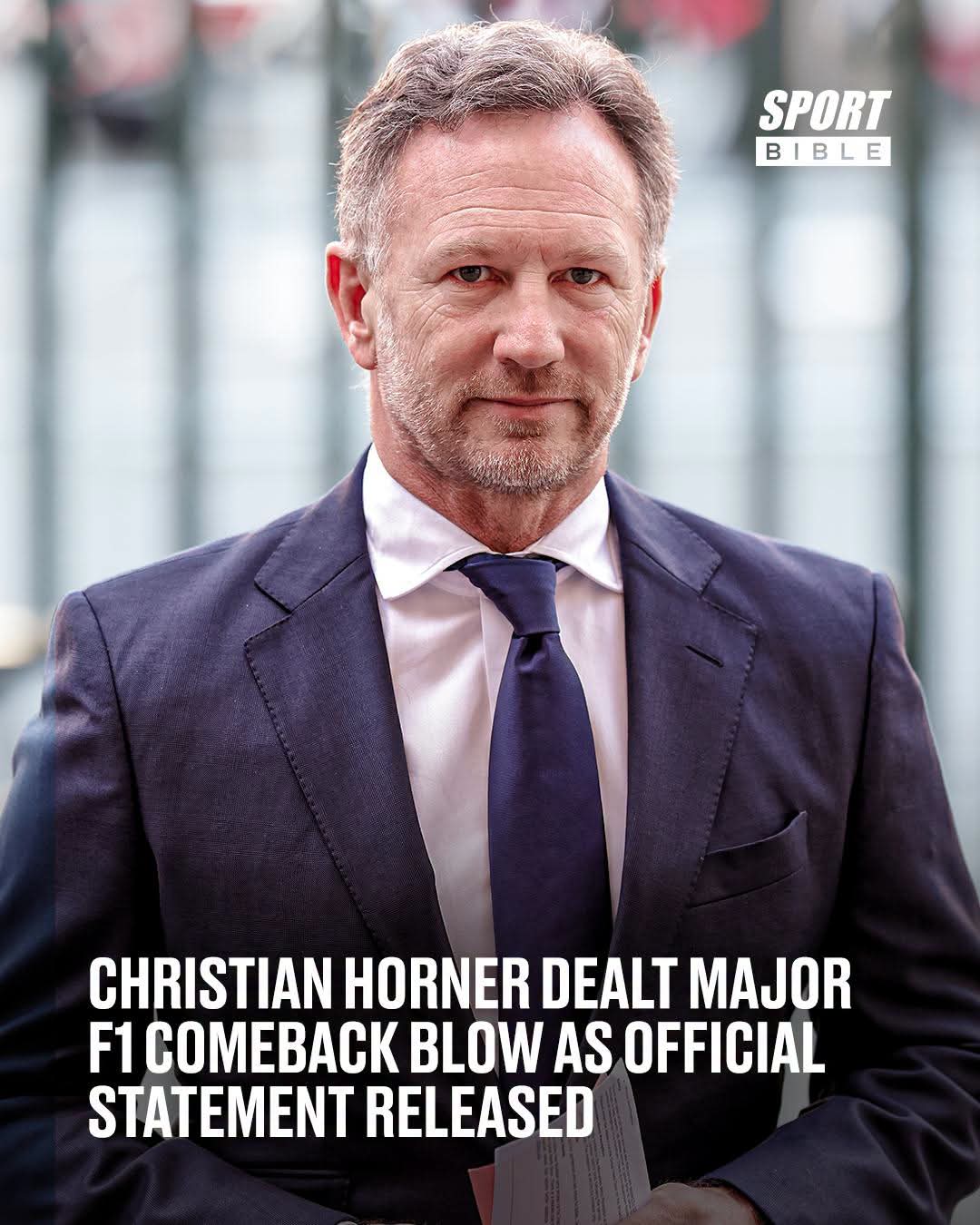
Christian Horner’s long-rumored return to Formula 1 has suffered a significant setback after Alpine executives publicly distanced themselves from reports linking the former Red Bull boss with a leadership role and potential ownership stake in the team.
For months, Horner’s future has been one of the most intriguing stories in the Formula 1 paddock. Following his departure from Red Bull in 2025 after a turbulent period that combined off-track controversy, internal tensions, and declining competitive fortunes, many expected it would only be a matter of time before one of the sport’s biggest names resurfaced elsewhere.
However, fresh comments from Alpine’s leadership suggest that a return may not be as imminent as many believed.
WHY CHRISTIAN HORNER REMAINS ONE OF F1’S MOST SOUGHT-AFTER FIGURES
Regardless of how his Red Bull tenure ended, Horner’s record speaks for itself.
Over two decades, he transformed Red Bull from an ambitious newcomer into one of Formula 1’s dominant forces. Under his leadership, the Milton Keynes-based squad secured multiple constructors’ championships and drivers’ titles across two different eras of dominance, first with Sebastian Vettel and later with Max Verstappen.
Few team principals in modern Formula 1 have achieved comparable success.
That pedigree naturally makes Horner a highly attractive option for teams looking to accelerate their ambitions. In a sport where leadership can often determine whether a team fights for championships or remains stuck in the midfield, proven winners are incredibly valuable.
This is why rumors connecting Horner to Alpine, Aston Martin, Audi, and other projects have persisted ever since his departure from Red Bull.
ALPINE POURS COLD WATER ON THE RUMORS
Among all the teams linked with Horner, Alpine appeared to be the strongest candidate.
The Enstone-based outfit continues searching for stability after years of restructuring, management changes, and inconsistent performances. Reports suggested Horner was interested not only in a management position but also in acquiring a financial stake in the project, potentially giving him greater influence over the team’s long-term direction.
Those rumors gained momentum when discussions emerged regarding the future of Otro Capital’s minority shareholding in Alpine.
However, Renault Group CEO Francois Provost has now publicly rejected suggestions that negotiations are taking place.
His comments make it clear that Alpine currently has no active discussions with Horner and remains committed to maintaining control of the team’s future.
For now, at least, one of the most frequently discussed pathways back into Formula 1 appears closed.
WHAT THIS MEANS FOR ALPINE’S FUTURE
Alpine’s stance reveals an important detail about the team’s current strategy.
Rather than handing significant influence to an external figure, Renault appears determined to retain control over its Formula 1 operation. That approach may provide stability, but it also increases pressure on Alpine’s existing leadership structure to deliver results.
The team has struggled to establish itself as a genuine front-runner despite substantial investment over recent seasons. While flashes of competitiveness have emerged, consistency remains elusive.
A figure like Horner could have brought instant credibility, championship-winning experience, and a proven ability to build organizational structures capable of competing at the highest level.
By ruling out that possibility, Alpine is effectively betting on its own internal plans rather than pursuing a high-profile external solution.
COULD ANOTHER TEAM MAKE A MOVE?
Although Alpine may no longer be an immediate option, Horner’s Formula 1 story is unlikely to end here.
Several teams remain in transitional phases.
Audi is preparing for its long-term future as a full works team. Aston Martin continues searching for ways to maximize its enormous investment and capitalize on the arrival of Adrian Newey. Even teams currently enjoying success understand how quickly Formula 1’s competitive landscape can change.
The value Horner brings extends beyond race-day operations. His expertise in commercial growth, sponsorship acquisition, driver management, and organizational leadership makes him one of the most complete executives in motorsport.
As long as he remains available, speculation will continue.
WHY TIMING COULD BE THE BIGGEST FACTOR
One of the biggest obstacles facing Horner may simply be timing.
Most teams have already committed to leadership structures for the 2026 and 2027 regulatory cycle. Major management changes are often planned years in advance, particularly with teams investing heavily in long-term development programs.
For Horner, the ideal opportunity may not arrive immediately.
Instead, potential openings could emerge after the current regulations mature and teams reassess their competitiveness heading into Formula 1’s next major cycle of change.
Patience could ultimately prove more valuable than rushing into the first available role.
HORNER’S NEW ROLE SHOWS HE ISN’T STANDING STILL
While his Formula 1 future remains uncertain, Horner is far from inactive.
His recent appointment as an advisor to investment firm Oakley Capital demonstrates that his expertise remains highly sought after beyond the racing world.
The move allows him to stay involved in high-level sports business operations while keeping his options open for a potential motorsport return.
In many ways, it mirrors the path taken by several former Formula 1 executives who temporarily stepped away from the paddock before eventually re-emerging in influential positions.
The role also broadens Horner’s experience beyond motorsport, potentially making him an even more attractive candidate if and when a Formula 1 opportunity eventually arises.
IS A COMEBACK STILL INEVITABLE?
Despite this latest setback, it would be premature to rule out Christian Horner’s return to Formula 1.
The sport has a history of bringing influential figures back into the fold, especially those with championship-winning credentials. Team principals with proven success rarely remain on the sidelines forever.
What has changed is the timeline.
The expectation that Horner would quickly walk into a major Formula 1 role now appears less certain. Alpine’s public rejection of speculation removes one of the most realistic pathways available to him.
Yet Formula 1 is a rapidly evolving environment. Team ownership structures change, management positions open unexpectedly, and ambitious projects frequently seek experienced leadership.
For now, Horner’s comeback may be delayed rather than denied. But given his track record, influence, and experience, few would bet against seeing him back on the Formula 1 grid sooner rather than later.