CHRISTIAN HORNER TARGETS TOTO WOLFF COMEBACK: “TOTO NEEDS HIS HAIR F****** RUFFLED UP
Formula 1 has never been short of bigger-than-life personalities, but few rivalries have defined an era quite like the long-running feud between Christian Horner and Toto Wolff. Now, more than a year after his dramatic exit from Red Bull Racing, Horner has made it clear the unfinished business burns bright. In recent comments promoting his memoir, the former Red Bull team principal and CEO openly admitted he still feels the pull of the paddock—and that one of his strongest motivations is making life uncomfortable again for the Mercedes boss.
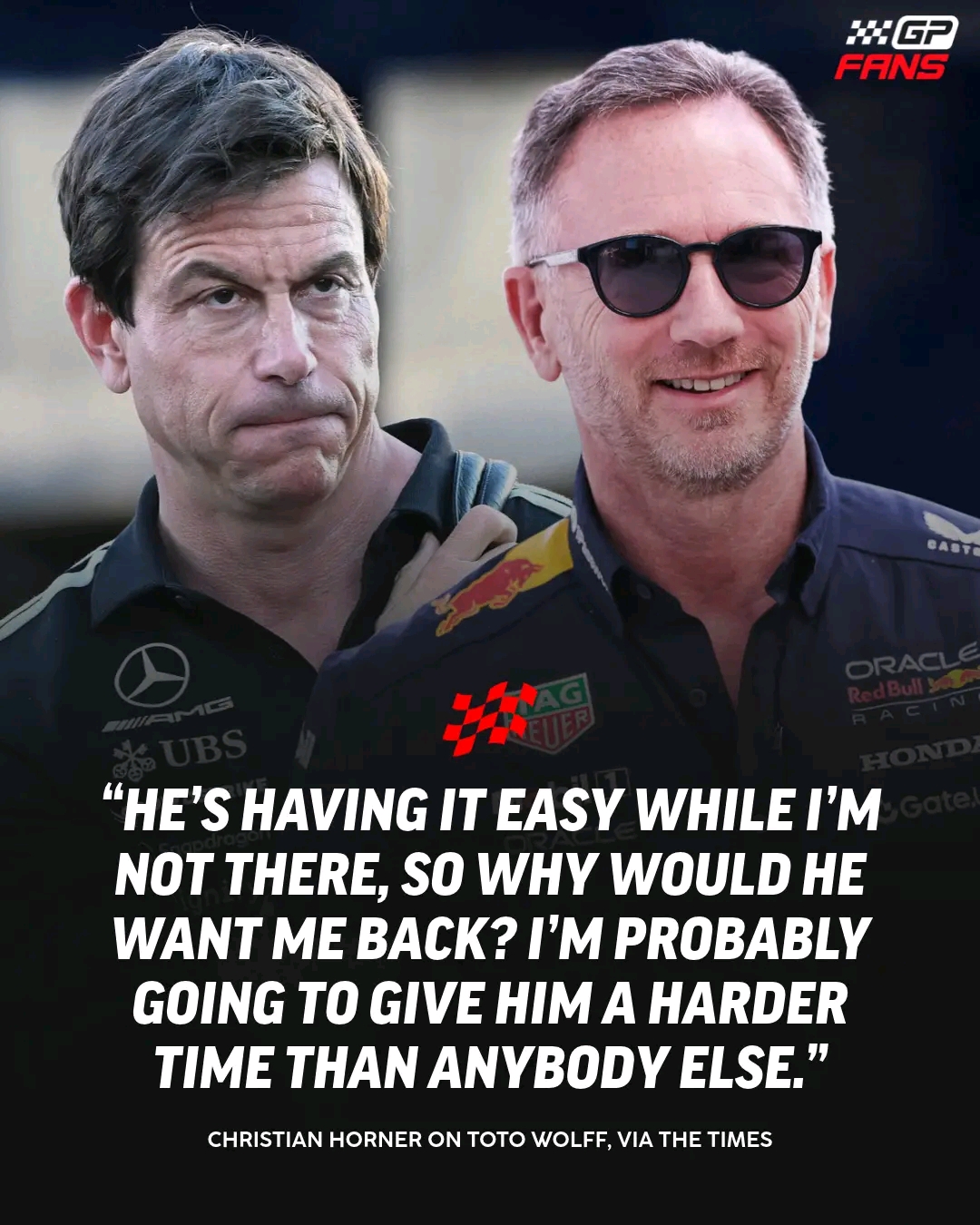
Horner, who led Red Bull to eight drivers’ championships and six constructors’ titles across two decades, was removed from his roles following the 2025 British Grand Prix amid internal turbulence and declining results. Since then the sport has moved on, with Laurent Mekies taking the reins and Red Bull navigating a new chapter. Yet Horner refuses to fade quietly into the background. He has described Ferrari as “the dream” and “the sleeping giant,” the only team for which he would consider returning without an ownership stake. More pointedly, he zeroed in on his old adversary: “I still feel that there’s another dance. And Toto needs to have his hair f****** ruffled up. He’s having it easy while I’m not there. So why would he want me back? I’m probably going to give him a harder time than anybody else.”
Those words capture the essence of a relationship that has always mixed genuine competitive fire with theatrical needle. From the height of the 2021 title battle between Max Verstappen and Lewis Hamilton through the subsequent years of verbal sparring, Horner and Wolff turned team principal press conferences into must-watch events. Wolff once branded Horner a “yapping little terrier.” Horner responded that he would rather be a terrier than a wolf, praising the breed’s loyalty and willingness to take on bigger dogs. Later exchanges after Horner’s departure included a revealing text from Wolff acknowledging both the “a***hole” side of their rivalry and the fact that the sport would miss one of its main protagonists. Horner’s reply thanked him for the competition and added a final jab about needing a haircut.
WHY THIS RIVALRY STILL MATTERS TO FORMULA 1
The Horner-Wolff dynamic was never just personal theatre. It raised the temperature of the entire championship. When two of the most successful team principals of the modern era publicly locked horns, it amplified the on-track battles, gave Netflix’s *Drive to Survive* ready-made drama, and kept sponsors, fans, and media fully engaged. Their teams claimed the vast majority of titles across more than a decade. That sustained excellence under pressure created a narrative of institutional excellence versus institutional excellence, with two very different leadership styles clashing in public.
Horner’s absence has left a vacuum. Wolff himself has acknowledged that the sport misses strong, polarising personalities and once described the need for “the good, the bad, and the ugly.” Without Horner’s constant prodding, the paddock has felt slightly more corporate and less combustible. For Mercedes, the quieter environment may have reduced external noise, but it also removed a foil that previously sharpened focus. For Red Bull, the post-Horner era has been about stabilising culture and performance after a period of internal strain. For the championship as a whole, the absence of that particular spark has made the political and media landscape less charged.
WHAT A HORNER RETURN WOULD MEAN FOR THE TEAMS AND THE TITLE FIGHT
A move to Ferrari would be seismic. The Scuderia remains the most iconic brand in the sport yet has not claimed a constructors’ title since 2008. Horner’s track record of building winning cultures, extracting the best from drivers and engineers, and thriving under pressure would inject both credibility and urgency into Maranello. It would also immediately reframe the competitive landscape. Mercedes would face a revitalised historical rival led by the man who knows exactly how to get under Wolff’s skin. Red Bull would watch their former leader attempt to rebuild success elsewhere. The psychological impact alone could shift resource allocation, driver negotiations, and long-term strategy across multiple teams.
Even without an immediate seat, Horner’s comments serve as a reminder that elite motorsport thrives on friction. Championships are won not only by superior cars and drivers but by organisations that stay sharp under scrutiny. The public needling that characterised the Horner-Wolff years forced both sides to stay on their toes. Removing that element risks complacency. Bringing it back could raise standards again.
THE BIGGER INDUSTRY PICTURE AND WHAT COMES NEXT
Formula 1 has grown dramatically in commercial value and global reach in recent years. That growth has been accompanied by greater professionalism and, at times, a more polished, less volatile public face. Personalities like Horner and Wolff provided the counterbalance—raw competitive edge that reminded audiences this is still a sport of egos, high stakes, and human drama. Horner’s willingness to keep the rivalry alive, even from outside the paddock, underlines how valuable that edge remains.
Predictions are risky in Formula 1, where contracts, performance, and boardroom decisions can change overnight. Yet the demand for Horner’s brand of leadership has not disappeared. Ferrari remains the obvious high-profile destination if circumstances align. Other opportunities could emerge through investment or advisory roles. Whatever path he chooses, the mere possibility of his return already forces competitors to recalculate. Wolff has previously warned that past actions carry repercussions in the tight F1 microcosm, while also conceding the sport benefits from strong characters.
Horner’s latest comments are more than nostalgia or score-settling. They are a statement of intent from a proven winner who believes the dance is not finished. For athletes, teams, and the championship itself, a renewed Horner-Wolff chapter would restore one of the most compelling storylines of the past decade. In a sport that sells itself on speed, strategy, and spectacle, few things deliver quite like two of its sharpest minds once again trying to outmanoeuvre each other—both on the track and in the war of words. The paddock, and the fans who feed on its drama, would be richer for it.