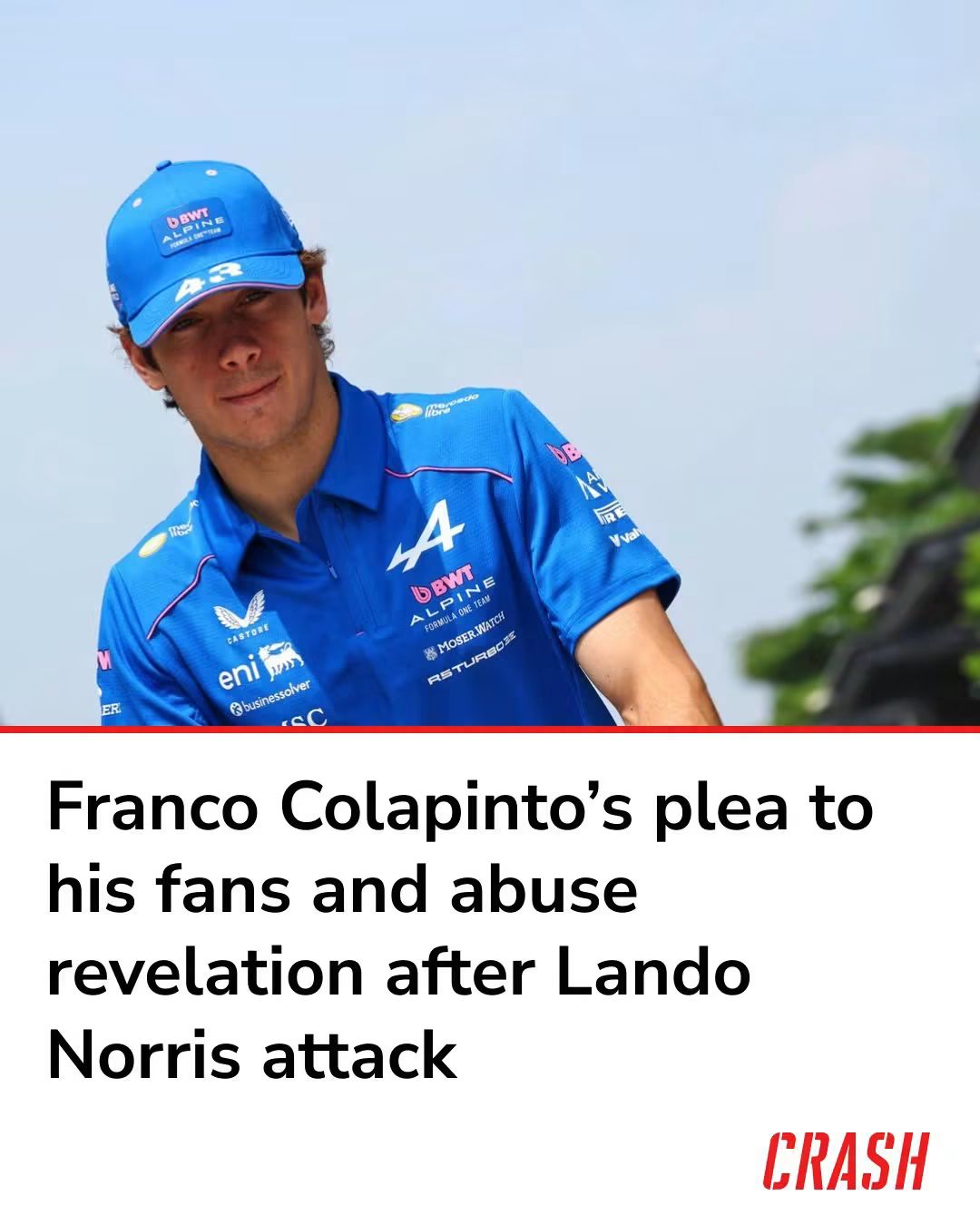
Formula 1’s paddock rarely stays quiet for long, but the fallout from the Azerbaijan Grand Prix has exposed something uglier than a simple racing incident. Alpine’s Franco Colapinto has stepped forward with a clear message to supporters after world champion Lando Norris endured a wave of online abuse triggered by the Argentine driver’s error in Baku. What began as a lock-up on a safety-car restart has ballooned into another chapter in the sport’s ongoing struggle with toxic fan behaviour, personal attacks, and the human cost of competing at the highest level.
WHAT HAPPENED IN BAKU AND WHY THE BACKLASH ERUPTED
During the first safety-car restart at the Baku City Circuit, Colapinto locked up heavily into Turn 1 on cold tyres and brakes. He slid into teammate Pierre Gasly, who was then forced into the path of McLaren’s Lando Norris. All three cars were eliminated on the spot. Colapinto immediately accepted full responsibility, describing it as a “big mistake.” Stewards handed him a 10-second penalty that converted into a five-place grid drop for the following race.
Still raw from the early retirement, Norris did not hold back in the media pen. He suggested some drivers “shouldn’t be in Formula 1” and called for at least a one-race ban for causing such a crash on a restart. Those words, spoken in the heat of the moment, lit a fire. Within hours, Norris’s social channels filled with hostile messages, many appearing to originate from passionate Argentine supporters. Alpine responded with a strong statement condemning the abuse directed not only at their own driver but also at rivals, media, and others in the F1 community.
Norris later apologised privately and publicly. He posted that emotions had run high, that the comments were wrong, and that he and Colapinto remained good friends ready to race again. The apology closed the personal chapter between the two drivers. The broader problem of fan toxicity did not disappear with it.
COLAPINTO’S MESSAGE: PASSION IS FINE, HATE IS NOT
Speaking ahead of the next round, Colapinto addressed the situation head-on. His core point was simple and human: people typing behind keyboards often forget the real impact of their words. “We are humans, and it’s not easy for us when we get these kind of things,” he said. He acknowledged the intensity of Argentine support while rejecting the idea that abuse is unique to one fanbase. Hate arrives from many directions and many countries, he noted, and it hits drivers and their families harder than outsiders realise.
Colapinto has spoken about this problem for more than a year. He pointed out that he himself receives plenty of abuse that rarely makes headlines. He avoids social media for that reason, yet he knows the damage it causes others. His plea was consistent with earlier calls for fans to stop the personal attacks. The latest episode only reinforced why the message keeps needing to be repeated.
On Norris’s original comments, Colapinto showed understanding rather than bitterness. He recognised the heat of the moment and noted that Norris had previously been one of the more vocal drivers against online hate. The surprise, he said, came from hearing such strong words from someone who knew the consequences. Once the apology arrived, the two men cleared the air
WHY THIS STORY MATTERS BEYOND ONE RACE
Online abuse in Formula 1 is no longer an occasional ugly side effect. It has become a recurring feature that affects drivers’ mental health, team atmospheres, and the sport’s public image. Previous incidents involving Yuki Tsunoda, Esteban Ocon, and even stewards have shown the pattern. Passionate national fanbases can turn protective energy into targeted hostility the moment a rival criticises “their” driver.
For Colapinto, the stakes are personal and professional. As a young driver still building his reputation at Alpine under the watchful eye of Flavio Briatore, every public misstep carries extra weight. The Baku crash cost the team a potential points haul and drew internal frustration. Yet Colapinto’s willingness to own the error and still advocate for better fan behaviour demonstrates a level of maturity that serves him well. It also protects the sport’s broader culture: when drivers refuse to stay silent about toxicity, it becomes harder for organisations, the FIA, and platforms to treat the issue as background noise.
The impact reaches teams and championships too. McLaren lost a points opportunity for their world champion. Alpine lost both cars from a promising position. Resources spent repairing damaged cars and managing public-relations fallout are resources not spent on performance. More importantly, the constant undercurrent of hostility risks driving talent away or forcing drivers into defensive silence rather than open competition.
UNIQUE INSIGHTS AND WHAT COMES NEXT
One under-discussed angle is the double standard in how abuse is reported. Colapinto’s observation that he receives significant hate that goes largely unnoticed highlights a selective media focus. When a high-profile champion like Norris is targeted, the story travels further. When a midfield driver absorbs similar treatment, it often stays quieter. This imbalance can leave younger or less established drivers feeling isolated even as they urge their own supporters to behave better.
Another layer is the emotional intelligence required of modern drivers. Norris’s rapid apology showed self-awareness. Colapinto’s measured response showed restraint. Both men modelled the behaviour they want from fans. Whether that example lands is the open question. Platforms still struggle to moderate coordinated pile-ons effectively. Teams issue statements, the FIA expresses concern, yet the cycle continues.
Looking ahead, the Bahrain Grand Prix (held in Malaysia this year) offered an immediate test. Colapinto faced his five-place penalty and the residual scrutiny. Norris returned focused on the championship fight. The real test, however, sits with the wider community. If passionate support can be channelled into positive energy rather than personal attacks, Formula 1 becomes a healthier environment for everyone involved. If the toxicity persists, drivers will keep paying a hidden price that no amount of prize money or championship points can fully offset.
Colapinto’s latest message is not new, but its timing after the Norris episode gives it fresh force. Racing will always produce mistakes, frustration, and strong opinions. Turning those moments into personal destruction is a choice. The drivers have made clear which choice they prefer. The fans now hold the next move.