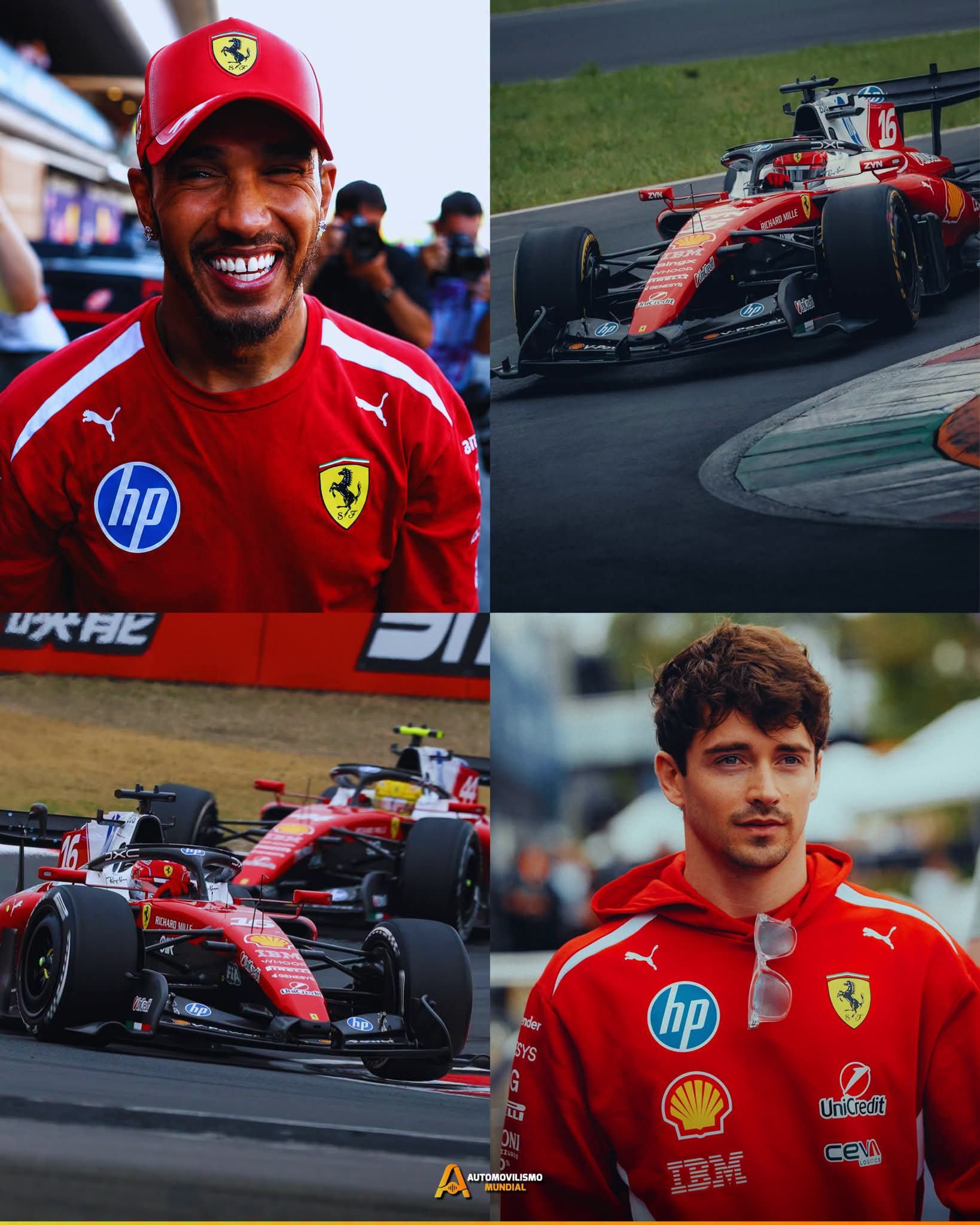
Ferrari’s fight to close the gap to Mercedes in the 2026 Formula 1 season has received another intriguing twist, with Charles Leclerc confirming a significant brake system change ahead of the Spanish Grand Prix. The Monegasque driver will switch from Brembo brakes to Carbon Industrie components, adopting the same brake specification currently used by teammate Lewis Hamilton.
The move comes after a frustrating run of reliability and performance concerns, with Leclerc reportedly experiencing recurring issues across three of his four Brembo brake units since the Canadian Grand Prix. As Ferrari searches for consistency in a season where every point matters, the decision could prove far more important than it initially appears.
WHY LECLERC IS MAKING THE SWITCH
Brake confidence is one of the most critical elements of modern Formula 1 performance. Drivers often speak about the importance of trusting the car under heavy braking, especially when attacking corners or defending against rivals.
For Leclerc, the repeated issues with his current brake package appear to have reached a point where a change became unavoidable. Rather than continuing to troubleshoot the existing setup, Ferrari has opted to align both of its drivers on the same Carbon Industrie specification.
This is particularly noteworthy because Lewis Hamilton has spent much of the season praising the improvements made to his Ferrari package compared to last year. While Hamilton’s resurgence cannot be credited solely to his brake system, having a stable and predictable braking platform has undoubtedly contributed to his improved form.
WHAT THIS MEANS FOR FERRARI
The timing of the change is significant. Ferrari enters the Spanish Grand Prix still chasing Mercedes, who have dominated much of the 2026 campaign through Andrea Kimi Antonelli and George Russell.
The Circuit de Barcelona-Catalunya is one of the most demanding tracks on the calendar when it comes to technical balance. Drivers face a mixture of high-speed corners, heavy braking zones, and long sweeping sections that expose every weakness in a car’s setup.
If Leclerc immediately feels more comfortable under braking, Ferrari could unlock additional performance without introducing a major aerodynamic upgrade. Sometimes a driver’s confidence can be worth several tenths of a second over a race weekend.
With Hamilton already operating at a high level and Leclerc looking to rediscover his best form, Ferrari will hope this change allows both drivers to extract the maximum potential from the SF26.
HAMILTON’S INFLUENCE COULD BE GROWING
The decision also highlights Hamilton’s growing influence inside Ferrari.
Since arriving at Maranello, the seven-time world champion has pushed for several structural and technical changes. Team principal Fred Vasseur has publicly backed Hamilton’s feedback, and Ferrari’s improved competitiveness in 2026 suggests those changes are beginning to pay off.
Leclerc adopting Hamilton’s brake specification may simply be a practical solution to a technical problem, but it also reflects Ferrari’s willingness to lean on Hamilton’s experience.
With over 350 Grands Prix under his belt, Hamilton has worked with multiple brake suppliers and countless car philosophies. If Ferrari believes his preferred setup delivers better consistency, it makes sense for the team to evaluate whether similar benefits can be gained on the other side of the garage.
HOW THIS COULD IMPACT THE CHAMPIONSHIP BATTLE
While a brake specification change will not suddenly transform Ferrari into the fastest team on the grid, marginal gains are becoming increasingly important.
Mercedes currently holds the advantage, but Formula 1 championships are often decided by a series of small improvements rather than one dramatic breakthrough. Better braking stability could improve tire management, qualifying performance, race pace, and driver confidence all at once.
For Leclerc personally, the change arrives at a crucial stage of the season. Hamilton has enjoyed a stronger campaign so far, and Ferrari needs both drivers consistently fighting near the front if it hopes to challenge Mercedes in the Constructors’ Championship.
A more comfortable Leclerc could also create strategic headaches for rivals. Ferrari becomes a far more dangerous opponent when both cars are operating at peak performance rather than relying heavily on one driver.
WHAT TO EXPECT IN BARCELONA
The Spanish Grand Prix will provide the first real test of whether the switch delivers immediate results.
Barcelona has traditionally been one of the best circuits for evaluating car performance because its layout exposes strengths and weaknesses more clearly than many other tracks. If Leclerc looks more confident under braking, particularly through Turns 1 and 10, it could be an early sign that Ferrari has found a solution to a persistent problem.
The change may not grab headlines like a major aerodynamic package or power unit upgrade, but it could quietly become one of Ferrari’s most important developments of the season.
As the championship battle intensifies, even seemingly minor technical decisions can influence the outcome of races—and perhaps the title fight itself. For Charles Leclerc, this weekend’s brake switch could mark the beginning of a crucial turning point in his 2026 campaign.