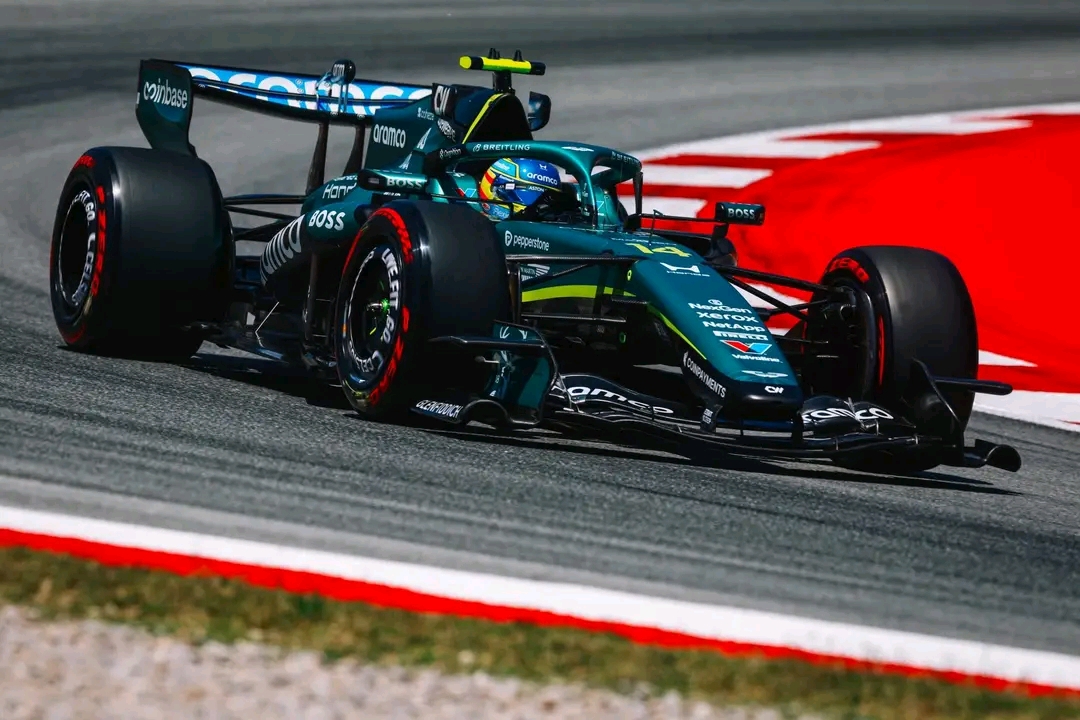
The 2026 Formula 1 season has not unfolded as Aston Martin would have hoped. Despite high expectations heading into the year and a strengthened technical direction, the team’s AMR26 package has failed to deliver consistent competitiveness, leaving both Fernando Alonso and Lance Stroll fighting far down the grid.
Now, reports indicate that Aston Martin is preparing a significant B-spec upgrade, effectively a near-new car, in a bid to rescue the remainder of their season and reset their development trajectory.
This development highlights not just performance struggles, but a deeper technical gap the team is urgently trying to close in an increasingly competitive midfield and front-running hybrid era.
ALONSO’S FRUSTRATION REFLECTS A WIDER PERFORMANCE GAP
Fernando Alonso has been unusually blunt about Aston Martin’s current position, openly acknowledging the scale of the challenge facing the team.
He described the car as uncompetitive across multiple areas, suggesting that Aston Martin are effectively operating in a different performance bracket compared to their rivals. His comments underline a growing sense of urgency inside the garage as race weekends become more about damage limitation than outright performance.
Alonso also pointed to upcoming races as continued struggles, implying that even traditional power-sensitive circuits like Austria may expose the same weaknesses already seen in earlier rounds.
For a driver of Alonso’s experience, such direct criticism is not common unless the gap is both consistent and structurally rooted in the car’s design philosophy.
AMR26 STRUGGLES REVEAL DEEPER DESIGN LIMITATIONS
Aston Martin Aramco F1 Team entered the 2026 campaign with expectations of fighting closer to the front, but the AMR26 has instead exposed limitations in overall balance, efficiency, and race pace.
According to team discussions, the car has struggled to extract performance across different track conditions, leaving it vulnerable in both qualifying and race trim. The deficit has been described internally as significant enough that the team feels they are competing in a separate category altogether.
While Formula 1 development cycles are typically continuous, Aston Martin’s situation appears to have accelerated the need for a more drastic mid-season correction rather than incremental upgrades.
B-SPEC CAR DEVELOPMENT TARGETED FOR ZANDVOORT DEBUT
The most significant update is the planned introduction of a B-spec car, expected around the Zandvoort race after the summer break.
This update is not just a minor aerodynamic package but a broader redesign of key performance areas. Early indications suggest the team is targeting improvements in:
Overall aerodynamic efficiency
Mechanical grip and corner stability
Tire degradation management
Power unit integration and cooling performance
The goal is not just to improve lap time, but to fundamentally reposition the car within the midfield battle.
While Aston Martin has not officially confirmed all technical details, the scale of the upgrade suggests a major reset rather than a simple upgrade cycle.
ADRIAN NEWEY’S INVOLVEMENT ADDS LONG-TERM SIGNIFICANCE
A key storyline behind the development push is the reported involvement of Adrian Newey, who has been working on shaping future performance direction.
Newey’s reputation as one of the most influential designers in Formula 1 history means any car development linked to him carries significant weight. While the B-spec car is aimed at immediate recovery, it is also expected to align with longer-term technical philosophy changes being implemented within the team.
If the upgrade performs as intended, it could serve as a foundation for future seasons rather than just a short-term fix.
KRACK EMPHASIZES LEARNING DESPITE DIFFICULTIES
Mike Krack has taken a more measured tone, focusing on the development value of even the most difficult weekends.
He highlighted that even when a team is several seconds off the pace, there are still insights to be gained from operations, strategy execution, and process refinement. One example cited was a strong single-stop strategy execution, which the team believes was a rare positive in a challenging race environment.
Krack’s comments suggest that while results are poor, the internal focus remains on building long-term operational efficiency and reducing execution errors.
WHY THIS UPGRADE MATTERS FOR ASTON MARTIN’S FUTURE
This B-spec project is more than just a mid-season fix. It is a critical turning point for Aston Martin’s competitive identity.
If successful, it could:
Stabilize Alonso’s final competitive years in Formula 1
Strengthen the team’s position in the midfield battle
Restore confidence after a disappointing start to the season
Provide a technical platform for future regulation cycles
However, if the upgrade fails to deliver immediate gains, Aston Martin risks falling further behind in a season where development speed is crucial.
CHAMPIONSHIP IMPACT AND COMPETITIVE OUTLOOK
While Aston Martin is not currently fighting for the championship, their performance still influences the wider grid dynamics. A stronger Aston Martin could disrupt midfield battles involving teams fighting for constructors’ points, potentially reshaping strategic decisions across multiple squads.
For Alonso, the priority remains extracting maximum performance from whatever package arrives. For Stroll, consistency and adaptation to the new car will be critical in ensuring both drivers benefit equally from the upgrade direction.
FINAL THOUGHTS
Aston Martin’s decision to effectively restart their 2026 campaign with a B-spec car is a bold but necessary gamble. In modern Formula 1, where development speed often defines season success, hesitation can be more damaging than failure.
All eyes now turn to Zandvoort, where the true effectiveness of this overhaul will begin to reveal whether Aston Martin are rebuilding momentum or simply attempting to stop a deeper decline.