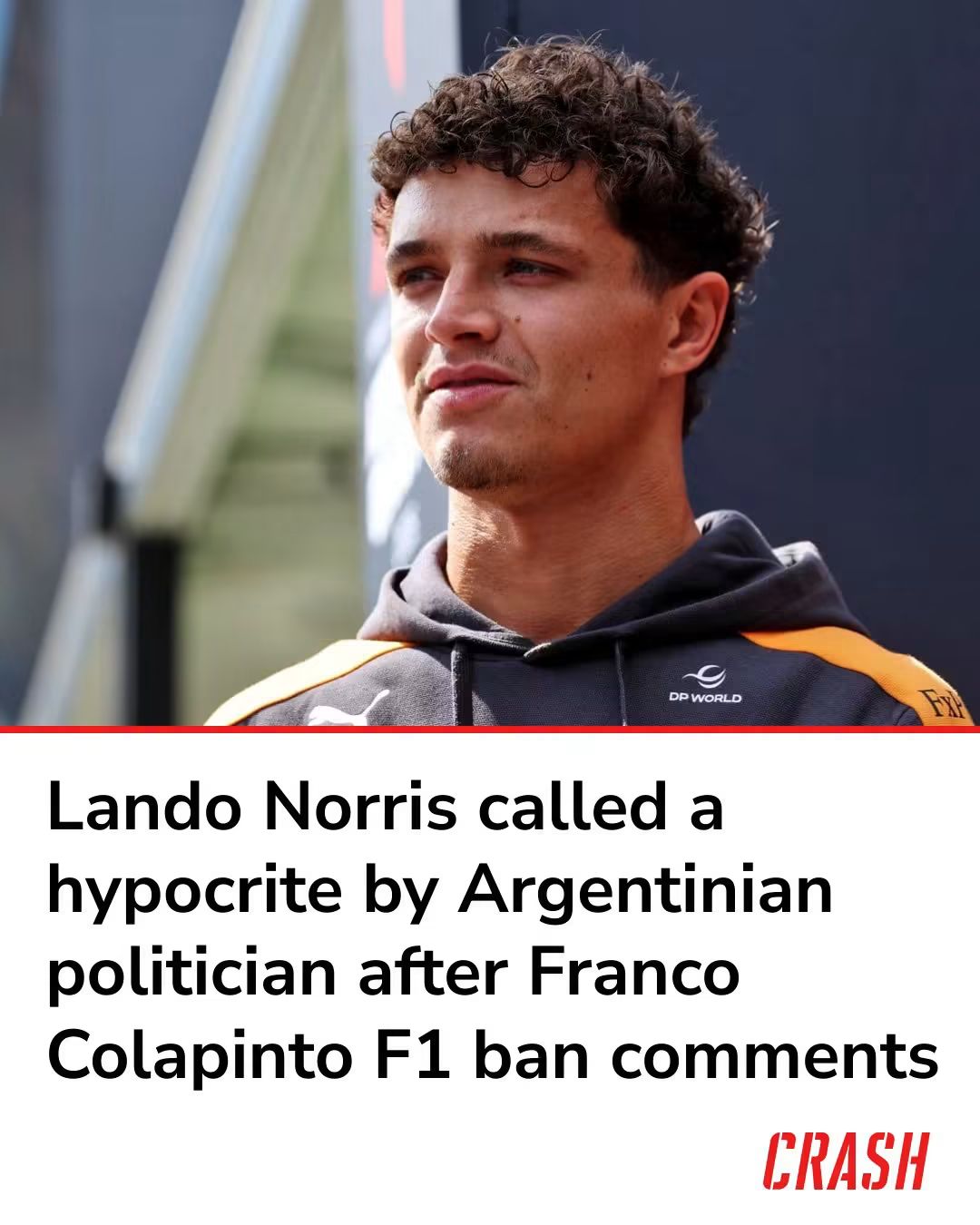
Formula 1 rarely stays confined to the track. What began as a messy safety-car restart in Baku has now pulled in national pride, online warfare, and even Argentina’s foreign minister. After reigning world champion Lando Norris demanded a race ban for Alpine’s Franco Colapinto, Argentine official Pablo Quirno fired back with a sharp public dig that has turned a racing incident into a diplomatic-tinged row.
THE BAKU INCIDENT THAT SPARKED THE FIRESTORM
During the Azerbaijan Grand Prix, a safety-car period ended and the field accelerated toward Turn 1. Colapinto, running on the inside, locked up heavily on cold tyres and brakes. His Alpine slammed into teammate Pierre Gasly. Gasly’s car then collected Norris’s McLaren. All three drivers were out on the spot.
Norris, already struggling for pace that weekend, was left furious. The British driver told media he had not yet seen a full replay but still called for severe punishment. He argued the FIA should start handing out bans for such “careless” driving, saying it costs teams huge sums in damaged parts and that this level of error does not belong in Formula 1. Norris suggested at least a one-race ban and went further, stating that some drivers simply should not be on the grid.
Colapinto immediately owned the mistake. He apologised to Gasly, Norris, the team and the factory, describing a complete lock-up that left him out of control. Stewards handed him a 10-second time penalty. Because he did not finish the race, it converts to a five-place grid drop for the next round in Malaysia.
POLITICS ENTERS THE COCKPIT
The real escalation came off-track. Argentine fans flooded Norris’s social media with criticism. Then Pablo Quirno, Argentina’s Minister of Foreign Affairs, International Trade and Worship, joined the conversation. In a pointed social-media post, Quirno referenced a 2025 Montreal incident in which Norris himself was involved in a collision with teammate Oscar Piastri. The implication was clear: Norris had not called for bans when the roles were reversed.
The intervention is unusual. Senior government figures rarely comment on individual racing penalties. It underscores how deeply Colapinto’s presence resonates in Argentina. The young driver is a rare South American face in modern F1 and carries significant national expectation. For many supporters, Norris’s comments crossed from legitimate frustration into an attack on Colapinto’s right to compete.
WHY THE STORY MATTERS BEYOND ONE RACE
This episode reveals several tensions running through today’s Formula 1.
First is the perennial debate over standards and pay-drivers. Colapinto’s seat at Alpine has always been scrutinised. Critics question whether he has the experience and consistency required at the sharp end. Supporters point to limited opportunities and the pressure of representing a nation hungry for success. Norris’s blunt assessment that some drivers “shouldn’t be there” lands differently depending on which side of that divide you sit.
Second is the growing problem of online abuse. Alpine issued a statement condemning the hate directed at Norris and others after the race. The team noted that mistakes happen at the limit and that no one in the paddock or media should face abuse. Similar waves of hostility have followed Colapinto before, including earlier in the season when fans targeted stewards and rival drivers. The sport’s governing body and teams increasingly find themselves issuing statements about social-media toxicity rather than pure sporting matters.
Third is the championship picture. Norris’s retirement was his first since Monaco. He now sits a substantial points deficit behind the leaders with limited rounds remaining. For a defending champion, an avoidable DNF stings harder. Meanwhile Alpine lost a potential double-points finish, a costly result for a midfield team fighting for every position in the constructors’ standings.
THE BROADER IMPACT ON DRIVERS, TEAMS AND THE SPORT
For Colapinto, the five-place grid penalty in Malaysia is the immediate sporting consequence. Longer term, the incident adds to a narrative of high-profile errors that could influence his future prospects. Alpine has already shown signs of internal tension; team principal Flavio Briatore previously warned Argentine fans about aggressive online behaviour toward Gasly, threatening to limit Colapinto’s media access if it continued.
For Norris, the episode risks painting him as overly harsh in the court of public opinion, particularly among Latin American fans. Champions are allowed to be angry when taken out, yet the language he chose invited a cultural and political backlash.
For Formula 1 itself, the affair highlights the global nature of the modern audience. A British world champion criticising an Argentine driver can no longer stay inside the paddock bubble. National politicians now feel entitled to reply. That raises questions about where the line sits between passionate support and political interference in sporting discipline.
WHAT COMES NEXT
The Malaysia weekend will be the first real test of the fallout. Colapinto starts five places further back. Norris will be under pressure to score heavily if his title defence is to remain mathematically alive. The FIA is unlikely to revisit the penalty or introduce a ban; race bans generally require a driver to accumulate 12 penalty points on their super licence within 12 months, a threshold the current system makes harder to reach for single incidents of this type.
Beyond the next race, the bigger conversation will continue. Should the FIA adopt stricter automatic bans for causing multi-car collisions on restarts? Is the current penalty system adequately protecting innocent parties from expensive, championship-damaging errors? And how should teams and the sport respond when passionate national fanbases turn toxic?
One weekend in Baku has shown that Formula 1’s on-track drama is only half the story. When a young Argentine driver’s mistake draws criticism from a British world champion and a response from a government minister, the sport’s cultural and political dimensions become impossible to ignore. The racing continues, but the arguments it generates now travel far beyond the circuit.