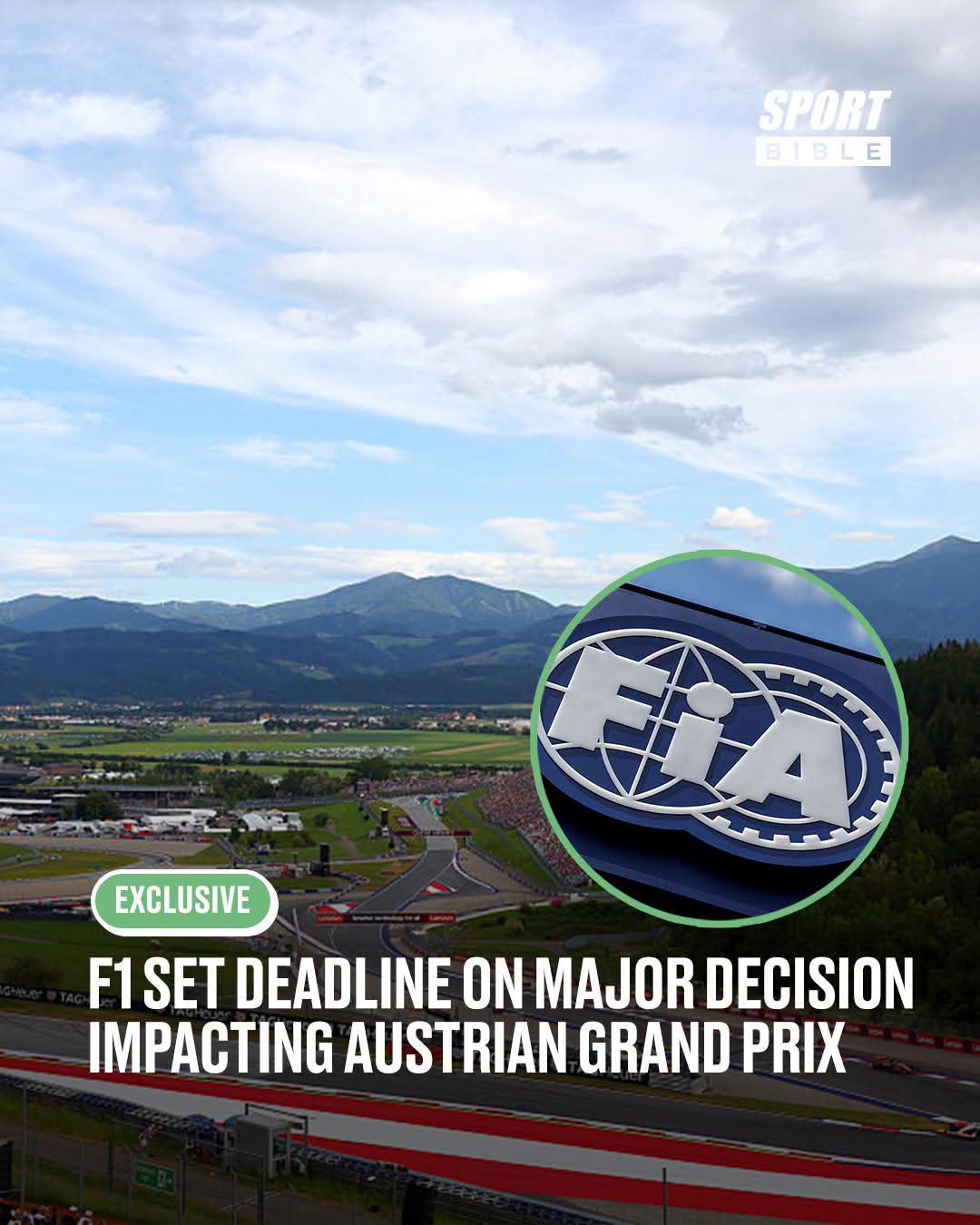
Formula 1 heads to Austria this weekend for the eighth round of the 2026 season, but the biggest challenge at the Red Bull Ring may not come from rival teams or championship pressure. Instead, soaring temperatures could force the FIA to activate one of the sport’s newest safety measures.
With forecasts predicting temperatures well above 30°C throughout the race weekend, Formula 1 officials are preparing to make a key decision that could directly impact every team, every driver, and potentially the outcome of the Austrian Grand Prix.
The FIA has confirmed that a final determination on whether to declare a “heat hazard” will be made before competitive action begins, placing teams on alert as they prepare for one of the hottest race weekends of the season.
EXTREME HEAT CREATES NEW CHALLENGE FOR TEAMS
The Red Bull Ring is already one of Formula 1’s most physically demanding venues despite its relatively short lap length.
Situated approximately 700 meters above sea level, the Austrian circuit combines heavy braking zones, rapid elevation changes, and demanding acceleration zones. Add temperatures potentially reaching 34°C, and the challenge becomes even greater.
High temperatures affect far more than driver comfort. Every major component of a Formula 1 car is impacted.
Power units must cope with increased thermal stress, cooling systems are pushed harder, brakes operate under greater strain, and tyre degradation can accelerate dramatically. Teams are often forced to compromise between aerodynamic performance and cooling efficiency when temperatures rise.
As a result, even small changes in weather conditions can dramatically influence race strategy.
WHAT IS A FORMULA 1 HEAT HAZARD?
The FIA introduced the heat hazard protocol to protect drivers from dangerous cockpit temperatures after concerns were raised during previous extreme-weather events.
Under current regulations, a heat hazard can be declared when forecast temperatures exceed established thresholds. Once activated, teams must install specific cooling equipment designed to help drivers cope with excessive heat inside the cockpit.
The system uses pumps, fluid lines, and cooling technology to circulate chilled liquid through specially designed fire-resistant cooling garments.
While drivers can choose whether or not to wear the cooling vest itself, teams are still required to fit the system’s core components to the car if the FIA declares a heat hazard.
The rule reflects Formula 1’s increasing focus on driver safety without fundamentally changing the competitive nature of the sport.
WHY THE FIA’S DEADLINE MATTERS
The FIA has confirmed that race officials will decide whether to activate heat hazard measures approximately 24 hours before the start of competitive sessions.
That decision carries significant consequences.
Once a heat hazard is declared, teams must adapt their cars accordingly. Additional equipment increases overall vehicle weight and affects packaging within already tightly engineered chassis.
Although the weight penalties appear small on paper, Formula 1 teams spend millions of dollars searching for fractions of a second. Even minor weight changes can influence setup choices, tyre behavior, and overall performance.
For teams already battling at the front of the grid, every detail matters.
HOW THE HEAT COULD IMPACT THE CHAMPIONSHIP BATTLE
The timing of this situation could not be more intriguing.
Mercedes enters Austria determined to recover from recent reliability setbacks. Andrea Kimi Antonelli still leads the championship, but Lewis Hamilton’s breakthrough Ferrari victory in Spain significantly tightened the title race.
Meanwhile, Ferrari, Red Bull, and McLaren all arrive with upgrades aimed at closing performance gaps and gaining momentum before the season reaches its midpoint.
Extreme temperatures could become an equalizer.
Cars that perform exceptionally well in cooler conditions sometimes struggle when cooling demands increase. Teams with efficient thermal management systems may suddenly gain an unexpected advantage.
Drivers who manage tyres effectively could also benefit as track temperatures rise and degradation becomes more severe.
The Austrian Grand Prix may therefore become as much a test of engineering adaptability as outright speed.
THE HIDDEN THREAT TO RELIABILITY
Perhaps the biggest concern for teams is reliability.
Modern Formula 1 power units are extraordinarily complex, and high temperatures increase stress across multiple systems simultaneously. Cooling requirements become more demanding while components operate closer to their limits.
Mercedes has already suffered costly reliability failures this season. Ferrari and Red Bull have experienced occasional concerns of their own.
In a championship where margins remain incredibly tight, another retirement caused by heat-related mechanical issues could significantly alter both title fights.
The risk is particularly high at the Red Bull Ring, where repeated periods of full throttle place additional demands on engines and hybrid systems.
WHY AUSTRIA COULD DELIVER ONE OF THE MOST UNPREDICTABLE RACES OF 2026
Formula 1 teams spend months preparing for every circuit, but weather remains one variable that nobody can fully control.
The expected heat in Austria introduces uncertainty into every aspect of the weekend. Teams must evaluate cooling strategies, tyre management plans, race setups, and reliability risks while waiting for the FIA’s final decision.
If a heat hazard is officially declared, it will add another layer of complexity to an already fascinating championship battle.
And if temperatures continue climbing throughout the weekend, the Austrian Grand Prix could become one of the most physically demanding and strategically unpredictable races of the entire 2026 season.
With Mercedes protecting its championship lead, Ferrari gaining momentum after Hamilton’s victory, and Red Bull eager to perform strongly on home soil, the weather may ultimately prove to be the decisive factor.
AI IMAGE PROMPT FOR GEMINI
Create a realistic Formula 1 Austrian Grand Prix scene at the Red Bull Ring under intense summer heat. Show drivers wearing cooling vests in the paddock, mechanics working on overheating cars, visible heat haze above the track, packed grandstands, and dramatic mountain scenery in the background. Include Mercedes, Ferrari, Red Bull, and McLaren cars in the pit lane with engineers monitoring temperatures. Ultra-realistic motorsport photography, cinematic lighting, high detail, 8K quality, intense atmosphere, professional sports journalism style.