A DECISION THAT COULD CHANGE THE POWER DYNAMIC IN PROFESSIONAL SPORTS
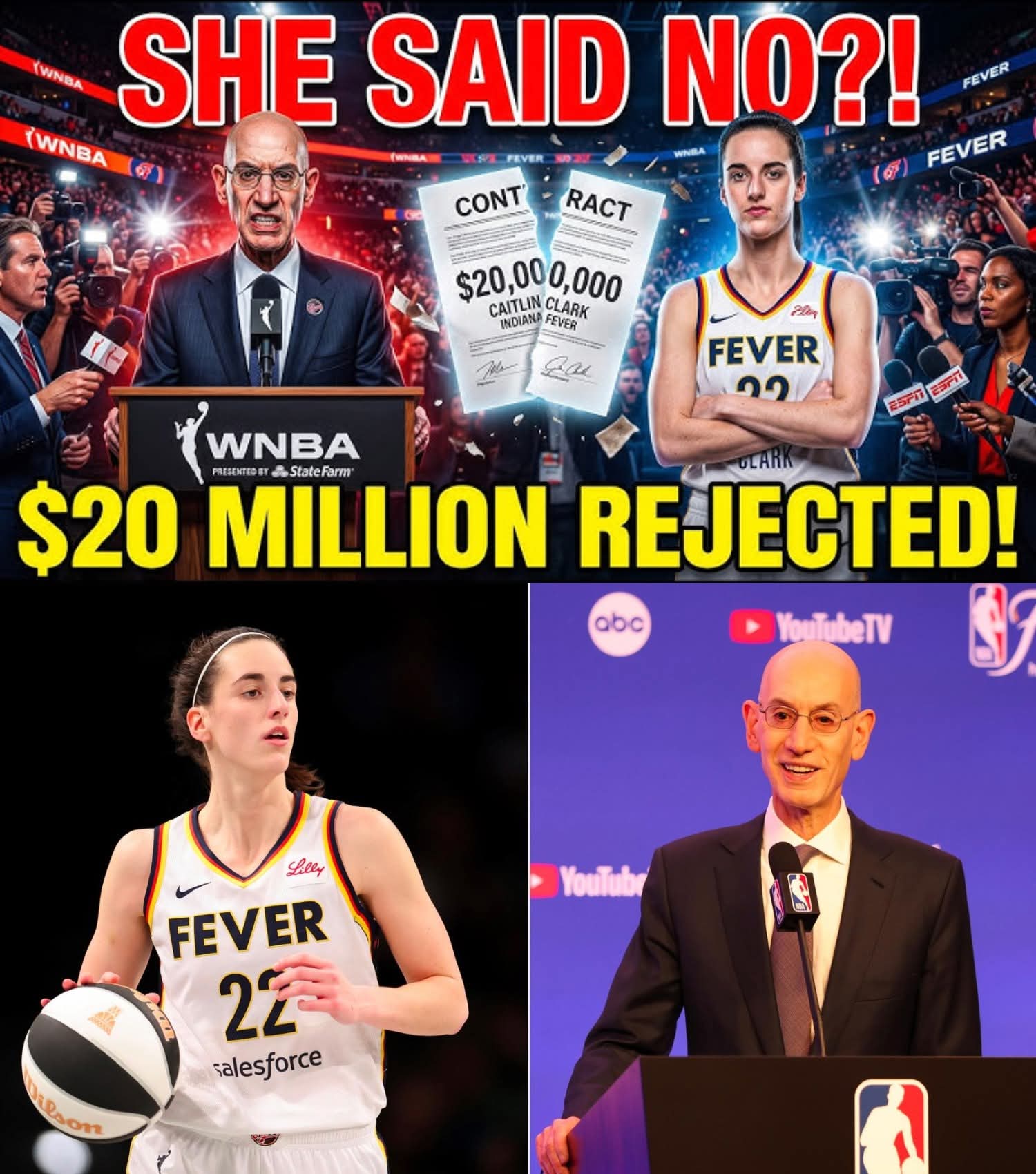
The basketball world was rocked after reports emerged that Indiana Fever superstar Caitlin Clark turned down a staggering $20 million commercial opportunity, a decision that has reportedly created frustration among some of the most influential figures connected to professional basketball. While the financial package would have ranked among the richest endorsement-related deals associated with women’s basketball, Clark’s reported refusal has fueled widespread debate about player independence, long-term branding, and the growing influence elite athletes now possess over their own careers.
Instead of accepting what many viewed as an automatic payday, Clark reportedly chose to prioritize flexibility and control over her future. The decision immediately sparked conversations throughout the sports industry, with executives, sponsors, fans, and media personalities questioning what motivated one of basketball’s biggest stars to reject such a lucrative proposal. Whether the reports ultimately prove accurate or not, the discussion highlights how dramatically the business side of women’s basketball has evolved.
CAITLIN CLARK’S MARKET VALUE CONTINUES TO SOAR
Clark entered the WNBA carrying unprecedented expectations after transforming women’s college basketball into a national phenomenon. Since arriving in Indiana, she has continued to generate enormous television ratings, sell out arenas across the league, attract record-breaking sponsorship interest, and bring new audiences to the WNBA.
That level of influence gives Clark negotiating power rarely seen from an athlete so early in a professional career. Rather than simply accepting the largest available offer, she is increasingly viewed as someone capable of building an even larger business empire through carefully selected partnerships. Industry analysts believe her earning potential over the next decade could far exceed the value of any single agreement if she continues managing her brand strategically.
WHY A MASSIVE OFFER MAY NOT HAVE BEEN ENOUGH
Money alone is no longer the deciding factor for many modern sports superstars. Today’s elite athletes often evaluate endorsement opportunities based on creative freedom, ownership rights, exclusivity clauses, and long-term commercial potential.
If reports surrounding Clark’s decision are accurate, rejecting a headline-grabbing financial package could signal that she values maintaining complete control over her image and business interests. Short-term wealth can sometimes come at the cost of future opportunities, particularly when contracts limit an athlete’s ability to pursue competing partnerships or launch personal ventures.
THE BUSINESS OF WOMEN’S BASKETBALL IS ENTERING A NEW ERA
Clark’s rise has accelerated commercial investment throughout the WNBA. Corporate brands that once overlooked women’s basketball are now aggressively competing for sponsorship opportunities, media rights continue to grow, and attendance figures have reached historic levels.
As more money enters the league, players are gaining leverage that previous generations rarely possessed. Instead of accepting whatever is offered, today’s stars have multiple companies competing for their attention, allowing them to negotiate from positions of strength rather than necessity.
LEAGUE EXECUTIVES FACE A CHANGING LANDSCAPE
Whether Adam Silver or any league executive was directly involved in the reported situation remains unconfirmed. However, stories like this underline a broader challenge facing basketball leadership across both the NBA and WNBA.
The biggest stars increasingly function as global entertainment brands independent of the leagues they represent. Their influence stretches across social media, broadcasting, endorsements, merchandise, and international marketing. Managing relationships with these athletes requires collaboration rather than control, as the balance of power continues shifting toward the players themselves.
INDIANA FEVER REMAIN THE BIGGEST BENEFICIARIES
Regardless of off-court speculation, the Indiana Fever continue benefiting enormously from Clark’s presence. Ticket demand remains exceptionally high, national television exposure continues increasing, and merchandise sales consistently rank among the league’s strongest.
Every headline involving Clark—whether basketball-related or business-focused—keeps the Fever at the center of the sports conversation. That visibility has elevated the franchise into one of the WNBA’s most recognizable organizations and strengthened its commercial value across multiple markets.
SPONSORS MAY HAVE TO CHANGE THEIR APPROACH
Companies hoping to partner with Clark may now realize that traditional endorsement strategies are no longer enough. Elite athletes increasingly seek relationships that extend beyond advertisements, including equity stakes, revenue-sharing models, collaborative product development, and long-term brand building.
Rather than simply paying athletes to promote products, corporations may need to treat stars like Clark as business partners whose influence extends far beyond the basketball court.
PLAYER EMPOWERMENT CONTINUES TO GROW
Professional sports have steadily moved toward greater athlete empowerment over the past decade. From contract negotiations to personal branding, players now possess more influence than ever before.
Clark represents the newest generation of athletes entering professional leagues already carrying global recognition and enormous commercial appeal. That reality changes negotiations significantly, allowing young stars to make decisions based on long-term strategy instead of immediate financial reward.
THE PRESSURE OF EXPECTATION REMAINS IMMENSE
While off-court business stories generate headlines, Clark continues facing enormous expectations every time she steps onto the court. Opposing defenses focus heavily on stopping her, media attention follows every performance, and every business decision receives intense public scrutiny.
Balancing those responsibilities while continuing to perform at an elite level requires remarkable discipline. How Clark manages both her basketball career and growing commercial empire could become a blueprint for future WNBA superstars.
WHAT HAPPENS NEXT COULD SHAPE THE FUTURE OF SPORTS MARKETING
Whether the reported $20 million offer was ultimately rejected or not, the discussion surrounding it reflects a larger transformation taking place throughout professional sports. Athletes are becoming increasingly selective, brands are becoming more aggressive, and leagues are adapting to an era where individual stars often possess influence comparable to entire franchises.
If Clark continues expanding her value while maintaining control over her career decisions, she could redefine how endorsement negotiations are approached across women’s sports. Rather than being remembered solely for contracts she accepted, she may ultimately be remembered for the opportunities she chose to walk away from—and the even greater success that followed.