CHELSEA GRAY SPEAKS OUT AFTER SOCIAL MEDIA HATE FOLLOWS FEVER CLASH
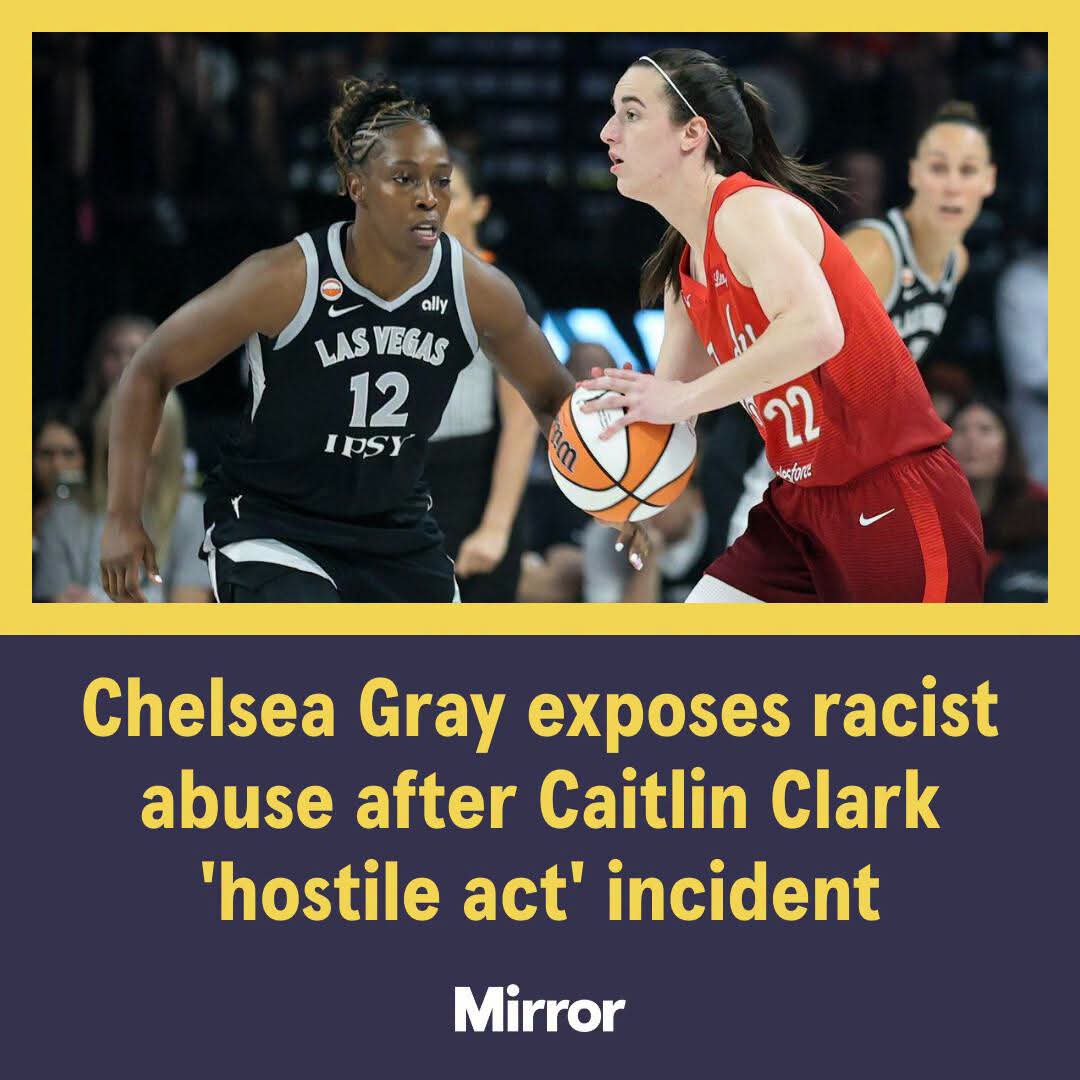
Las Vegas Aces veteran Chelsea Gray has publicly revealed the disturbing racist abuse she received on social media following the team’s recent matchup against the Indiana Fever, placing renewed attention on the growing problem of online harassment in the WNBA. The incident comes after a controversial on-court collision involving Indiana superstar Caitlin Clark, a play that sparked heated debate among fans and once again highlighted how quickly basketball discussions can escalate into personal attacks.
Gray’s decision to expose the messages has shifted the conversation away from a single basketball play and toward the toxic environment many professional athletes continue to face online. Rather than allowing the abuse to remain hidden, the veteran guard chose to show the reality behind the scenes, emphasizing that players frequently endure hateful comments that fans never see.
CONTROVERSIAL CLARK PLAY BECAME THE CENTER OF ATTENTION
The controversy began during Indiana’s dominant victory over the Aces when Gray drove toward the basket and made contact with Clark. The Fever guard immediately doubled over in discomfort, prompting officials to review the sequence for a possible hostile act.
After reviewing multiple angles, the officiating crew ruled that no hostile act had occurred and allowed the original decision to stand. Gray converted her free throws, and play resumed, but the debate exploded across social media within minutes.
Fans quickly split into opposing camps. Some believed Clark exaggerated the contact, while others argued the league continues to allow excessive physical play against one of its biggest stars. The differing opinions fueled thousands of reactions online long after the final buzzer.
GRAY REVEALS DISTURBING MESSAGES RECEIVED AFTER THE GAME
As emotions surrounding the game continued to build, Gray shared screenshots of abusive direct messages she received, including racist language and personal insults directed at her appearance.
Posting the messages publicly, Gray expressed frustration that many people dismiss athletes’ concerns whenever they speak about online abuse. She argued that players are often told to simply ignore the harassment despite the volume and severity of the attacks they receive after high-profile games.
Her decision to expose the messages quickly gained support from fellow players, coaches, and fans who condemned the abuse while calling for greater accountability across social media platforms.
THE INCIDENT ADDS TO A GROWING LEAGUE-WIDE PROBLEM
Gray’s experience is far from an isolated case. Multiple WNBA players have reported receiving threats and discriminatory messages throughout the season, particularly following nationally televised games involving Caitlin Clark and other high-profile stars.
The league’s growing popularity has dramatically expanded its audience, creating unprecedented exposure for players. While increased attention has boosted television ratings, attendance, sponsorship opportunities, and media coverage, it has also brought a darker side of online fandom.
As the WNBA reaches new audiences around the world, league officials are increasingly being challenged to find stronger ways to protect players from harassment that extends far beyond the basketball court.
PRESSURE CONTINUES TO BUILD ON WNBA LEADERSHIP
The latest controversy has once again placed WNBA leadership under intense scrutiny. Previous incidents involving player abuse have already prompted criticism from athletes who believe stronger action is needed to address hate directed toward players.
Many around the league argue that public statements condemning abuse are important, but they must eventually be accompanied by more aggressive action involving social media companies, arena security, law enforcement when necessary, and educational initiatives designed to discourage abusive behavior.
As player safety becomes an increasingly important topic, league executives may soon face renewed calls to implement broader policies aimed at protecting athletes both on and off the court.
CAITLIN CLARK’S STAR POWER CONTINUES TO MAGNIFY EVERY MOMENT
Few athletes in basketball generate as much attention as Caitlin Clark, and every game involving the Indiana Fever now receives extraordinary scrutiny. Routine fouls, officiating decisions, and physical plays frequently dominate national conversations, creating enormous pressure on everyone involved.
Opposing players often find themselves at the center of viral debates whenever contact occurs with Clark, regardless of whether officials determine the play was legal. That reality creates additional challenges for referees, coaches, and players who simply want games to be decided by basketball rather than social media narratives.
The Fever’s continued rise as one of the WNBA’s biggest attractions means this spotlight is unlikely to fade anytime soon.
THE LEAGUE MUST PROTECT ITS MOMENTUM
The WNBA is experiencing one of the most successful periods in its history, with record television audiences, increased attendance, expanding sponsorships, and unprecedented media coverage. However, maintaining that momentum requires ensuring players feel protected from abuse that accompanies increased visibility.
Basketball thrives on passionate rivalries, physical competition, and emotional debates. Personal attacks, racism, and threats have no place in the sport. As the league prepares for the second half of the season, the focus will ideally return to the outstanding performances happening on the court rather than the unacceptable behavior taking place online.
Chelsea Gray’s decision to speak out may ultimately become another turning point in the WNBA’s ongoing effort to confront online abuse while preserving the positive momentum that continues to drive women’s basketball to new heights.