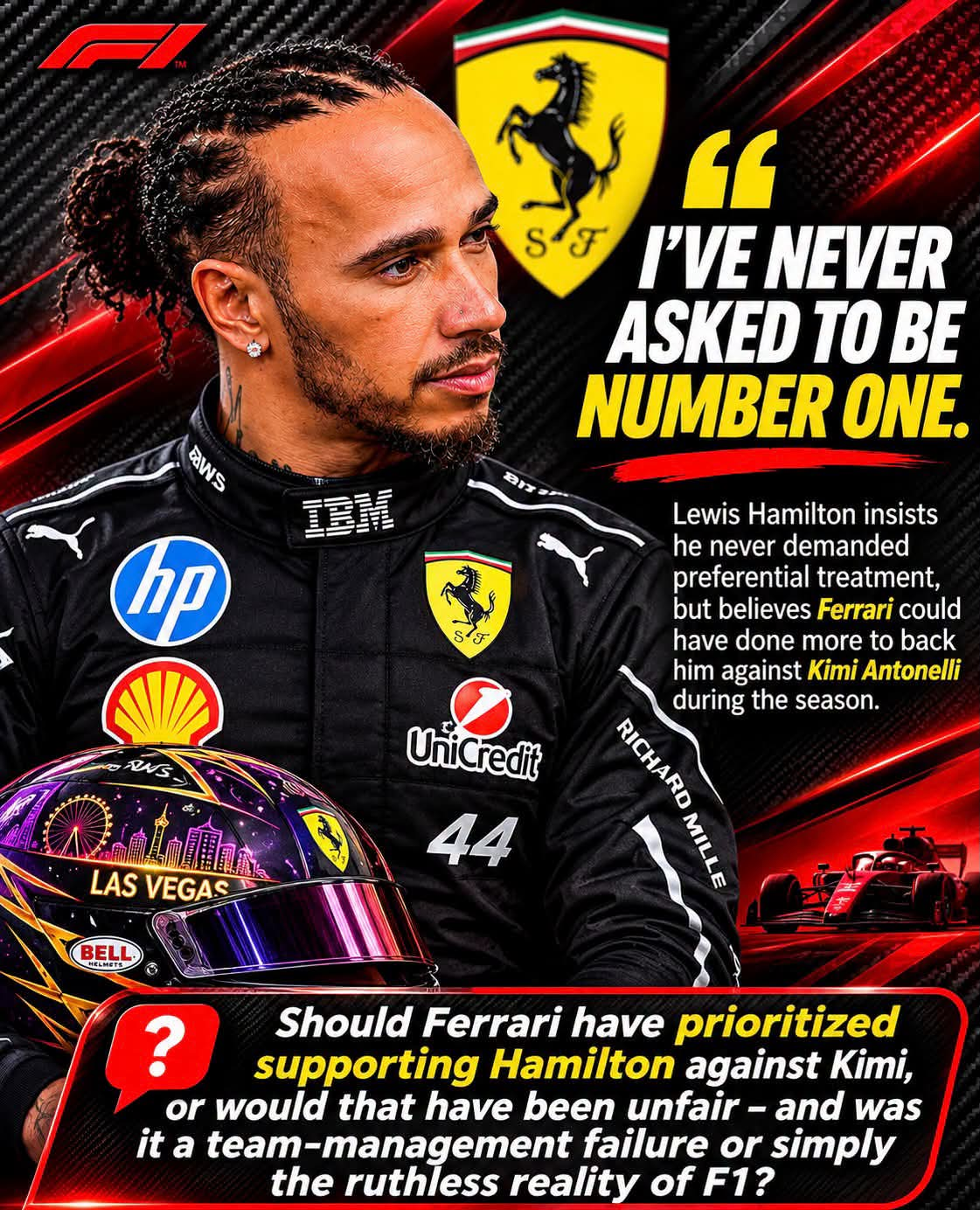
Lewis Hamilton left the Las Vegas Strip with another reminder that Ferrari’s biggest enemy can sometimes wear the same red overalls. After a chaotic night race under the neon lights, the seven-time world champion made his position unmistakable: he was not locked in some personal duel with Charles Leclerc. His focus stayed firmly on the McLarens. The contact that spun him and the subsequent points haemorrhage only underlined how costly internal friction remains for the Scuderia.
Hamilton recovered to seventh. Leclerc finished tenth after a 10-second penalty for the clash. Both drivers had already served or received penalties of their own. What should have been a solid points haul in a race where Ferrari showed genuine pace instead became another evening of damage limitation.
WHY HAMILTON INSISTS THE BATTLE WAS NEVER INTERNAL
From the moment he climbed out of the car, Hamilton rejected the narrative that Ferrari’s drivers were once again obsessed with each other. He described a race in which he felt competitive, especially after serving his own 10-second penalty for leaving the track while fighting Lando Norris. Once back in the pack, his mindset was clear.
He was hunting the McLarens. He saw the chance to climb toward the podium and, more importantly, to protect second place in the constructors’ championship. Every time the two Ferraris fought each other, he argued, they simply lost ground to the cars that mattered. Stay in the tow, work together, catch the cars ahead. That was the message he said he wanted.
The contact arrived when both red cars were still in the mix. Leclerc’s move resulted in Hamilton spinning. Stewards ruled Leclerc wholly at fault. Hamilton’s response stayed measured. He declined to re-litigate the incident in public, pointing instead to the team. “I’ve done all I can and I’ve said everything and more,” he noted. The question, he suggested, now sits with Ferrari.
THE COSTLY PATTERN THAT WILL NOT GO AWAY
This was not an isolated flashpoint. Mexico had already shown how quickly a first-lap scrap between the two can hand a potential one-two to Max Verstappen. Clear-the-air talks followed in São Paulo. Team principal Fred Vasseur delivered the same message both times: the team comes first. Respect the brand, the people in Maranello, the sponsors, and the tifosi.
In Las Vegas the message did not stick. Vasseur called the clash “completely unacceptable” and a lack of respect. He made clear he had reminded Leclerc during the race itself to think about the team. The result still delivered another round of lost points and fresh frustration inside the garage.
Hamilton’s earlier penalty had already forced a recovery drive. The spin compounded it. Telemetry and race pace suggested both Ferraris had the speed to fight higher up the order. Instead they left Las Vegas with seven and one point respectively in a race where the McLarens locked out the podium places behind Verstappen.
WHAT THIS MEANS FOR FERRARI’S CONSTRUCTORS FIGHT AND BEYOND
With only a handful of races left, every point matters in the battle for second in the constructors’ championship. McLaren remain the clear target. Every intra-team collision or messy battle simply hands them breathing room. Hamilton understands that equation better than most. He has spent years winning championships by maximising team results rather than winning individual skirmishes that cost the bigger prize.
The broader impact runs deeper. Dual number-one pairings always carry tension. Ferrari’s current pairing has produced moments of brilliance and moments of self-inflicted damage. The pattern risks eroding trust, complicating strategy calls, and draining energy that should be spent extracting the last tenth from the car and the remaining races.
Vasseur faces the classic management test. Strict rules of engagement can prevent disasters but can also frustrate ambitious drivers who feel their racing instinct is being muted. Leaving them free to race risks exactly the scenes seen in Mexico and Las Vegas. Finding the middle ground that both men will actually respect on track is now urgent.
LOOKING AHEAD: CAN FERRARI FINALLY ALIGN?
Hamilton’s public stance after Las Vegas was deliberate. He protected the idea of teamwork while making clear he will not keep repeating the same conversations. The responsibility, he indicated, now sits with the team leadership to create the conditions where both drivers pull in the same direction when the stakes are high.
Leclerc has acknowledged the embarrassment and the need to fix whatever is not working. That is a start. Whether the next few races show genuine change will determine if Ferrari can still maximise its late-season opportunities or whether the same costly script will keep playing out.
In a season already defined by tight margins and opportunistic results, Ferrari cannot afford another evening where the cars in red spend more time fighting each other than the ones that actually threaten their championship position. Hamilton made that point without raising his voice. The results sheet made it for him.