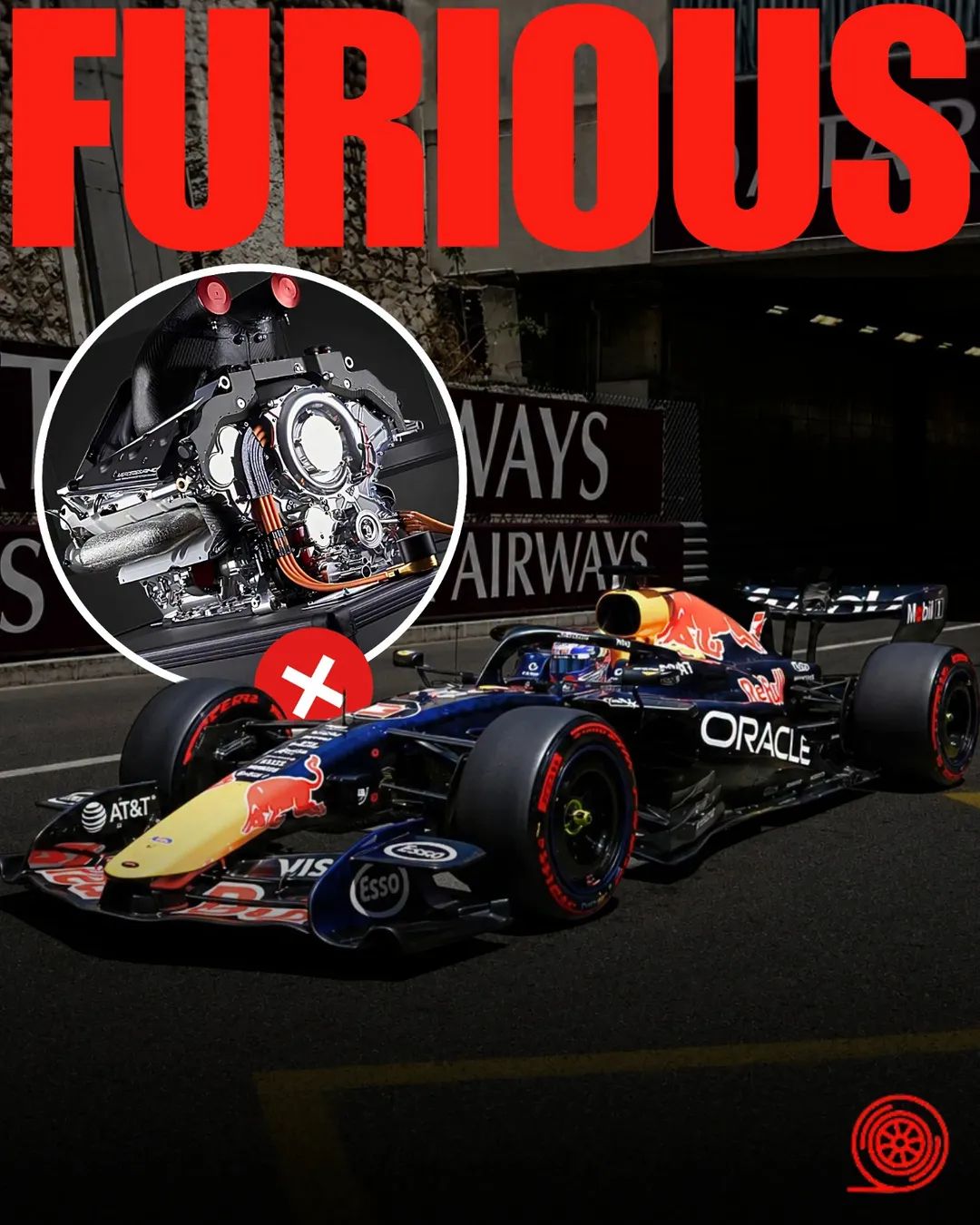
Red Bull Racing have reportedly launched a challenge against a controversial FIA engine assessment that has left the reigning powerhouse frustrated and potentially at a competitive disadvantage. In a surprising twist, being labeled as the benchmark power unit manufacturer may have become more of a burden than a reward.
The dispute centers on the FIA’s newly introduced performance evaluation system, which determines which engine manufacturers are eligible for additional development opportunities under Formula 1’s current regulations. While the governing body reportedly classified Red Bull Powertrains as the leading engine supplier, the team believes the methodology behind that conclusion fails to paint the full picture.
With the 2026 regulations already generating intense debate throughout the paddock, this latest disagreement could become one of the season’s most important political battles.
WHY RED BULL IS CHALLENGING THE FIA DECISION
At the heart of Red Bull’s frustration is the way the FIA measures engine performance.
According to reports, the current evaluation focuses primarily on the internal combustion engine component of each power unit. While that may provide a useful benchmark for traditional engine performance, Red Bull argues it ignores a critical aspect of modern Formula 1: hybrid efficiency and electrical deployment.
In the current era, raw combustion power is only one part of the equation. Energy recovery systems, battery performance, deployment efficiency, and electrical power management can significantly influence lap times. A power unit may possess a slightly weaker combustion engine but compensate through superior hybrid technology.
Red Bull’s position is straightforward: if the FIA only measures one half of the power unit, the resulting rankings may not accurately reflect the true competitive order.
THE HIGH-STAKES CONSEQUENCE OF BEING NUMBER ONE
Normally, being declared the best engine manufacturer would be cause for celebration. Under Formula 1’s new balancing mechanism, however, it creates a unique problem.
Manufacturers deemed to be trailing the benchmark are allowed additional development opportunities designed to help close performance gaps. Those opportunities can include technical upgrades and additional spending allowances within specific regulatory limits.
Because Red Bull was reportedly classified as the benchmark, rivals such as Mercedes, Ferrari, Audi, Honda, and others could gain access to development benefits that Red Bull itself cannot utilize.
From Red Bull’s perspective, the ruling effectively rewards competitors while restricting the team that has already done the best job.
This explains why the Austrian outfit is fighting so aggressively against the assessment.
THE MERCEDES FACTOR RED BULL CANNOT IGNORE
One of the biggest talking points surrounding the dispute is Mercedes.
Throughout Formula 1 history, Mercedes has built a reputation for producing highly sophisticated hybrid systems. Even during periods when rival manufacturers matched or exceeded its combustion power, the German manufacturer often retained advantages in energy recovery and deployment efficiency.
Red Bull reportedly believes that these hybrid strengths are not being properly reflected in the FIA’s calculations.
If Mercedes possesses a stronger overall power package thanks to superior electrical performance, Red Bull argues that ranking systems focused primarily on combustion output fail to capture the complete competitive picture.
This is precisely why the team views the ruling as flawed rather than flattering.
WHAT THIS MEANS FOR THE 2026 CHAMPIONSHIP
The controversy arrives at a crucial moment.
Formula 1’s new generation of regulations has already faced criticism from drivers, teams, and fans. Concerns over energy management, battery deployment limitations, and excessive lift-and-coast driving have dominated discussions throughout the season.
As the FIA simultaneously works to revise future engine regulations for 2027 and 2028, questions about competitive balance have become increasingly important.
If rival manufacturers receive meaningful upgrade opportunities while Red Bull remains restricted, the competitive order could shift dramatically over the next two seasons.
That could impact not only race victories but also the future championship battles involving drivers such as Max Verstappen, Kimi Antonelli, Lewis Hamilton, Charles Leclerc, and George Russell.
WHY THE FIA’S NEXT MOVE WILL BE CRUCIAL
The FIA now faces a delicate situation.
On one hand, Formula 1 wants mechanisms that prevent one manufacturer from dominating the sport. On the other, any balancing system must be viewed as fair and technically accurate by all participants.
If Red Bull’s challenge gains traction, the governing body may face pressure to revise how engine performance is evaluated. Future assessments could potentially include hybrid efficiency metrics, deployment effectiveness, and overall power unit performance rather than focusing heavily on combustion output alone.
Such changes would have major implications for every manufacturer currently competing under the new regulations.
RED BULL’S PROTEST COULD SHAPE F1’S FUTURE
What initially appeared to be a routine technical assessment is quickly becoming a significant political battle inside Formula 1.
Red Bull’s anger is not simply about bragging rights. It is about ensuring that development opportunities are distributed using a measurement system the team considers accurate and representative of modern hybrid racing technology.
The outcome of this dispute could influence how engine performance is judged for years to come. If the FIA stands by its ruling, Red Bull may be forced to watch rivals receive valuable upgrade opportunities. If the challenge succeeds, Formula 1 could be pushed toward a more comprehensive evaluation system that better reflects the complexity of today’s power units.
Either way, this controversy highlights a growing reality of modern Formula 1: sometimes being declared the best can create more problems than being second-best.