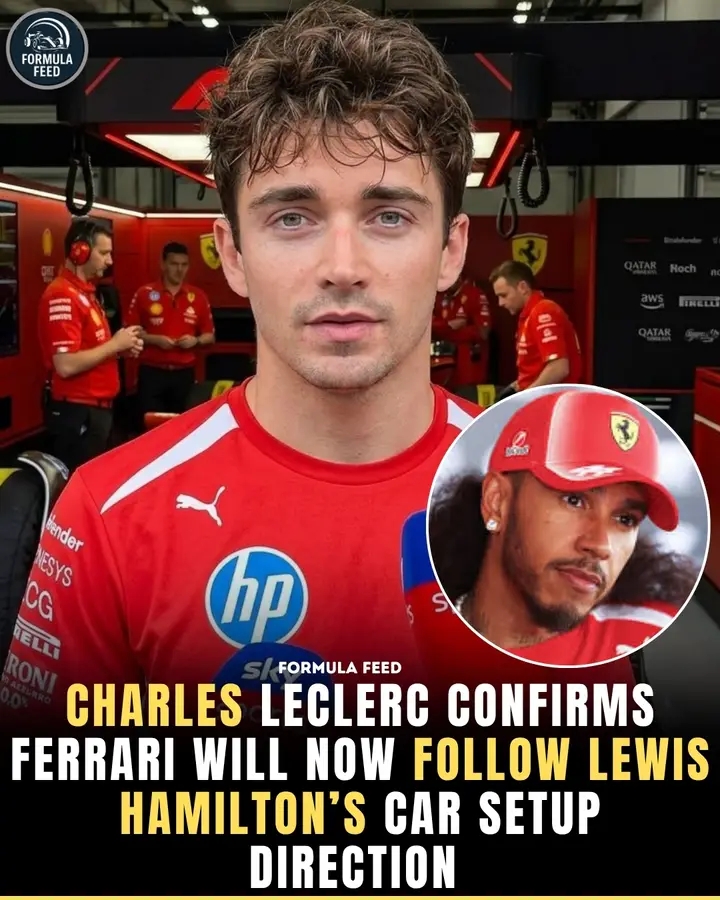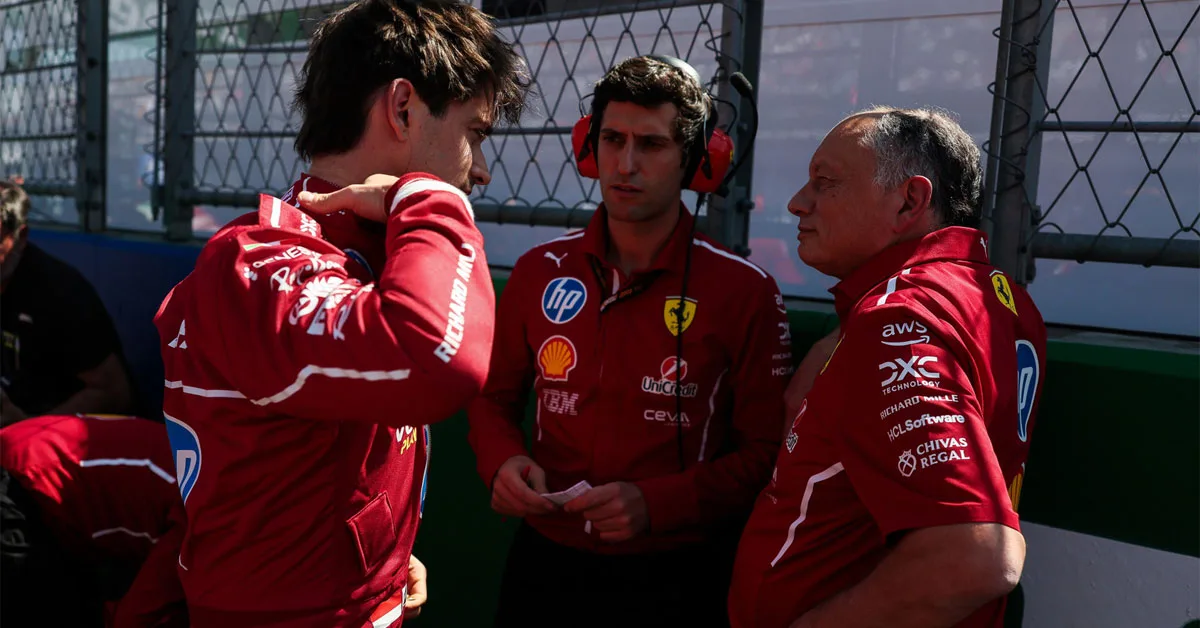
The recent contract extension between Charles Leclerc and Scuderia Ferrari has reinforced one of the most important driver-team relationships in modern Formula 1. While the announcement itself did not shock the paddock, the reasoning behind it reveals how deeply Ferrari is investing in stability, trust, and long-term technical continuity under team principal Frédéric Vasseur.
Beyond the usual contract language, this renewal highlights a strategic shift inside Ferrari: building a championship project around continuity rather than constant restructuring.
TRUST AND LONG-TERM VISION INSIDE MARANELLO
According to Vasseur, the decision to extend Leclerc’s contract was not just about performance metrics or race results. It was about trust built over years of collaboration and a shared belief in Ferrari’s future direction.
Ferrari is currently in a phase where driver input is deeply integrated into car development. This makes frequent driver changes disruptive, especially when the team is trying to refine a competitive package capable of fighting for world championships.
Leclerc is not just a driver in this project. He is a technical reference point. His feedback is used to shape future design directions, making him central to Ferrari’s development cycle rather than just its race-day execution.
This is one of the key reasons Ferrari opted for continuity instead of exploring alternatives in the driver market.
WHY LECLERC STILL BETS ON FERRARI
From Leclerc’s perspective, the extension is equally significant. Despite years of inconsistent championship challenges, he continues to commit his prime years to Ferrari.
The decision reflects belief rather than convenience. Ferrari remains one of the few teams with the infrastructure, history, and ambition to deliver a world championship project capable of matching modern powerhouses like Red Bull and Mercedes.
However, this commitment also carries pressure. Leclerc is now expected to translate loyalty into results, especially as he approaches record-breaking longevity milestones within the team.
If he stays long enough, he is on track to become one of the most experienced Ferrari drivers in history in terms of race starts. But within Ferrari, experience means little without titles.
VASSEUR’S KEY MESSAGE: STABILITY IS PERFORMANCE
One of the most important insights from Vasseur’s comments is the idea that stability itself is a performance tool.
Modern Formula 1 is not just about raw speed. It is about:
Development continuity
Technical communication
Long-term aerodynamic philosophy
Consistency in feedback loops
Frequent changes in driver lineups disrupt all of these layers. Ferrari has learned this the hard way over multiple seasons where internal resets slowed progress.
By locking in Leclerc long-term, Ferrari ensures that every new car concept is built around a consistent driving style and technical language. This reduces uncertainty and improves development efficiency.
WHAT THIS MEANS FOR FERRARI’S TITLE HOPES
Ferrari’s championship ambitions depend heavily on whether this stability translates into real gains on track.
If the team successfully delivers a car capable of consistent wins, the Leclerc-Vasseur partnership could become one of the strongest foundations in Formula 1.
However, there is also pressure attached. Stability alone does not guarantee success. Ferrari still needs to solve long-standing issues such as:
Race-day strategy execution
Tire degradation management
Consistency across different circuits
Pit stop and operational precision
Without improvements in these areas, even the strongest driver-team trust cannot guarantee a title fight.
IMPACT ON TEAM DYNAMICS AND INTERNAL COMPETITION
Leclerc’s extension also shapes Ferrari’s internal hierarchy. With the Monegasque firmly positioned as a long-term pillar, Ferrari’s approach to teammate dynamics becomes more defined.
Rather than constant internal reshuffling, Ferrari appears focused on building a clear leadership structure within the garage. This benefits development clarity but also increases pressure on teammates to match Leclerc’s consistency.
For Ferrari engineers, this clarity can be positive. It reduces uncertainty and helps streamline design priorities around a known driving profile.
THE VASSEUR EFFECT ON FERRARI’S FUTURE
Since taking charge, Vasseur has emphasized calm structure over emotional reactions. His leadership style is built around technical clarity and trust-based relationships rather than short-term panic decisions.
The Leclerc extension reflects that philosophy perfectly.
Instead of reacting to individual race results, Ferrari is now building a multi-year framework where success is measured in development progress, not just podiums.
This is a significant cultural shift for a team that has often been criticized for instability and reactive decision-making.
WHAT COMES NEXT FOR LECLERC AND FERRARI
Looking ahead, the success of this partnership will depend on Ferrari’s ability to deliver a truly championship-capable car within the next development cycles.
If progress continues, Leclerc could finally move from long-term prospect to world champion contender in red. If not, questions will inevitably resurface about whether loyalty alone is enough in modern Formula 1.
Either way, Ferrari has made its position clear: Leclerc is central to the project, not replaceable within it.
And in Formula 1, where uncertainty defines careers, that kind of clarity is rare.
FINAL THOUGHTS
The renewal between Charles Leclerc and Ferrari is more than a contract extension. It is a declaration of intent from both sides.
Ferrari is committing to stability under Frédéric Vasseur. Leclerc is committing his prime years to a project that still carries enormous potential but also significant pressure.
Now the challenge is simple but demanding: turn trust into trophies.