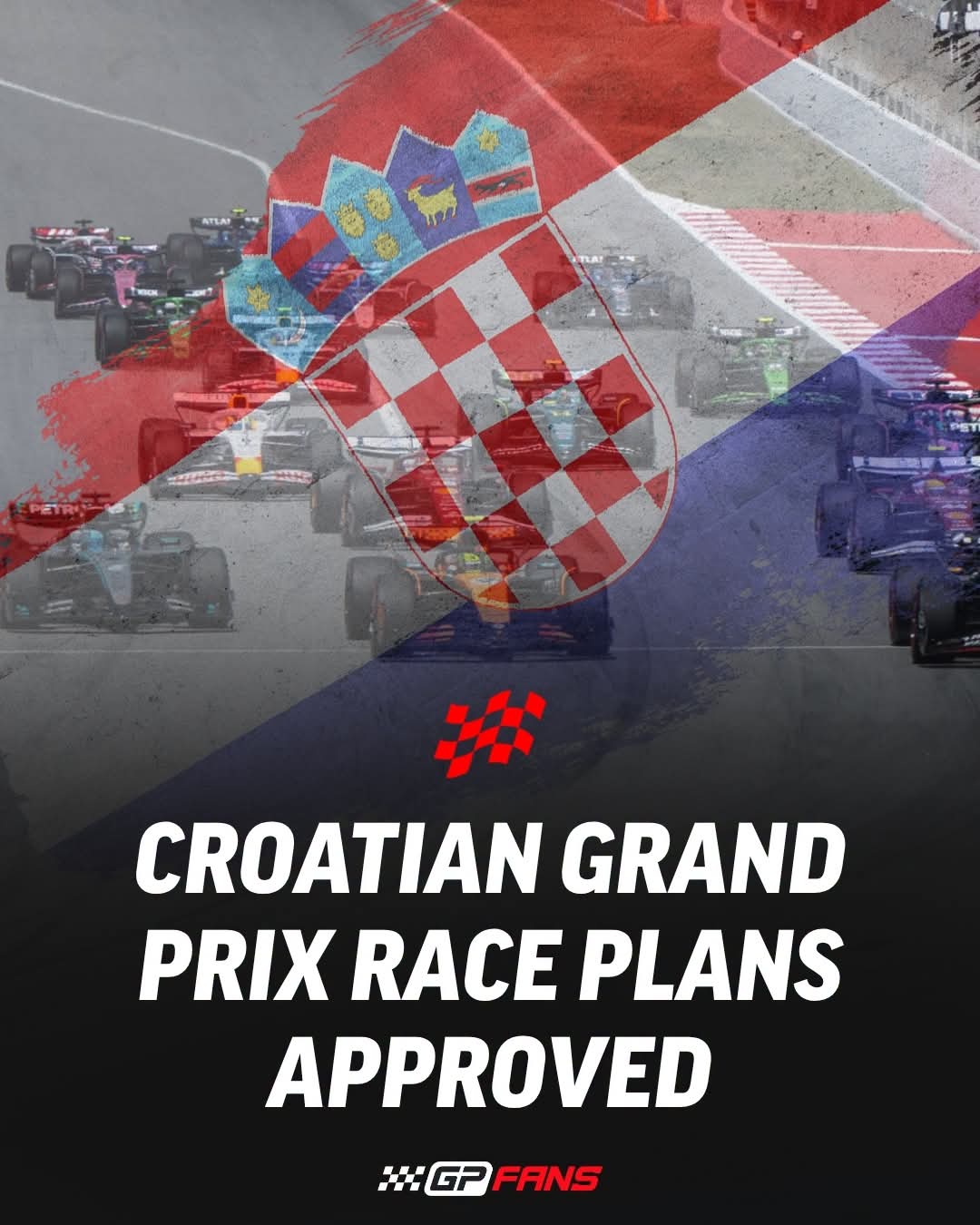
Formula 1’s global expansion could eventually add another exciting destination to the calendar after plans for a brand-new Croatian circuit took a significant step forward.
The ambitious “Croatia Ring” project has officially received approval from Croatian authorities, with the country’s government recognizing the development as a strategic national investment. While a Croatian Grand Prix remains far from guaranteed, the decision marks one of the most important milestones yet in the country’s effort to join Formula 1’s growing list of host nations.
For Formula 1 fans, it raises an intriguing question: could Croatia eventually become the sport’s next European destination?
CROATIA’S FORMULA 1 AMBITIONS GAIN MOMENTUM
The proposed Croatia Ring circuit is planned for the Slunj region, located roughly an hour from Zagreb International Airport. Organizers hope the venue will not only attract Formula 1 but also become a major motorsport and tourism hub for the region.
Government backing is often one of the biggest obstacles facing large-scale sporting infrastructure projects. By receiving strategic investment status, the Croatia Ring has cleared an important hurdle that many proposed circuits never overcome.
The project now moves from concept toward reality, with organizers targeting completion by the end of 2027.
That timeline alone signals serious intent.
JACQUES VILLENEUVE’S INVOLVEMENT ADDS CREDIBILITY
One of the most intriguing aspects of the project is the involvement of 1997 Formula 1 World Champion Jacques Villeneuve.
Villeneuve is reportedly advising circuit designers to help ensure the track offers both technical challenges for drivers and entertaining racing for spectators.
Modern Formula 1 circuits often face criticism for prioritizing aesthetics over racing quality. Having an experienced former world champion involved in the design process could help Croatia avoid some of the mistakes that have affected newer venues in recent years.
A successful Formula 1 circuit requires far more than long straights and modern facilities. It needs character, overtaking opportunities, challenging corners, and strategic complexity. Villeneuve’s experience could prove invaluable in achieving that balance.
THE BIGGEST OBSTACLE ISN’T THE TRACK
Ironically, building the circuit may not be the hardest part of Croatia’s Formula 1 dream.
Securing a place on the Formula 1 calendar could be far more difficult.
Formula 1 currently operates one of the most crowded schedules in its history. With 24 races already stretching teams, drivers, and logistics departments to their limits, adding another event is far from straightforward.
Several existing venues already face uncertainty, while multiple countries are actively competing for future races.
Croatia isn’t simply competing against established circuits. It is competing against ambitious billion-dollar projects backed by powerful governments and major investors.
GLOBAL COMPETITION FOR F1 IS MORE INTENSE THAN EVER
Croatia enters a crowded field of potential Formula 1 hosts.
Thailand continues to push aggressively for a Grand Prix. South Korea has explored a return to the championship. Saudi Arabia’s massive Qiddiya project remains one of the most ambitious motorsport developments in the world. Argentina’s hopes have also been revived thanks to the popularity of Franco Colapinto.
Each of these projects offers Formula 1 unique commercial opportunities, new audiences, and substantial financial incentives.
This competition highlights Formula 1’s current position as one of the world’s fastest-growing sports properties. Countries are increasingly viewing Grand Prix events as economic investments capable of generating tourism, global exposure, and long-term business opportunities.
Croatia will need to prove it can deliver similar value.
WHAT A CROATIAN GRAND PRIX COULD BRING TO FORMULA 1
Despite the challenges, Croatia offers several attractive qualities.
The country has become one of Europe’s fastest-growing tourism destinations, famous for its stunning coastline, historic cities, and modern infrastructure. A Croatian Grand Prix would add another picturesque location to Formula 1’s calendar while strengthening the sport’s presence in Central and Eastern Europe.
The event could also provide Formula 1 with a fresh European identity at a time when traditional races are increasingly rotating or disappearing from the schedule.
With venues such as Imola already dropped and historic circuits like Spa-Francorchamps and Barcelona entering rotation agreements, Formula 1 is actively reshaping its European footprint.
Croatia could potentially benefit from that evolution.
WHY A 2028 DEBUT REMAINS UNLIKELY
Even if construction finishes on schedule in 2027, a Formula 1 debut shortly afterward appears optimistic.
Beyond completing the circuit itself, organizers would need to secure FIA Grade 1 certification, negotiate a commercial agreement with Formula One Management, establish supporting infrastructure, and prove they can handle the logistical demands of hosting a Grand Prix weekend.
The current calendar situation further complicates matters.
Formula 1 leadership has repeatedly signaled concerns about expanding beyond 24 races, meaning new events will likely require existing races to leave the schedule or enter rotation systems.
That creates opportunities, but it also intensifies competition among prospective hosts.
THE LONG-TERM OUTLOOK
While Croatia may not be joining the Formula 1 calendar immediately, the project’s approval represents a meaningful step forward.
The combination of government support, strategic investment status, and involvement from respected Formula 1 figures suggests the Croatia Ring is more than just another speculative proposal.
The road to hosting a Grand Prix remains long and uncertain, but Formula 1’s history has shown that persistence often pays off.
For now, Croatia has successfully placed itself into the conversation. Whether that conversation eventually leads to the lights going out for a Croatian Grand Prix remains one of the more fascinating stories in Formula 1’s ongoing global expansion.
If the project continues progressing at its current pace, Formula 1 fans may one day witness a brand-new chapter of the championship unfolding in the heart of Croatia.