The crossover between MotoGP and Formula 1 has always fascinated motorsport fans.
Two-wheel champions have often wondered how they would perform behind the wheel of a Formula 1 car, while F1 drivers frequently express admiration for the incredible bravery required to race motorcycles at over 350 km/h. Few athletes have successfully made the transition between the two disciplines, making every potential crossover story a major talking point.
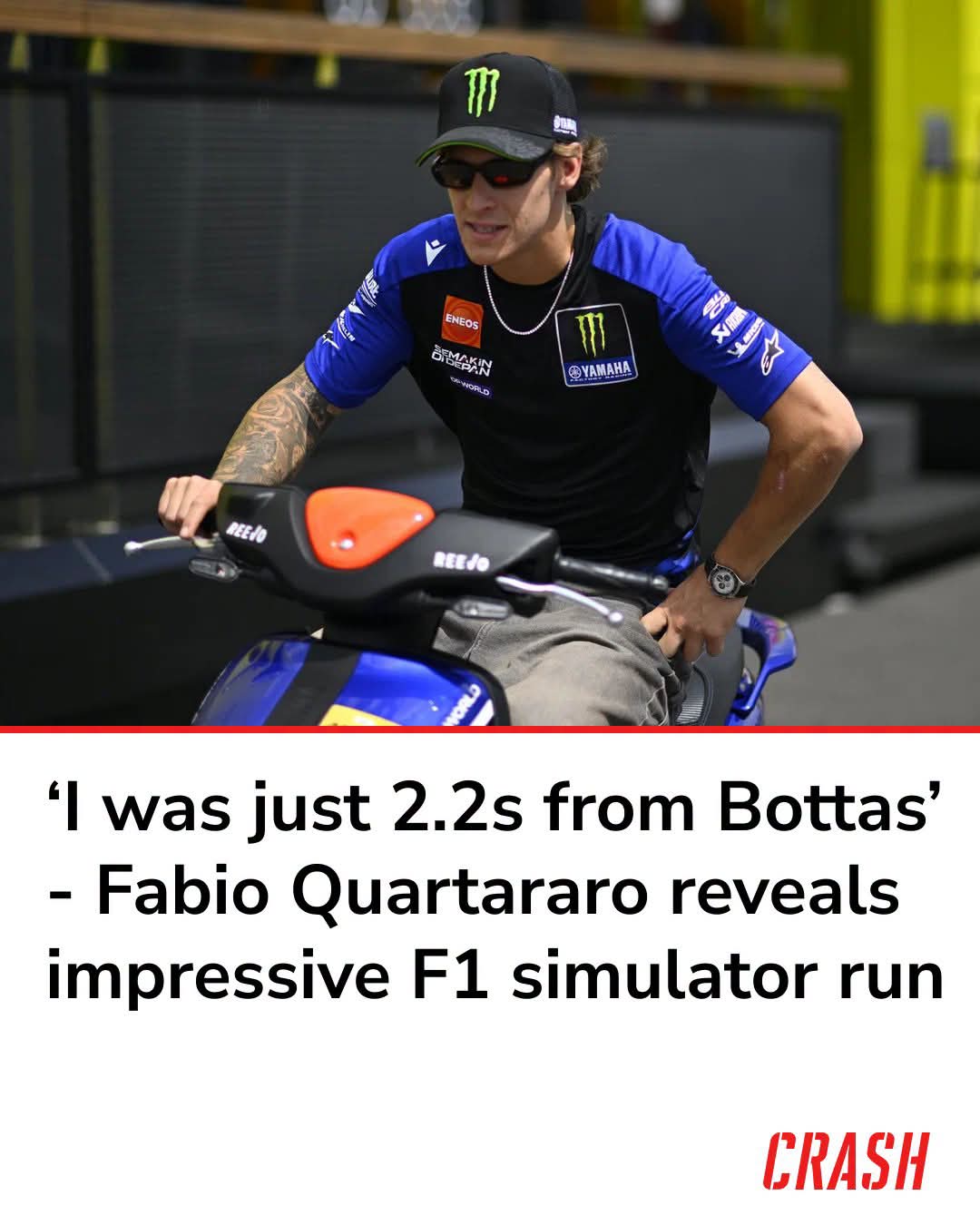
Now, MotoGP world champion Fabio Quartararo has reignited that conversation with a remarkable revelation. The French star has disclosed that he once had an agreement in place to test a Mercedes Formula 1 car and, perhaps even more impressively, managed to get within 2.2 seconds of former Mercedes race winner Valtteri Bottas during an extensive simulator session.
For a rider with no professional Formula 1 experience, that statistic has caught the attention of motorsport fans worldwide.
THE MERCEDES TEST THAT NEVER HAPPENED
Back in 2022, Quartararo appeared to be on course for one of the most exciting crossover opportunities in modern motorsport.
Through a shared sponsorship connection with Monster Energy, discussions were underway for the Yamaha rider to experience Formula 1 machinery with Mercedes. At the time, the prospect generated huge excitement, particularly given Quartararo’s reputation as one of MotoGP’s most naturally gifted riders.
Ultimately, the planned test never materialized.
While Quartararo visited Mercedes facilities and spent time in the simulator, the opportunity to drive an actual Formula 1 car never came together. Years later, however, the Frenchman has confirmed that the ambition remains alive and that getting behind the wheel of an F1 machine remains one of his personal goals.
The fact that he still talks about the possibility suggests the dream has never completely faded.
THE SIMULATOR PERFORMANCE THAT TURNED HEADS
What makes Quartararo’s story particularly interesting is the level of performance he achieved during his simulator work.
According to the MotoGP star, he completed approximately 60 laps of Silverstone in Mercedes’ simulator and finished only 2.2 seconds slower than Bottas, who was actively competing for the team at the time.
On paper, 2.2 seconds may sound like a significant gap.
In reality, for a rider with no Formula 1 racing background, it is an incredibly respectable benchmark.
Formula 1 simulators are highly sophisticated tools used by professional drivers to prepare for race weekends. Learning braking points, tire behavior, energy deployment systems, steering inputs, and complex vehicle dynamics takes years of experience.
For Quartararo to adapt quickly enough to remain relatively close to a seasoned Formula 1 driver demonstrates a level of natural adaptability that few athletes possess.
WHY MOTOGP RIDERS OFTEN SURPRISE F1 OBSERVERS
MotoGP riders are frequently underestimated when discussions turn to Formula 1.
While the two disciplines demand different skill sets, they share several key attributes. Elite motorcycle racers develop extraordinary reflexes, spatial awareness, racecraft, and an ability to process information at extreme speeds.
Quartararo has already demonstrated all of those qualities throughout his MotoGP career.
The French rider became a world champion by consistently outperforming rivals under pressure and extracting maximum performance from his machinery. Those same traits often translate surprisingly well to other forms of motorsport.
History has shown that top-level racers tend to adapt faster than many people expect because elite competitive instincts remain valuable regardless of the vehicle being driven.
THE GROWING CONNECTION BETWEEN F1 AND MOTOGP
Quartararo’s comments arrive at an interesting moment for global motorsport.
Since Liberty Media became involved in both Formula 1 and MotoGP, the relationship between the two championships has become increasingly visible. Drivers and riders regularly appear at each other’s events, while fans have shown growing interest in following both series.
The presence of MotoGP stars in Formula 1 paddocks has become more common, while former Formula 1 executives and engineers are increasingly exploring opportunities within motorcycle racing.
This closer relationship benefits both championships.
Formula 1 gains exposure to MotoGP’s passionate fanbase, while MotoGP benefits from the global commercial growth that Formula 1 has experienced over the last decade.
Quartararo’s Formula 1 ambitions are another example of how the boundaries between the two worlds continue to blur.
COULD QUARTARARO ACTUALLY DRIVE AN F1 CAR ONE DAY?
The answer appears to be yes.
Unlike previous rumors that were largely speculative, Quartararo has now openly confirmed that serious discussions once took place and that he remains interested in making it happen.
The biggest challenge is likely scheduling rather than capability.
Modern MotoGP riders face packed calendars, commercial obligations, testing commitments, and intense physical demands throughout the season. Finding the right opportunity to conduct a meaningful Formula 1 test is far from straightforward.
However, given the growing collaboration between motorsport categories and the publicity such an event would generate, it would not be surprising to see manufacturers revisit the idea in the future.
Mercedes could remain an option, but other teams may also see marketing and technical value in giving a world-class MotoGP champion a chance.
WHAT THIS SAYS ABOUT QUARTARARO’S TALENT
Perhaps the biggest takeaway from the story is what it reveals about Quartararo himself.
For years, he has been regarded as one of the most naturally gifted riders in MotoGP. Even during difficult periods for Yamaha, his speed has rarely been questioned.
The simulator revelation reinforces that reputation.
Very few athletes can transition into an entirely different discipline and immediately perform at a competitive level. While a simulator session is obviously different from driving a real Formula 1 car, the experience still highlights Quartararo’s exceptional ability to learn, adapt, and operate under pressure.
Those qualities are what separate champions from ordinary competitors.
A CROSSOVER FANS WOULD LOVE TO SEE
Motorsport fans are naturally drawn to “what if” scenarios.
What if a MotoGP champion tested a Formula 1 car? What if an F1 driver tried a MotoGP bike? What if the best racers from different disciplines competed on equal terms?
Quartararo’s latest comments have reignited one of the sport’s most intriguing possibilities.
Whether the long-awaited Formula 1 test finally happens remains uncertain, but the Frenchman has made one thing clear: the dream is still alive.
And after proving he could get surprisingly close to an experienced Formula 1 race winner in the simulator, many fans will be wondering just how fast Fabio Quartararo could be if he ever gets the chance to drive the real thing.